Category: Electric

  • Electric locomotives to replace diesel on Bengaluru-Mangaluru ghat section

    Electric locomotives to replace diesel on Bengaluru-Mangaluru ghat section

    Anush S

    South Western Railway plans to introduce electric locomotives on the 55-km Sakleshpura-Subrahmanya Road ghat section.
    South Western Railway plans to introduce electric locomotives on the 55-km Sakleshpura-Subrahmanya Road ghat section.

    Diesel locomotives on the Bengaluru-Mangaluru rail section could soon become history.

    Almost a year after the 55-km ghat section between Sakleshpura and Subrahmanya Road was electrified, South Western Railway (SWR) can shortly start running trains powered by electric locomotives.

    The stretch with several steep gradients, tunnels and bridges is a crucial part of the rail link between Bengaluru and Mangaluru.

    SWR has proposed switching seven trains using the stretch to alternating current (AC) traction: SMVT Bengaluru-Murdeshwar Express, Kozhikode Express, Yesvantpur-Karwar Express, Yesvantpur-Mangaluru Junction Weekly Express, Gomteshwara Express, Vijayapura-Mangaluru Central Express, and KSR Bengaluru-Karwar Panchaganga Express.

    Of these, four trains are now diesel-hauled, while the rest are pulled by electric locomotives and partially by diesel locomotives. The Kozhikode Express, SMVT Bengaluru-Murdeshwar Express and Vijayapura-Mangaluru Central Express currently use diesel locos partially only to pass the ghats.

    An SWR Mysuru division official said, “We are currently working on a traction sub-station (TSS) at Sakaleshpura. Once that is completed, we expect to conduct the electric trials for the section. The Research Designs and Standards Organisation (RDSO) trials for Vande Bharat were completed last month and were successful.”

    As railway rules mandate automatic emergency brakes (AEB) along the ghats, only electric locomotives fitted with the feature will be used. Despite the traction upgrade, speed restrictions will continue. All trains, including the proposed Madgaon-Yeshwantpur Vande Bharat, will be capped at a maximum speed of 30kmph.

    Karnataka is among five states/UTs yet to achieve 100 per cent rail electrification; currently, 97 per cent of the state’s network is electrified.

    Join the community of 2M+ industry professionals.

    Subscribe to Newsletter to get latest insights & analysis in your inbox.

    All about ETEnergyworld industry right on your smartphone!

  • Why electric vehicle sales are lukewarm in America, but hot in Europe

    Why electric vehicle sales are lukewarm in America, but hot in Europe

    US consumers are shifting towards hybrids and used EVs as new electric vehicle sales decline after the federal tax credit expired.
    US consumers are shifting towards hybrids and used EVs as new electric vehicle sales decline after the federal tax credit expired.

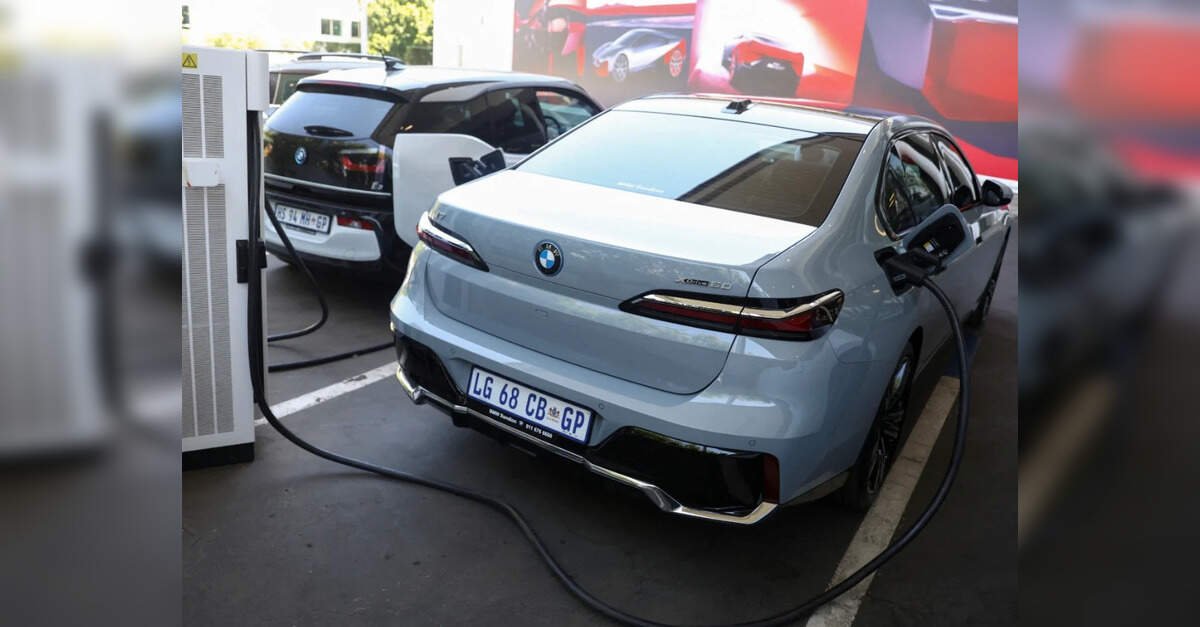
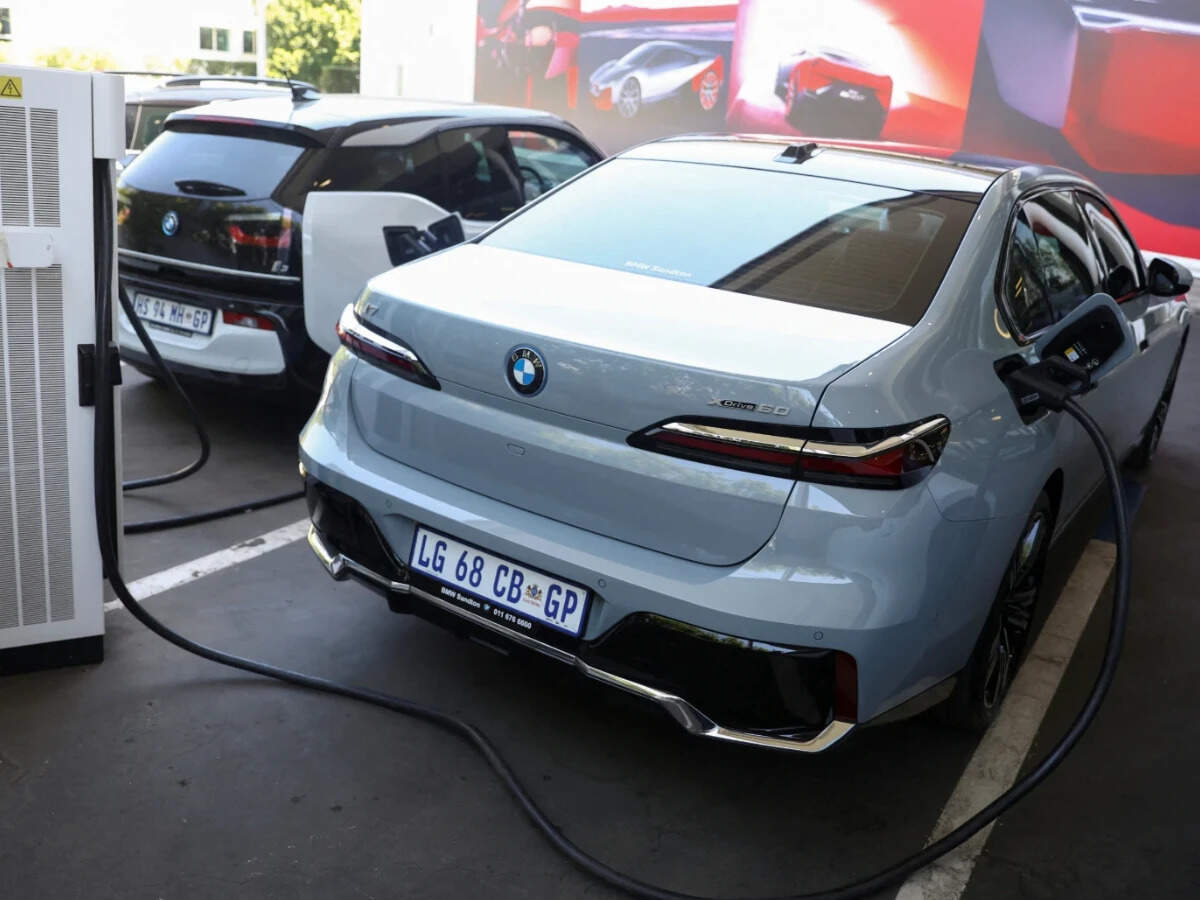
    US car shoppers have been slow to warm back up to electric vehicles since a key federal subsidy expired a year ago, despite persistently high gas prices, while Europeans have flocked to the cars.

    EV sales in the US are down 30.7 per cent this year through September, according to research firm Motor Intelligence, accounting for just 6 per cent of overall sales. That’s less than the 8.5 per cent at this time a year ago, when buyers rushed to beat the expiration of a $7,500 federal tax credit.

    In Europe, however, buyers have flocked to electrics for relief from higher fuel prices stemming from the war in Iran. EVs accounted for 23.2 per cent of the European auto market this year through September, up from 17.7 per cent a year earlier, according to the European Automobile Manufacturers’ Association.

    The divergence in the two markets is due in part to key policy differences between the two regions. In Europe, automakers continue to roll out electric models to meet stringent tailpipe-emissions regulations, and Chinese automakers have stormed the European market with a slew of imported EVs.

    In the US, the Trump administration worked with Congress to eliminate support for EVs, and watered down fuel-efficiency regulations. High tariffs and a ban on Chinese-made vehicle software have effectively blocked Chinese car brands.

    Meanwhile, there were more than 150 EVs on sale in Europe during the first half of 2026, up from about 100 models in 2024, according to Transport & Environment, a Brussels-based environmental advocacy group. Many are priced below 25,000 euros ($27,995), and many countries offer tax breaks to lower consumers’ out-of-pocket costs.

    US buyers go for hybrids, used EVs

    Since the expiration of the $7,500 federal tax credit a year ago, many US automakers have discontinued electric models or scrapped plans for new entries. Some have ended cheap leases that helped fuel demand.

    Buyers instead are seeking hybrids and used EVs, car dealers and analysts say. Hybrid sales jumped 23 per cent through the first three quarters from the year-earlier period, accounting for 15.6 per cent of total sales over that stretch.

    “There’s still demand out there [for EVs], but the energy and the masses are definitely running to hybrid technology,” said Thad Szott, a Detroit-area dealer with Ford, Stellantis and Toyota.

    Some automakers are adding hybrids to their showrooms. Nissan, for example, moved up the launch of a new hybrid system on its popular Rogue SUV by several months.

    Hybrids are “a safer choice” for consumers worried about driving range, said Tiago Castro, Nissan’s senior vice president of US marketing and sales. “When we had the government incentive” for EVs, he said, “it was a different story.”

    The market for used EVs is bustling, though, a sign that less affluent buyers are seeking relief from high fuel prices. Sales of used electric cars rose 19 per cent through September from the year-earlier period, according to research site CarGurus.

    Tesla, Rivian EVs fare better than legacy carmakers

    EV-only brands have fared better than traditional automakers’ EV sales. Tesla’s US sales fell only 14 per cent in the first three quarters, a milder decline than the broader electric vehicle market, according to an estimate from Motor Intelligence. Rivian’s US sales rose 29 per cent, helped by the release of a new SUV, the R2.

    By contrast, Ford’s EV sales are down 68 per cent this year through September, while crosstown rival General Motors saw a 43 per cent drop in EV sales.

    Honda has opted to end EV production after this year, while planning to expand hybrid sales. “Once they scaled back the $7,500, it became obvious” that EV market share would decline, said Lance Woelfer, vice president of US auto sales at Honda.

    However, South Korean automaker Hyundai has seen some recovery in EV sales since gas prices began rising in late winter, and dealers are asking for them, said Randy Parker, CEO of Hyundai Motor North America.

    “We’re not giving up on EVs by any stretch of the imagination,” Parker said.

    • Published On Oct 8, 2026 at 08:03 PM IST

    Join the community of 2M+ industry professionals.

    Subscribe to Newsletter to get latest insights & analysis in your inbox.

    All about ETEnergyworld industry right on your smartphone!

  • Electric Vehicles in Mining: Overview Video

    Electric Vehicles in Mining: Overview Video

    Diesel mining machines make up over 1% of all global emissions and their electrification will be key to meeting sustainability goals of countries and individual companies.

    As a result, electric vehicles in mining have seen significant interest and investment over the last five years, and in this brief video we cover some of the recent progress in this sector, based on our latest research.

  • Electric Mining Vehicles Set to Become a US$27 Billion Global Market

    Electric Mining Vehicles Set to Become a US$27 Billion Global Market

    With the mining industry transitioning from diesel to electric machines, this article highlights the key drivers that will further machine electrification, the key challenges that have hampered adoption to date, and the direction the market may take over the next 20 years.


    Over the last 5 years, the global market for mining machines has seen considerable evolution, as decades-old machine technologies are disrupted by the prospect of electrification. Machine manufacturers, mining companies, and governments are now increasingly aligned in their aim of electrifying the mining industry, leading to greater implementation of electric machines in mines today. While the market still faces challenges that will need to be addressed in the coming years, IDTechEx’s new “Electric Vehicles in Mining 2027-2047: Technologies, Players, Forecasts” report details how the global market for electric mining machines is forecasted to grow to over US$27 billion by 2047.

    What is driving the adoption of electric machines?

    With increasing attention being paid to decarbonization and sustainability across global sectors, the mining industry has also come under greater scrutiny. Mining accounts for 2-3% of all global greenhouse gas emissions, with over half of this coming from the direct emissions of diesel mining machines. Therefore, their electrification will go some way towards reducing global emissions and help countries to achieve their sustainability targets.

    On top of their environmental credentials, electric vehicles (EVs) can facilitate operational benefits too. They produce far less heat, noise, and vibration than diesel combustion engines, creating a cleaner and safer working environment. The lack of direct tailpipe emissions also benefits working crews, especially when working underground, and drastically reduces the requirement for expensive and power-hungry ventilation systems. Additionally, EVs have fewer moving parts and less frequent need for repair, while also not consuming any energy while idling or stationary.

    However, the most significant driver leading to electrification in mining is the financial benefits that EVs can offer over diesel. This comes largely through the use of cheaper electricity, with savings able to compound quickly due to the high rate of utilization of many machines (including up to 24/7 operation). IDTechEx’s new report finds that, even though electric machines will come at a greater upfront cost, the savings generated through energy costs are more than sufficient to overturn this and make EVs financially favorable on a total cost of ownership (TCO) basis. This is before other sources of savings are considered, such as reduced maintenance costs and improved drivetrain efficiency.

    Adoption of electric mining machines is driven by environmental, operational, and financial benefits. Source: IDTechEx

    What roadblocks are EVs facing?

    In spite of all the development that has taken place in machine electrification in the last 5 years, the industry still faces considerable technical and market factors that are hampering adoption. In particular, the high utilization rates of mining machines pose significant challenges for both the battery technologies and charging systems used in mining. Most machines are now equipped with batteries large enough to enable around 6 hours of continuous operation before they need to be recharged. This is the result of significant developments made by machine manufacturers in recent years to improve runtimes, but it remains far from the near-constant operation that mining companies are accustomed to with existing diesel equipment. To enable the productivity enhancements that mines demand will call for a combination of larger battery packs, more energy-dense battery technologies, and faster charging systems to minimize downtime.

    Charging in itself poses a challenge for many mines, with those in remote locations often having poor or inconsistent grid access to enable fast charging. Future widespread adoption of EVs in mining will increase electricity loads substantially and demand upgrades to on-site electrical infrastructure. This may include solutions such as BESS installations or microgrids in the longer term.

    At a legislative level, while governments are interested in the decarbonization of mining activities, there has been little regulation to date that is specifically targeted towards the electrification of mining machines. Canada is the only country to have done so, while other regions including China, India, and Australia have catch-all policies targeted at mobility more broadly which have led to some electrification in machines. Crucially, the US has a large mining industry but no regulatory framework to encourage EV adoption in it.

    What does the future hold for electric mining machines?

    Electric machines have already proven their capability to provide environmental, operational, and financial benefits to mines, leading to growing rates of adoption into mining fleets. This adoption is expected to accelerate over the next 20 years as OEMs continue developing vehicle, battery, and drivetrain technologies and as charging infrastructure becomes optimized for the mining environment. Crucially, adoption is likely to be driven less by regulatory pressure and more by the independent adoption of EVs by mining companies.

    The maturation of the battery industry will also be key to growth, allowing large MWh-scale batteries to become more commonplace in the largest electric mining trucks and helping to prolong runtime and improve machine productivity. As battery innovation continues, the falling prices of Li-ion battery packs are expected to make their way into mining, reducing the upfront price premium that EVs come at and potentially growing their adoption further.

    IDTechEx’s market outlook

    IDTechEx’s “Electric Vehicles in Mining 2027-2047: Technologies, Players, Forecasts” report goes into additional detail on all of these factors and more, highlighting how the global market for electric mining vehicles is set to grow to over US$27 billion by 2047. The myriad benefits that EVs offer on mines coupled with continuing technology development, including for batteries and charging, will be key drivers for their adoption and the growth of the industry.

    The IDTechEx report dives deep into key drivers and barriers for adoption, provides benchmarking and case studies of state-of-the-art machine models from key OEMs, financial analysis of machine TCO, and in-depth technology appraisals of batteries, charging systems, motors, and inverters. Granular 20-year forecasts are provided for global mining EV sales (in 1000s of units), battery demand (in GWh), and market size (US$ billion), segmented by region (USA, Canada, Europe, China, Australia, Rest of the World) and by machine type (haul trucks, dump trucks, wheel loaders, underground loaders, underground trucks, mining light vehicles, other mining vehicles).

    For more information on this report, including downloadable sample pages, please visit www.IDTechEx.com/EVMining, or for the full portfolio of related research available from IDTechEx, see www.IDTechEx.com.