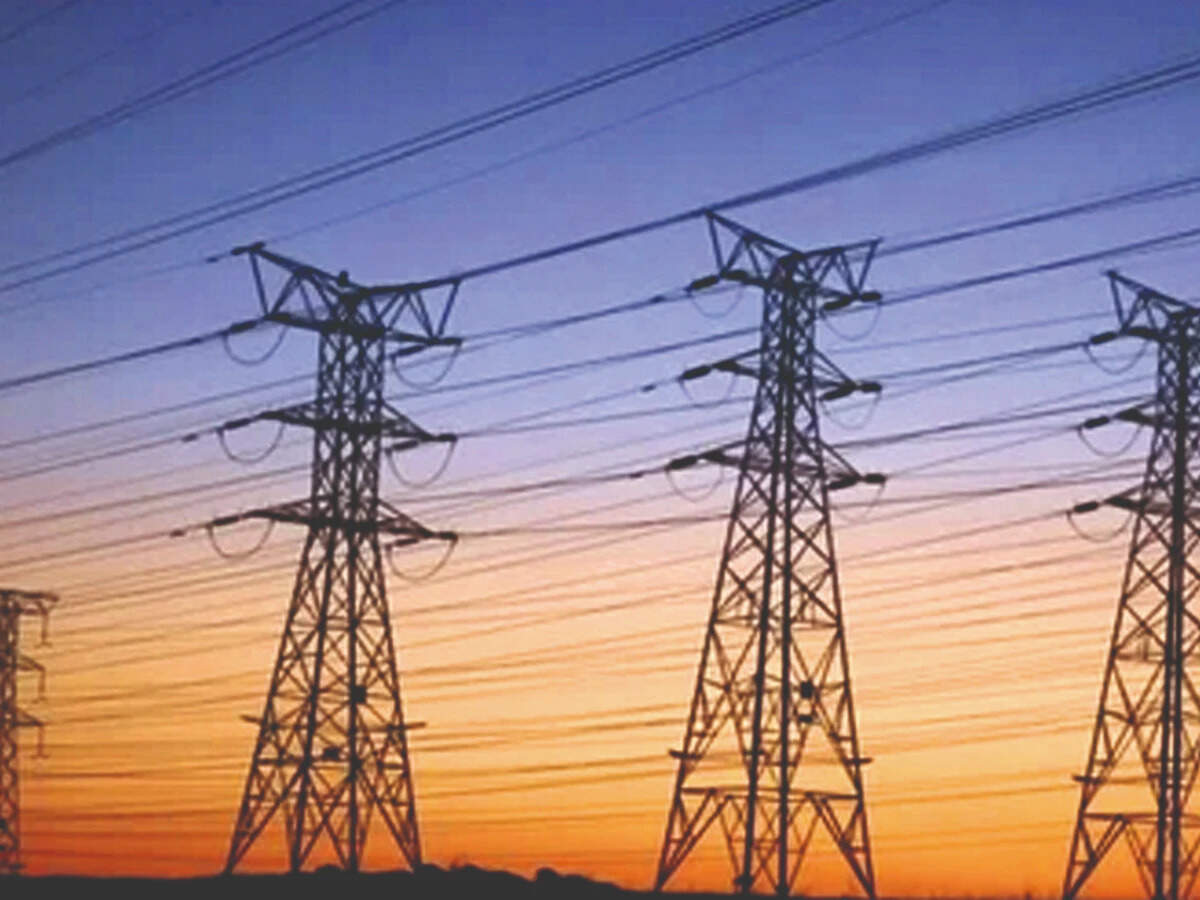
Renewable generation, excluding large hydropower, reached 101 BU in the second quarter of FY27, reflecting clean energy’s growing contribution as peak power demand hit a record 270 GW.
India’s total electricity generation rose 11% year-on-year to 536 billion units (BU) in July-September, while renewable power output crossed 100 BU in a quarter for the first time, according to a report by the Centre for Research on Energy and Clean Air (CREA).
Renewable generation, excluding large hydropower, reached 101 BU in the second quarter of FY27, reflecting clean energy’s growing contribution as peak power demand hit a record 270 GW.
Combined generation from non-fossil sources, including renewables, large hydro and nuclear power, rose to a record 177 BU from 163 BU a year earlier, the report titled ‘India Energy Snapshot for Q2 FY2026–27’ said.
Meanwhile, solar was the fastest-growing major power source, with generation rising 39 per cent year-on-year to 51 BU.
Wind generation increased 29 per cent to 45 BU, while solar accounted for 10 per cent of India’s total electricity generation during the quarter for the first time. Solar output also hit a daily record of 705 million units on September 30.
Non-fossil sources accounted for around 33 per cent of total electricity generation in the quarter, while coal continued to supply most of the power.
The report also flagged a mismatch between coal consumption and supplies to power plants, with inventories falling even as electricity demand increased.
Coal stocks remain under pressure
Coal stocks at power plants declined to 21 million tonnes on September 30, equivalent to just 36 per cent of the normative requirement of 58 million tonnes.
The number of plants with stocks below 25 per cent of their prescribed requirement rose from 32 on August 22 to 91 on October 6, according to the report’s accompanying release.
Coal consumption also remained broadly stable at around 79 million tonnes a month from May through September.
However, coal dispatch to power plants fell from 74 million tonnes in May to 66 million tonnes in August, while average railway rake loading declined from around 290 rakes a day in June to 280 in August before increasing sharply in early September.
Despite peak demand reaching 270 GW on July 16, coal power plant utilisation stood at 68 per cent in the second quarter, down from 73 per cent in the preceding quarter, the release said.
“Even with national peak demand reaching a record 270 GW, India’s coal power plants only reached 68 per cent of their utilisation rate in Q2 FY2026-27,” said Manoj Kumar, India analyst at CREA.
As solar increasingly meets daytime demand and storage helps supply electricity during evening and night-time peaks, new thermal capacity should be assessed against projected demand, renewable generation and storage availability, he said.
This would help avoid investments in capacity that could remain underutilised as the power system evolves.
Renewable capacity additions outpace thermal
India’s installed power capacity reached 555 GW in August 2026, with non-fossil sources accounting for around 55 per cent of the total. Renewable capacity excluding large hydro stood at 243 GW, including 168 GW of solar capacity.
Renewable capacity additions also outpaced thermal additions in the second quarter of FY27, with around 7 GW of renewable capacity added against 0.8 GW of thermal capacity.
The country’s energy storage pipeline is expanding, with around 290 GWh of capacity tendered by August, including pumped storage and battery energy storage systems, the report stated.
Operational battery storage stood at around 9.1 GWh, contributing up to 5.5 GW during periods of night-time peak demand.
The report also estimated that around 1,835 million units of renewable electricity, including 1,462 million units of solar and 373 million units of wind power, were curtailed during July and August due to grid and operational constraints.
Join the community of 2M+ industry professionals.
Subscribe to Newsletter to get latest insights & analysis in your inbox.
All about ETEnergyworld industry right on your smartphone!
In 2025, nearly 90 per cent of LNG shipments from Qatar and the UAE passing through the Strait of Hormuz were destined for Asia, leaving the region particularly vulnerable to supply disruptions, said the report.
India weathered one of the most severe LNG supply shocks in global gas trade relatively better than its South Asian neighbours, maintaining uninterrupted city gas distribution while restricting supplies to fertiliser, refinery and industrial sectors in March and April.
Despite the disruptions, daily urea production increased by 12,000–15,000 tonnes, with monthly output reaching record highs of 25.19 lakh tonnes in May and 25.37 lakh tonnes in June, supported by government subsidies, according to Wood Mackenzie’s latest analysis.
The war in West Asia and the closure of the Strait of Hormuz disrupted LNG supplies from Qatar and the UAE to South Asia, a region heavily dependent on imports from both countries.
South Asia’s demand dip
According to Wood Mackenzie’s latest analysis, LNG demand across South Asia, previously projected to grow by 2.7 million tonnes (Mt), or 7 per cent, in 2026, is now expected to decline by around 6 Mt. The consultancy has also significantly downgraded its demand outlook beyond 2026.
In 2025, nearly 90 per cent of LNG shipments from Qatar and the UAE passing through the Strait of Hormuz were destined for Asia, leaving the region particularly vulnerable to supply disruptions, said the report.
The resulting surge in spot LNG prices relative to contracted prices put pressure on government finances and reduced gas demand by more than 3 million tonnes (Mt) in Bangladesh and approximately 1.5 Mt each in India and Pakistan.
“The Middle East conflict has exposed the structural vulnerabilities of South Asian LNG markets in stark terms,” said Johnson Quadros, Head of Gas and LNG Research at Wood Mackenzie.
Highlighting the importance of supply diversification, Quadros added, “Countries that had diversified their supply sources and established multiple pricing mechanisms came through this crisis in far better shape than those that had not.”
The report warns that the conflict’s duration remains the key uncertainty and hostilities continue, current policy tools will prove inadequate, forcing governments to choose between energy security and fiscal stability.
“Affordable LNG is critical to the 60 per cent demand growth expected by 2040. Buyers must diversify supplies, adopt flexible pricing and strengthen infrastructure to avoid future disruptions,” said Quadros.
Join the community of 2M+ industry professionals.
Subscribe to Newsletter to get latest insights & analysis in your inbox.
All about ETEnergyworld industry right on your smartphone!
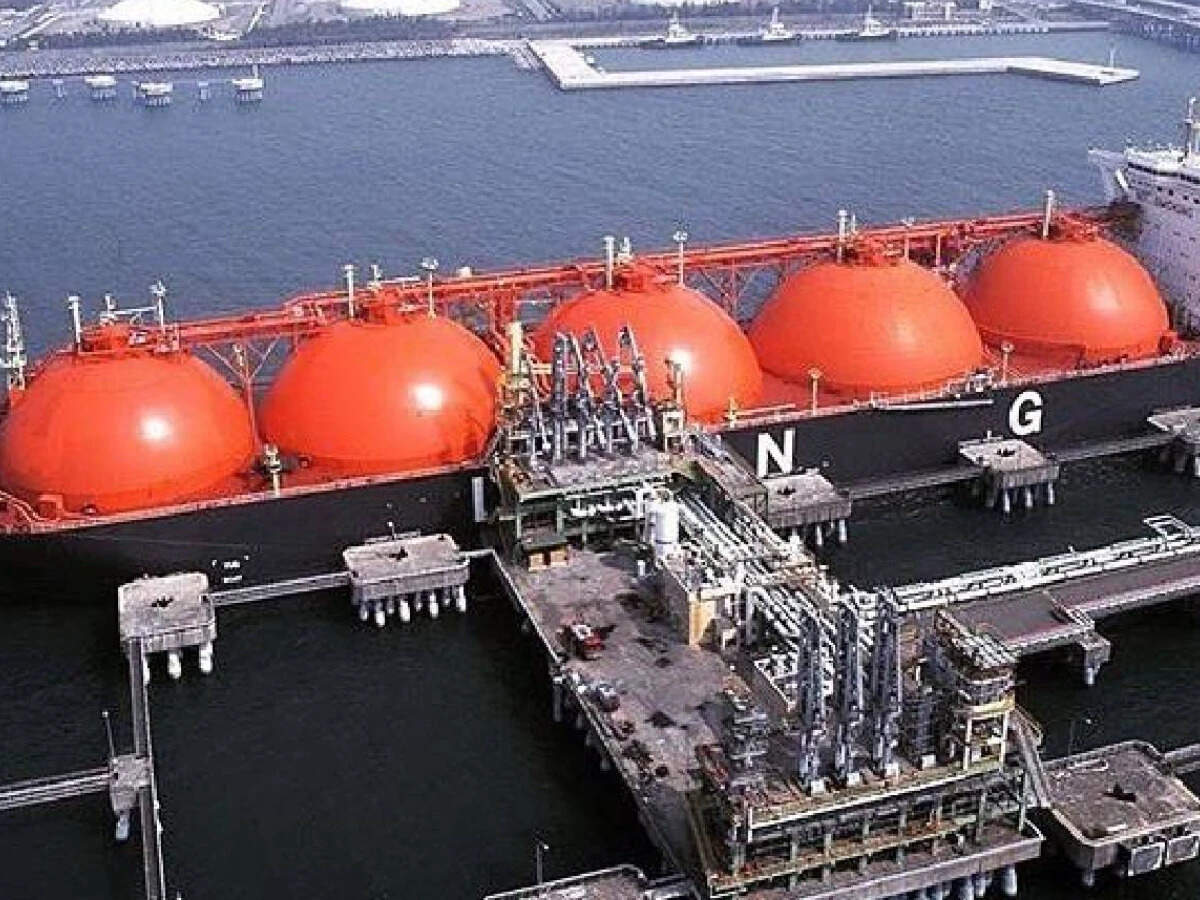
New Delhi: India has protected city gas supplies by curbing deliveries to fertiliser plants, refineries and industrial users as the Middle East conflict disrupts liquefied natural gas (LNG) shipments, while South Asia’s overall LNG demand is now expected to fall by about 6 million tonnes in 2026, consultancy Wood Mackenzie said.
The region’s LNG demand had earlier been projected to grow by 2.7 million tonnes, or 7 per cent, this year. The closure of the Strait of Hormuz and disruption to Qatari and United Arab Emirates supplies have reversed that outlook, forcing governments to ration gas, seek expensive replacement cargoes and absorb mounting fiscal costs, Wood Mackenzie said.
“India fared relatively better by deploying a tiered demand-management strategy that kept city gas distribution unaffected while cutting supply to the fertiliser, refinery, and industrial sectors in March and April,” it said in a report.
Government subsidies helped sustain fertiliser production, with daily urea output rising by 12,000-15,000 tonnes. Monthly production reached record highs of 25.19 lakh tonnes in May and 25.37 lakh tonnes in June, according to the consultancy.
However, India has not escaped the price shock. LNG tender award prices ranged from USD 16.8 to USD 18.8 per million British thermal units (mmBtu) between March and June, before rising to USD 26.4 per mmBtu in September. Demand for LNG tenders remained robust throughout the period, Wood Mackenzie said.
The disruption has hit Pakistan and Bangladesh harder because of their dependence on Gulf supplies. In 2025, Qatar accounted for 99 per cent of Pakistan’s LNG imports and more than 70 per cent of Bangladesh’s, leaving both countries highly exposed to interruptions through the Strait of Hormuz.
Nearly 90 per cent of Qatari and UAE LNG shipments transiting the strait in 2025 were destined for Asia, making the region particularly vulnerable to the supply shock, Wood Mackenzie said.
The resulting surge in spot prices relative to contracted LNG prices contributed to a reduction in gas demand of more than 3 million tonnes in Bangladesh and about 1.5 million tonnes each in India and Pakistan, according to the consultancy.
“The Middle East conflict has exposed the structural vulnerabilities of South Asian LNG markets in stark terms,” said Johnson Quadros, head of gas and LNG research at Wood Mackenzie. “Countries that had diversified their supply sources and established multiple pricing mechanisms came through this crisis in far better shape than those that had not.”
Pakistan has been among the hardest-hit markets, with the Hormuz disruption reducing LNG supplies bound for the country by as much as 0.4 million tonnes per month between March and November 2026. It responded by curtailing demand, switching fuels and releasing previously withheld domestic gas, resulting in more than 2.5 million tonnes of gas demand destruction, Wood Mackenzie said.
Pakistan returned to the spot LNG market in April after a two-year absence, but high prices limited its ability to secure replacement cargoes. It also remains liable for daily floating storage and regasification unit (FSRU) take-or-pay charges regardless of whether LNG cargoes arrive, adding to the financial burden.
Wood Mackenzie has cut its forecast for Pakistan’s LNG demand to 3.7 million tonnes in 2027, from 6.6 million tonnes in 2025. Committed LNG volumes are expected to exceed demand through 2030, while uncontracted volumes are projected to account for more than 90 per cent by the early 2030s.
Bangladesh, meanwhile, has struggled to replace disrupted supplies because of limited scope to increase domestic gas production and a lack of diversified import options. Gas shortages triggered prolonged power outages and greater reliance on coal.
State-owned Petrobangla bought spot LNG cargoes from Gunvor and Vitol for March delivery at USD 23-28 per mmBtu. Between March and June, Bangladesh consistently paid an average of more than USD 18 per mmBtu for spot LNG, putting additional pressure on government subsidies, Wood Mackenzie said.
Governments across South Asia have responded with gas rationing, power cuts, tariff increases and additional budget allocations. But the consultancy warned that such measures defer costs rather than resolve the underlying vulnerabilities, as rising energy bills and disrupted industrial supplies put further pressure on consumers, businesses and public finances.
The duration of the conflict remains a key uncertainty. If disruptions persist, governments could face increasingly difficult choices between energy security, consumer protection and fiscal stability, Wood Mackenzie said.
The crisis also threatens the region’s longer-term gas demand outlook. Wood Mackenzie expects affordable LNG to be essential to support global demand growth of 60 per cent through 2040, with South and Southeast Asia central to that expansion.
“Affordable LNG is essential to drive the 60 per cent demand growth we expect through 2040, and South and Southeast Asian economies are central to that trajectory,” Quadros said.
“The disconnect between today’s supply crisis and tomorrow’s risk of oversupply creates real uncertainty for both buyers and sellers. Buyers who do not act on the lessons of 2026 on diversification, on flexible pricing, on infrastructure resilience and on building trading capabilities risk facing the same vulnerabilities again, in a market that will be even larger and more interconnected.”
The industry’s readiness will ultimately depend on demonstrating that these systems can operate within clearly defined safety, cybersecurity and human-oversight frameworks, says Asheesh Arora.
In an exclusive interaction with ETEnergyWorld, Arora said AI-enabled systems can make operational knowledge more accessible to on-site teams, support faster analysis and decision-making, and help less-experienced operators manage complex processes with appropriate human oversight.
Edited excerpts:
In your pilot projects with green hydrogen developers, how does your software help keep electrolyser stacks running safely, and which green hydrogen developers are you currently working with? What real-world data do you have on stack life and performance?
India’s green hydrogen ecosystem is in its transition phase from experimental installations to commercial scale, so reliability and stack economics continue to be important considerations. Electrolyser stacks contribute to a significant part of the total cost of producing an electrolyser, and the performance of stacks can vary based on factors including operational conditions, cycling loads, and water purity. The larger the installations become, the more need there will be to monitor such metrics.
Hydrogen Electrolyzer Control System is designed to work across PEM, alkaline and AEM electrolyser technologies and provide continuous monitoring of operating and performance indicators. The objective is to help operators monitor electrolyser degradation, identify changes in equipment behaviour early and take corrective action before they translate into a larger reliability and cost issue. Degradation directly impacts cost of energy and plant operating expenses; hence, monitoring degradation is critical to control cost of energy and green hydrogen
We are engaging with a growing set of developers across India’s emerging hydrogen ecosystem, and HECS is central to how we support electrolyzer reliability as projects move from pilot to commercial scale.
In commercial setups like TruAlt’s aviation fuel plant, how does your automation stop contaminated feedstocks from ruining catalysts without shutting down the entire facility?
Feedstock variability and contamination are established operational risks in renewable-fuel production because contaminants can affect catalyst performance, product quality, and plant economics. The ability to identify a deviation early and respond at the appropriate point in the process is therefore critical, particularly as new fuel pathways move from demonstration to commercial scale.
-tonne-per-year SAF project uses Honeywell Technologies’ Ethanol-to-Jet technology. In such an operating environment, automation and safety systems can provide continuous visibility into process conditions and feed quality, while defined alarms, interlocks, and isolation procedures help operators respond to abnormal conditions without unnecessarily taking the entire facility offline.
Honeywell Technologies’ Experion distributed control and safety systems are designed to give operators the process visibility and control needed to manage these conditions. The broader principle is straightforward: protect the catalyst and the process by detecting deviations early, isolating the affected section where the process design allows it, and enabling the rest of the facility to continue operating safely. This layered approach – sensing, alarming, and isolating in sequence, rather than defaulting to a full shutdown is not unique to SAF plants. The same architecture applies across renewable-fuel and biofuel facilities handling variable feedstocks, where an unplanned outage carries a much higher cost than the automation that could have prevented it.
Indian renewable developers face intense pressure to bid the lowest possible power tariffs in government tenders. Are companies buying cheaper, basic control systems instead of heavy-duty safety systems to keep initial building costs down?
Cost competitiveness is a central consideration for India’s emerging green hydrogen industry. Developers are balancing the cost of renewable power, electrolysers, storage, infrastructure and other plant systems while trying to build projects that remain commercially viable over the long term. In that environment, the initial purchase price of automation cannot be viewed separately from reliability, safety and lifecycle performance.
The key question is therefore not whether developers should spend more on automation, but whether the control and safety architecture is appropriately designed for the operating and risk profile of the plant. A lower upfront specification may appear attractive, but the consequences of an avoidable trip, prolonged downtime, equipment damage or a safety incident can extend well beyond the original equipment cost.
Honeywell Technologies’ approach is to right-size automation and safety solutions to the scale and requirements of the project. For developers competing in a price-sensitive market, the objective is to maintain the level of plant integrity required for safe and reliable operations without over-engineering the solution. The broader industry shift is towards evaluating automation as part of total project economics and lifecycle risk, rather than treating it only as an upfront capex line item.
Honeywell Technologies’ bought turbomachinery specialist CCC, pump maker Sundyne, and Johnson Matthey’s catalyst division. Why are you packaging these together and what does this mean for Indian developers who prefer mixing and matching cheaper standalone vendors to keep their capex low?
Energy-transition projects are becoming increasingly interconnected. A green hydrogen, SAF or other low-carbon process may involve process technology, catalysts, rotating equipment, controls and digital systems that all must perform reliably within the same operating environment. For developers, this makes integration, commissioning, lifecycle support and clear accountability important alongside the upfront equipment price.
Catalyst Technologies business broaden the portfolio across critical equipment, process technologies, catalysts and automation. Together, they strengthen combined syngas capabilities spanning methanol, ammonia, hydrogen and low-carbon fuel value chains. The strategic rationale is to bring complementary capabilities together so customers can access a more connected set of technologies and lifecycle services.
For Indian developers, this does not mean they have to abandon a multi-vendor approach. Rather, an integrated offering can reduce the number of interfaces that need to be coordinated across technology, engineering, commissioning and lifecycle support, while providing a single point of accountability across the relevant solution stack.
As India develops first-of-a-kind energy-transition projects, the value of this approach will be measured not simply by the number of components supplied, but by how effectively those components work together through engineering, deployment and operations.
Many of India’s planned green hydrogen hubs sit in remote coastal pockets where experienced chemical engineers don’t want to relocate. Is the Indian industry genuinely open and ready to letting AI run plants remotely with less operators on-site?
Access to experienced industrial talent is an important consideration as green hydrogen projects develop in remote locations. The challenge is not unique to hydrogen: process industries globally are managing an experienced workforce that is becoming harder to replace, while new projects are often located away from established industrial centres.
For India’s hydrogen hubs, AI-assisted operations can help address this gap by making operational knowledge more accessible to teams on site and supporting operators with faster analysis, recommendations and decision support. Honeywell Technologies’ Protonium Unified Control and Optimisation is an AI-enabled offering which automates Green Hydrogen and Green Ammonia performance, plantwide energy management and optimises plant operation for large electrolyser fleets with minimal operator intervention. The objective is not to remove people from the operating model; it is to augment their capabilities and help less-experienced teams manage complex processes with appropriate oversight.
is intended to bring autonomous operations capabilities to Indian customers. These technologies point towards a model where routine monitoring and optimisation can increasingly be supported by AI, while human operators retain responsibility for critical decisions and safety.
The industry’s readiness will ultimately depend on demonstrating that these systems can operate within clearly defined safety, cybersecurity and human-oversight frameworks. For remote green hydrogen hubs, AI-assisted operations can therefore be an important enabler of scalability, rather than a substitute for skilled people.
Join the community of 2M+ industry professionals.
Subscribe to Newsletter to get latest insights & analysis in your inbox.
All about ETEnergyworld industry right on your smartphone!
India is assessing the implications of US plans to buy Russian diesel as Washington weighs sanctions over New Delhi’s Russian oil imports.
India is studying and reviewing President Donald Trump‘s announcement of the US decision to purchase diesel from Russia, even as Washington threatens to impose 100 per cent tariffs on India under the Russia and Iran Sanctions Act for purchasing Russian oil.
Trump’s decision to purchase Russian diesel may not explicitly violate the Russia and Iran Sanctions Act, and Washington may devise a concession for itself, senior sources, speaking on condition of anonymity, told ET. The move to purchase Russian diesel while sanctioning India for buying Russian oil may appear hypocritical. However, the Trump administration may carve out an exemption to implement its decision to import Russian diesel, sources explained.
India is carefully studying Trump’s announcement and its implications for the country’s energy purchases from Moscow, sources added. While Trump’s phone call with Prime Minister Narendra Modi on September 30 was described as good, the Trump administration has not taken a conclusive decision yet on any waiver under the Russia and Iran Sanctions Act (SRIA).
During several conversations with the US over the past few months, New Delhi had explained to its interlocutors that sanctioning India under SRIA would adversely affect bilateral ties, which have already been strained by delays in concluding a trade pact and growing US-Pakistan ties.
Under the agreement with President Vladimir Putin, Russia will immediately supply more than 300,000 tonnes of diesel, followed by another 500,000 tonnes in November, then 1 million tonnes “immediately thereafter” and a further 3 million tonnes, depending on refinery conditions, according to the US President.
The move is being seen as an outreach to American voters ahead of the midterm elections.
Between our TOTAL CONTROL of the Strait of Hormuz, and this great announcement on Russian Energy, Diesel Prices for Americans and, indeed, the World, will be COMING DOWN, IN RECORD NUMBERS, AND FAST! Lower prices for Americans, especially our Great Farmers, Ranchers, and Truckers, is my Greatest Priority. This is a very big and important announcement,” the US President Donald Trump wrote on Truth Social.
Diesel prices in the US and Europe have risen amid fuel supply constraints through Hormuz. Attacks on Russia’s oil and gas infrastructure have further complicated the situation. Trump has, in fact, advised the Ukrainian President to stop attacks on Russia’s oil infrastructure.
Join the community of 2M+ industry professionals.
Subscribe to Newsletter to get latest insights & analysis in your inbox.
All about ETEnergyworld industry right on your smartphone!
India is looking to scale up its nuclear power capacity to 100 gigawatts (GW) by 2047, with the entry of private players expected to bring in ₹7.5 lakh crore in investment and contribute 30 GW to the country’s ambitious expansion target.
The move marks a major push to expand nuclear energy as India seeks to meet rising electricity demand, strengthen energy security and diversify its power mix.
According to news agency PTI, Atomic Energy Commission chairman A K Mohanty said the private sector could contribute 30 GW to the target, while the opening of the nuclear power sector to private players is expected to attract ₹7.5 lakh crore in investment.
He also said India holds 25 per cent of global thorium reserves, which could support the second and third stages of the country’s nuclear power programme.
India currently has an installed nuclear power capacity of 8.78 gigawatts (GW), generated by 24 reactors, according to the Department of Atomic Energy. The government aims to increase this capacity to around 22 GW by 2031-32, before scaling it up further to 100 GW by 2047 as part of its long-term nuclear energy expansion plan.
The government plans to raise the nuclear power capacity of Nuclear Power Corporation of India Limited (NPCIL), a public-sector company responsible for operating nuclear power plants in India, to 54 GW by 2047.
Other public-sector companies, state governments and private players are expected to contribute the remaining 46 GW. The expansion aims to strengthen India’s energy security and provide reliable, low-carbon electricity.
According to data released by the department of atomic energy, it has as identified around 439,800 tonnes of in-situ uranium oxide resources across Andhra Pradesh, Telangana, Jharkhand, Meghalaya, Rajasthan, Karnataka, Chhattisgarh, Uttar Pradesh, Uttarakhand, Himachal Pradesh and Maharashtra.
The department also reported 1.18 million tonnes of thorium oxide resources contained in 13.15 million tonnes of monazite, a mineral found in coastal beach sands, red sands and inland deposits across several states.
The department of atomic energy says India is pursuing a three-stage nuclear power programme to make optimal use of its limited uranium resources and harness thorium for long-term energy security. Thorium must first be converted into fissile uranium-233 before it can be used as nuclear fuel.
Join the community of 2M+ industry professionals.
Subscribe to Newsletter to get latest insights & analysis in your inbox.
All about ETEnergyworld industry right on your smartphone!
The proposed interconnection has the potential to facilitate reliable cross-border electricity trade, support clean energy integration and strengthen regional energy security.
India and Singapore are exploring options for a proposed 2,000 MW cross-border power interconnection, Minister of State for power and renewable energy Shripad Yesso Naik said on Thursday.
One of the options under consideration is a land-based transmission corridor of around 3,000 km connecting Imphal in India to Singapore through Myanmar, Thailand and Malaysia, Naik said while addressing the East Asia Summit energy ministers’ meeting in Manila.
The proposed interconnection has the potential to facilitate reliable cross-border electricity trade, support clean energy integration and strengthen regional energy security, he said. Naik said India was ready to share its experience in large-scale renewable energy deployment, grid integration, transmission planning, energy storage, green hydrogen and clean energy technologies with the participating easy Asian countries.
He called for greater institutional linkages between the ASEAN Centre for Energy and Indian institutions, including NTPC, Power Grid Corporation, Central Electricity Authority, among others. There are opportunities for cooperation on strategic petroleum reserves, electricity system resilience, LNG and gas supply security, renewable energy forecasting, battery energy storage, green hydrogen and other emerging energy technologies in the region, he said.