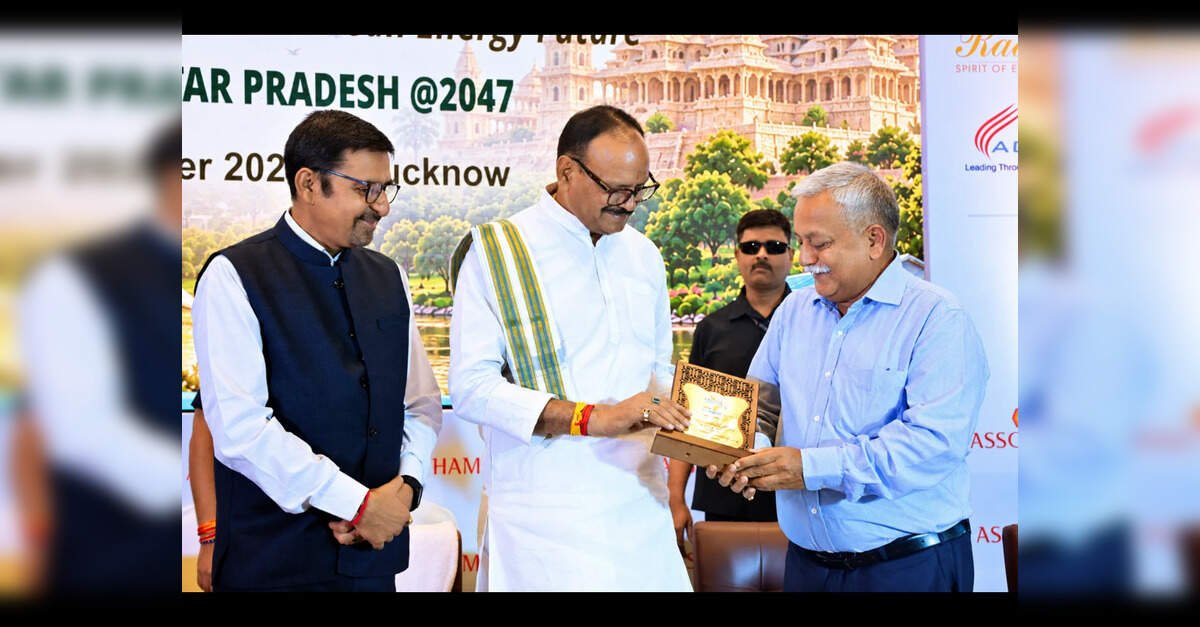
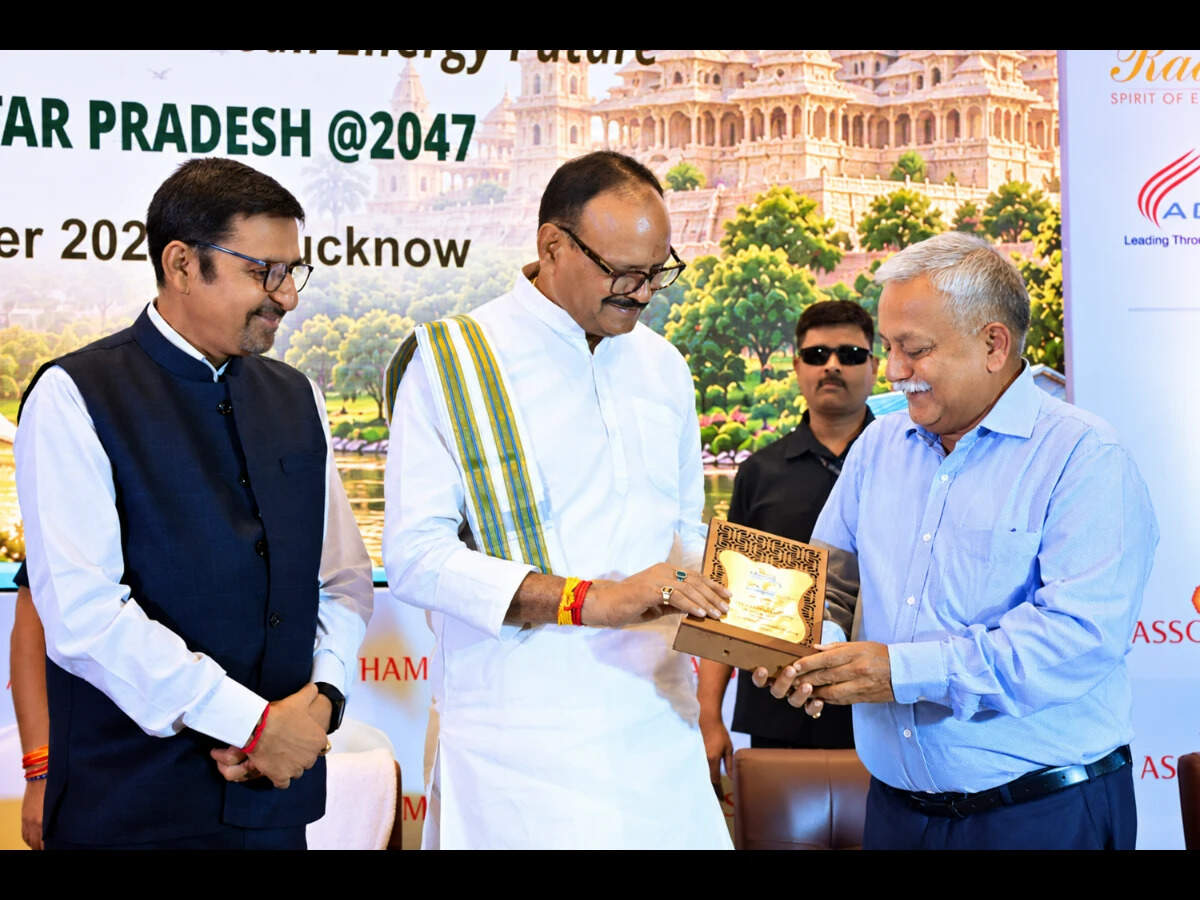
Uttar Pradesh is looking to strengthen its renewable energy ecosystem to support industrial expansion and agricultural growth, with the state government signalling continued investment in clean energy infrastructure, green hydrogen and emerging energy technologies.
The focus was highlighted at Uttar Pradesh Urja Sangam 2026, organised by the ASSOCHAM India in association with the Uttar Pradesh New and Renewable Energy Development Agency (UPNEDA) and Invest UP. The conclave brought together government representatives, industry stakeholders and financial institutions to discuss opportunities across manufacturing, project execution and power offtake.
Renewable energy push gathers pace
Deputy Chief Minister Brajesh Pathak, who attended the event as chief guest, said the state was stepping up investment in renewable energy, which he described as a priority sector. He pointed to the expansion of the sector since 2017, including the establishment of new distribution units and progress in grid integration, as part of the state’s efforts to reduce carbon emissions.
Pathak also highlighted India’s role in establishing the International Solar Alliance and underscored the importance of central government programmes such as the PM Surya Ghar Muft Bijli Yojana and PM-KUSUM in advancing solar adoption.
These initiatives, he said, were encouraging farmers to use available land for solar power generation while reducing their electricity costs. He also said Uttar Pradesh had emerged as the country’s leading state in rooftop solar installations.
Biogas and green energy open investment avenues
Awanish Kumar Awasthi, Advisor to the Chief Minister, said Uttar Pradesh offered significant opportunities for investment in green energy, adding that the state was well placed to expand its sustainable energy ecosystem. He also expressed confidence in India’s potential to emerge as a global leader in the sector.
Highlighting the state’s compressed biogas (CBG) ecosystem, Awasthi said Uttar Pradesh had 37 CBG plants installed or operational, with a combined production capacity of approximately 237 tonnes per day (TPD).
He also pointed to the Centre’s GOBARdhan initiative, which seeks to convert cattle dung, agricultural residue and other organic waste into commercially valuable products, including biogas, compressed biogas and organic manure.
The potential to link agricultural waste management with clean energy production offers another avenue for investment, particularly as the state looks to develop a broader ecosystem around bioenergy and other low-carbon fuels.
Green hydrogen and electrolysers in focus
A key panel at the conclave examined electrolyser manufacturing and green hydrogen, with discussions centred on technology, policy frameworks, market opportunities and investment prospects.
The panel brought together Sandeep Singh Chadha, Chief of Staff and Vice President, Growth and Strategy, SAEL; Zeeshan Raza, Deputy General Manager at Tata Motors; Rohit Mahajan, Assistant General Manager at J&K Bank; Himanshu Joshi, Assistant Sales Manager at IDFC FIRST Bank; and Mallika Modi, Director and Chief Business Development Officer at Zero Footprint Industries Ltd.
The participation of industry representatives and financial institutions reflected the importance of linking technology development and manufacturing with access to capital, commercial viability and the development of markets for green hydrogen. These factors will be central to building a competitive domestic electrolyser manufacturing ecosystem and scaling green hydrogen projects.
Solar manufacturing and project execution
A separate session focused on solar manufacturing and project execution, covering floating solar, solar manufacturing policy and industry readiness, as well as the implementation of government programmes designed to expand solar adoption.
Discussions covered the PM Surya Ghar scheme, PM-KUSUM and PM-SSY, with the broader agenda addressing the policy and execution requirements for scaling solar manufacturing and deployment. The session highlighted the importance of translating policy support into investment, manufacturing capabilities and projects that can be implemented at scale.
Linking clean energy with agriculture
Agriculture also featured in discussions on the transition to cleaner energy. Awasthi highlighted inefficiencies in conventional fertiliser use, noting that a significant proportion of nitrogen applied through urea does not reach crops. He also referred to the growing use of green ammonia, which can play a role in reducing the carbon intensity of fertiliser production.
The intersection of renewable power, green hydrogen, ammonia and bioenergy could create opportunities across manufacturing, agricultural inputs and waste-to-energy projects, provided these technologies can be scaled commercially.
Join the community of 2M+ industry professionals.
Subscribe to Newsletter to get latest insights & analysis in your inbox.
All about ETEnergyworld industry right on your smartphone!
- Download the ETEnergyworld App and get the Realtime updates and Save your favourite articles.
