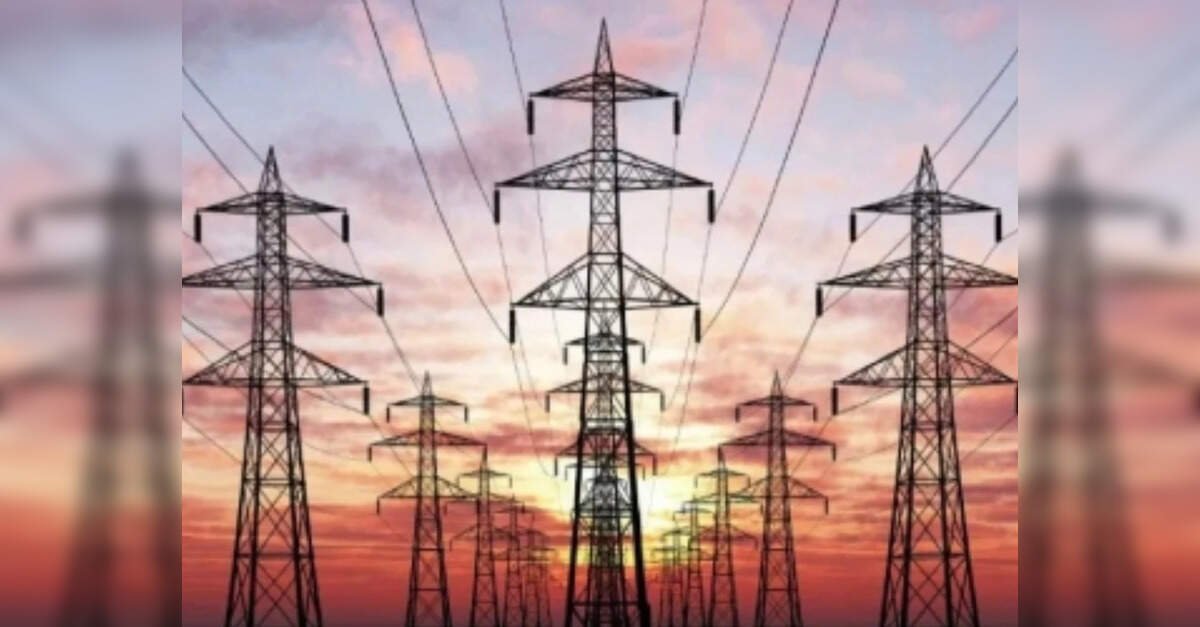
The company stated in the release that each of the two projects contributes 4.5 GW to the overall evacuation capacity along the crucial Fatehgarh-Beawar corridor.
According to a press release issued on October 13, the newly completed infrastructure is designed to channel the region’s expanding renewable energy output directly into the national grid.
The projects were executed through two special purpose vehicles: Fatehgarh III Beawar Transmission Limited (F3BTL) and Beawar Transmission Limited (BTL).
The company stated in the release that each of the two projects contributes 4.5 GW to the overall evacuation capacity along the crucial Fatehgarh-Beawar corridor.
Beawar Transmission Limited, which officially went live on September 23, 2025, features an 838 circuit kilometre (cKM) transmission corridor, a 765 kV double-circuit line, and a 3,000 MVA substation at Beawar to manage renewable energy variability and maintain grid stability.
Its counterpart, Fatehgarh III Beawar Transmission Limited, was commissioned in March 2026 with a 635 cKM corridor and a 765 kV double-circuit line of its own. Both transmission networks traverse challenging desert terrains across districts such as Jaisalmer, Barmer, Balotra, Jodhpur Gramin, Pali, and Beawar, while the F3BTL corridor also extends into Ajmer.
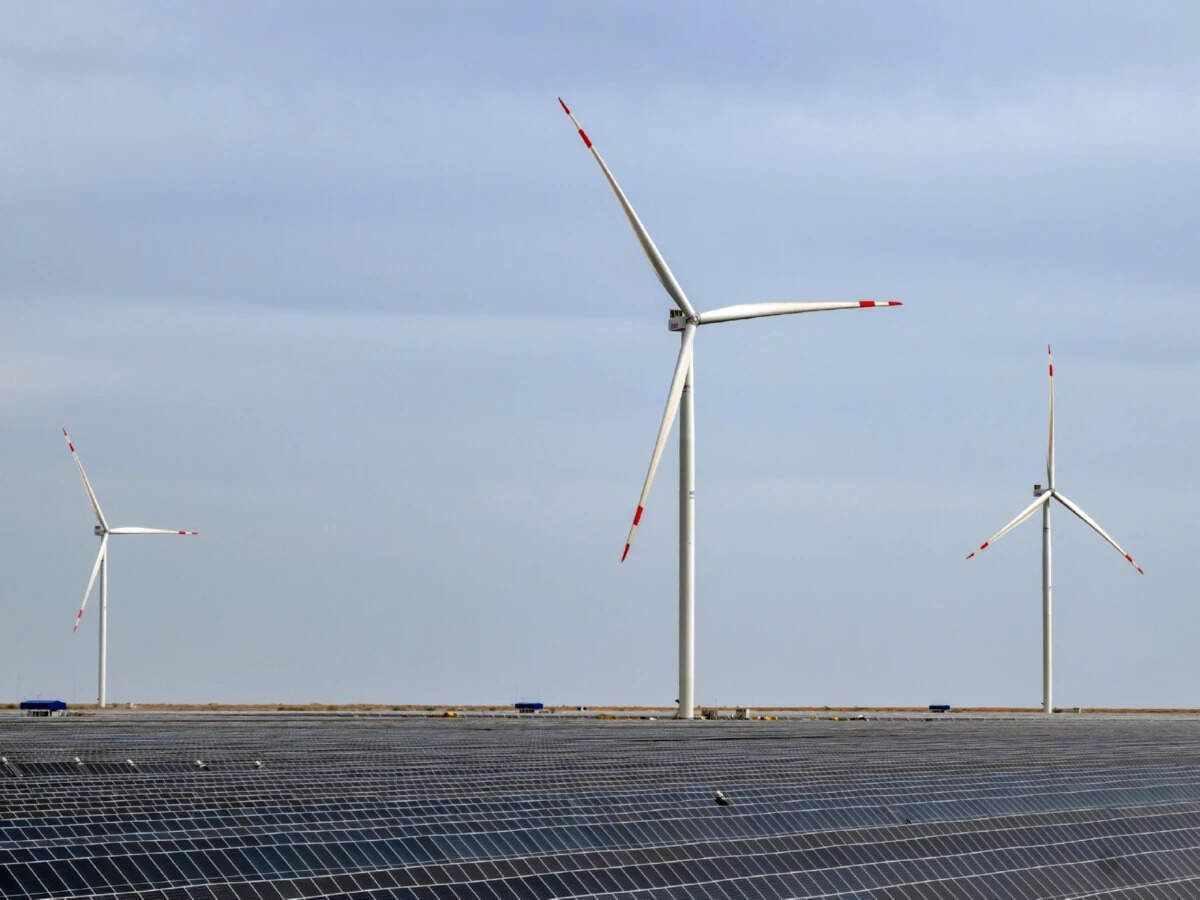
Building heavy infrastructure across arid landscapes required a modern touch, the company noted in the release. To navigate the harsh conditions and reduce environmental disruption, Resonia deployed advanced construction techniques, including drone-assisted conductor stringing using Infravision technology and crane-based tower erection.
Prashant Sinha, Chief Executive Officer at Resonia, emphasised that as Rajasthan quickly becomes a major hub for green energy generation, robust transmission networks are critical to ensure efficient power evacuation.
He noted that the successful delivery of these projects reflects the firm’s dedication to technology-led execution in demanding environments.
Join the community of 2M+ industry professionals.
Subscribe to Newsletter to get latest insights & analysis in your inbox.
All about ETEnergyworld industry right on your smartphone!
Indian Gas Exchange Ltd (IGX), the country’s first online delivery-based trading platform for natural gas, on Monday secured Sebi’s approval to float an initial public offering (IPO), an update with the regulator showed.
The proposed public issue is entirely an offer for sale (OFS) of up to 1.67 crore equity shares by promoter Indian Energy Exchange Ltd (IEX), according to the draft red herring prospectus (DRHP).
As the issue is entirely an OFS, IGX will not receive any proceeds from the IPO. The entire proceeds will go to the selling shareholder, IEX.
The company had filed its preliminary IPO papers in July. After reviewing the draft prospectus, Sebi gave its final observation on October 12.
Sebi’s observations mark an important step in the IPO process, allowing the company to proceed with the preparations for the public issue, subject to applicable regulatory requirements.
The approval comes amid a strong IPO fundraising momentum, with companies raising over Rs 1.1 lakh crore through 96 public issues so far in 2026.
Several more IPOs are lined up for launch this month, signalling continued activity in the primary market.
In the draft papers, IGX stated the primary objective of the IPO is to achieve the benefits of listing its equity shares on the stock exchange, which it expects will enhance its visibility, strengthen brand image and provide a public market for its shares.
Indian Energy Exchange holds over 47 per cent stake in IGX, and as per regulations, it has to bring it down to 25 per cent.
IGX was incorporated in November 2019 as a wholly-owned subsidiary of IEX.
Its electronic gas trading platform was inaugurated in June 2020, and it received authorisation from the Petroleum and Natural Gas Regulatory Board (PNGRB) to operate as a gas exchange in December 2020.
The company operates a technology-enabled electronic marketplace for trading natural gas through standardised physical delivery-based contracts across multiple delivery hubs connected to India’s national gas pipeline network.
According to the draft papers, unlike several international gas exchanges where a significant share of contracts are financially settled, IGX operates a physical delivery-based market and also offers forward contracts with tenures of up to six months.
For the financial year ended March 2026, the company reported revenue from operations of Rs 61 crore, compared with Rs 48.8 crore in FY25 and Rs 34.8 crore in FY24.
In January, IGX’s Managing Director and CEO Rajesh Kumar Mediratta had stated that the country’s first online delivery-based natural gas trading platform was targeting an IPO by December 2026.
Axis Capital and Motilal Oswal Investment Advisors are the book-running lead managers to the issue, while KFin Technologies is the registrar.
According to a press release, the company said the new facility will increase its cement manufacturing capacity in the UAE from 4 MTPA to 7 MTPA and its overall capacity to 76.3 MTPA.
“The commissioning is an important milestone in Shree Cement’s global growth journey and strengthens our presence in the UAE,” said H M Bangur, Chairman of Shree Cement.
The plant is equipped with Gebr. Pfeiffer’s MVR 6000 vertical roller mill technology, which integrates grinding and separation systems.
It also features modern material-handling infrastructure and dust-collection systems designed to improve operational efficiency and reduce energy consumption.
The expansion also builds on UCC’s existing energy-efficiency initiatives, including a waste heat recovery system with 31.5 MW of green power generation capacity, said the cement maker.
Shree Cement said it had an installed green power capacity of 634.5 MW, with renewable energy accounting for 66 per cent of its total energy mix in the first quarter of FY27.
The company has also begun deploying battery energy storage systems at select locations to assess their potential for wider use.
Join the community of 2M+ industry professionals.
Subscribe to Newsletter to get latest insights & analysis in your inbox.
All about ETEnergyworld industry right on your smartphone!
India’s power sector profits likely to grow up to 11% in Q2FY27 on strong demand: Report
New Delhi: India’s power sector is expected to post up to 11 per cent year-on-year (YoY) profit growth in Q2FY27, driven by strong electricity demand, higher plant load factors and potential incentives for thermal power producers, according to Nuvama Institutional Equities.
Nuvama noted in its report, India’s power demand rose nearly 12 per cent YoY to 163 billion units (BU) in September 2026 and 11.7 per cent to 503 BU in Q2FY27. This was largely due to high humidity and lower average rainfall.
On the other hand, “peak power demand surged ~17.5% YoY to 269GW in Sep-26, led by non-solar hour demand.”
Meanwhile, India’s thermal power accounted for nearly 69 per cent of total generation in Q2FY27, with plant load factors (PLFs) rising to 68.3 per cent from 61.9 per cent in Q2FY26.
Apart from this, tighter power supply pushed electricity prices higher on the Indian Energy Exchange (IEX), with solar-hour prices remaining elevated. Additionally, non-solar-hour prices also increased in September on YoY basis.
“Tighter supply pushed IEX prices higher, with solar-hour prices remaining elevated at INR5.6/unit and non-solar prices surging to INR9.5/unit in Sep-26 from Rs 3.2/unit in Sep-25,” it said.
Nuvama further noted, electricity trading volumes on IEX rose 10.4 per cent YoY in September 2026 and 12.7 per cent in Q2FY27, with solar-hour prices averaging around Rs 3.8 per kWh during the quarter.
However, total trading volumes, including Renewable Energy Certificates (RECs), grew nearly 9 per cent year-on-year in September, while quarterly growth remained subdued at around 4 per cent.
At the same time, “Coal stock at NTPC‘s plants was down to about seven days in Sep-26 with low inventory of ~21MT (-54% YoY),” which further indicated a “tight” coal supply situation in the country.
“Total RE additions stood at ~16.4GW YTD (till Sep-26) with solar additions contributing ~14.3GW in YTDFY27,” it said.
Overall, as per the brokerage house, “IEX is expected to post moderate growth with overall volume rising merely 4% in Q2FY27.”
Meanwhile, major thermal power producers are expected to report 8-9 per cent year-on-year profit growth, supported by higher plant load factors (PLFs) and potential incentives.
US President Donald Trump‘s trademark ability to talk down oil markets with a few words is fading as the Iran war drags on, leaving global energy prices far more exposed to escalation.
The Republican president’s so-called “jawboning” was one of the defining features of the Iran conflict’s early months after fighting erupted in late February.
In the months before the short-lived July ceasefire, Trump’s repeated public statements and social media posts that said Washington and Tehran were edging toward a deal to end the conflict and reopen the Strait of Hormuz helped keep oil prices well below record highs. That rhetoric appeared to work even as the blockage of the chokepoint, which previously handled about a fifth of global oil supplies, upended energy markets.
Trump repeatedly predicted during the months of Israeli-US airstrikes that oil prices would “drop like a rock” once a ceasefire deal with Iran is reached.
Traders likely deemed it too risky to bet against Trump’s desire to avoid a domestic fuel price spike. As stockpiles deteriorated, they assumed the US president would pull back and end the war quickly.
That bet appeared to pay off until markets learned the limitations of Trump’s control. The July ceasefire broke down, giving way to a protracted, low-level conflict that has spread throughout the region, including the recent escalation in violence between Yemen’s Iran-aligned Houthis and Saudi Arabia.
This lack of market confidence is now undermining the US president’s efforts to bring down soaring diesel prices, a key priority before US midterm elections that are only three weeks away.
For energy markets, the era of the Trump trade may be over.
FADING EFFECT
Global benchmark Brent crude prices have held stubbornly above $100 a barrel for most of the past few weeks, despite a strong recovery in oil flows through the Strait of Hormuz.
Crude exports through the critical waterway have rebounded to roughly 80%-90% of pre-war levels, according to ship-tracking firms, as Gulf producers have increasingly relied on US naval protection to move cargoes.
Yet repeated efforts by Trump and US Energy Secretary Chris Wright to calm markets by highlighting the recovery in flows have not proven effective.
Brent did slip below $100 a barrel on news of the surge in crude flows, but that reprieve proved brief as Middle East violence continued to spread, including stepped-up Iranian strikes on tankers.
Meanwhile, shipping oil through the region remains very costly because of soaring tanker chartering costs and insurance premiums, as well as the complicated logistics required to get crude out of the region. The Trump administration can’t “talk” those realities away anymore.
It turns out that increasing flows is one thing. Convincing traders that supplies will remain secure is much harder.
WORDS ARE CHEAP
Nowhere is that more evident than in the diesel market.
The combined impact of the Middle East conflict and Ukraine’s drone campaign against Russian energy infrastructure has sharply reduced global refining capacity, limiting gasoline, diesel and jet fuel output.
US diesel prices have climbed to fresh records of $6.50 a gallon, while US gasoline prices remain elevated, worsening a cost-of-living squeeze that has become a major political challenge for Trump ahead of the November 3 elections.
It is therefore no surprise that the administration has spent much of the past few weeks searching for ways to cool the diesel market.
Trump last week announced an agreement with President Vladimir Putin under which Russia would resume some diesel exports to ease the global shortage. Washington also relaxed certain sanctions to facilitate the shipments, drawing criticism from both Republicans and Democrats.
“Between our TOTAL CONTROL of the Strait of Hormuz, and this great announcement on Russian Energy, Diesel Prices for Americans and, indeed, the World, will be COMING DOWN, IN RECORD NUMBERS, AND FAST!” Trump wrote on Truth Social on October 9.
But the volumes involved are modest. The total promised Russian exports over the next three months, according to Trump, amount to around 15 million barrels, equivalent to only about half of one day’s global diesel consumption.
Trump also announced on Sunday an energy infrastructure ceasefire between Russia and Ukraine, although neither side has publicly confirmed adherence to the agreement.
All this comes after the administration took additional steps to ease domestic shortages, including pressing Europe to accelerate the release of emergency diesel stocks and relaxing restrictions on the use of certain diesel grades.
Yet so far, Trump’s “diesel diplomacy” has had only a limited effect. US wholesale diesel prices were flat on Monday, European diesel futures dropped 2% while Brent rose around 2% to nearly $107 a barrel.
HARSH REALITIES
The muted market response reflects a deeper problem. The loss of around 2 million barrels per day (bpd) of refining capacity in Russia and the Middle East, and the sharp drawdown in global oil inventories since the start of the Iran war, have left energy markets in a precarious position that cannot be fixed through rhetoric or relatively small supply additions.
A halt to Ukrainian attacks on Russian refineries could eventually allow Russia, the world’s second-largest diesel exporter, to restore larger export volumes. But repairing damaged refineries and export infrastructure will take months, if not years. Markets simply don’t believe Trump has the ability to bring about a resolution.
The president can still move energy markets with his words, but that power has clearly weakened as the web of conflicts has become more complicated. For energy investors, traders and producers, talk and even action are no longer sufficient. They need trust in Washington’s willingness and ability to find a durable solution – and that is in very short supply.
(The opinions expressed here are those of Ron Bousso, a columnist for Reuters.)
NTPC is currently engaged in discussions with potential buyers from Japan, South Korea, and Germany.
India‘s top power producer NTPC is in talks with potential buyers in Japan, South Korea and Germany for green ammonia and other low-carbon fuels, Chairman Gurdeep Singh said on Tuesday.
India has outlined plans to become a major green hydrogen producer, even as developers worldwide have struggled to secure the long-term offtake agreements required to underpin large-scale investments.
NTPC is in talks with prospective overseas customers as it develops a proposed green hydrogen hub in the southern state of Andhra Pradesh, Singh said at an event organised by the Indian Chamber of Commerce.
The project is expected to produce green ammonia and green methanol, which are considered more practical than hydrogen for transportation and international trade.
“We have to make hydrogen a business,” Singh said, adding that the focus was shifting from pilot projects to commercially viable ventures.
The comments underscore efforts by Indian companies to secure demand as they seek to turn government-backed hydrogen ambitions into commercially viable projects.
Backed by subsidies of roughly $2.1 billion, New Delhi aims to produce 5 million metric tons of green hydrogen annually by 2030. Demand for green fuels is expected to rise as industries look for alternatives to fossil fuels to reduce missions and meet decarbonisation targets.
The company said investments in transmission infrastructure, grid expansion and renewable energy integration were supporting demand for its engineering, procurement and construction (EPC) services.
Kalpataru Projects International Ltd (KPIL) has secured new orders worth around ₹2,225 crore across its power transmission and distribution (T&D) business in India and international markets, according to an exchange filing on Tuesday.
The company has received orders and letters of comfort worth approximately ₹2,031 crore in its T&D business, while its Swedish subsidiary, Linjemontage i Grästorp AB, has won a contract worth around ₹194 crore.
“We have secured orders valued at approx. ₹20,000 crore so far in the current fiscal year (YTD FY27), representing over 30 per cent YoY growth,” said Manish Mohnot, managing director and chief executive officer of KPIL.
With these wins, he noted, it is a step forward to achieving KPIL’s targeted growth numbers.
Linjemontage has secured a contract worth approximately 200 million Swedish kronor from Swedish electricity distribution company Ellevio AB to refurbish and expand an existing 130-kV substation in Repbäcken, Borlänge.
The project is expected to run for three years, with final inspection scheduled for October 15, 2029.
The turnkey contract includes construction of a new substation, civil works, a control building, equipment installation, testing and commissioning. The expansion is intended to increase capacity and redundancy in the electricity grid, according to the filing.
Join the community of 2M+ industry professionals.
Subscribe to Newsletter to get latest insights & analysis in your inbox.
All about ETEnergyworld industry right on your smartphone!
Renewable generation, excluding large hydropower, reached 101 BU in the second quarter of FY27, reflecting clean energy’s growing contribution as peak power demand hit a record 270 GW.
India’s total electricity generation rose 11% year-on-year to 536 billion units (BU) in July-September, while renewable power output crossed 100 BU in a quarter for the first time, according to a report by the Centre for Research on Energy and Clean Air (CREA).
Renewable generation, excluding large hydropower, reached 101 BU in the second quarter of FY27, reflecting clean energy’s growing contribution as peak power demand hit a record 270 GW.
Combined generation from non-fossil sources, including renewables, large hydro and nuclear power, rose to a record 177 BU from 163 BU a year earlier, the report titled ‘India Energy Snapshot for Q2 FY2026–27’ said.
Meanwhile, solar was the fastest-growing major power source, with generation rising 39 per cent year-on-year to 51 BU.
Wind generation increased 29 per cent to 45 BU, while solar accounted for 10 per cent of India’s total electricity generation during the quarter for the first time. Solar output also hit a daily record of 705 million units on September 30.
Non-fossil sources accounted for around 33 per cent of total electricity generation in the quarter, while coal continued to supply most of the power.
The report also flagged a mismatch between coal consumption and supplies to power plants, with inventories falling even as electricity demand increased.
Coal stocks remain under pressure
Coal stocks at power plants declined to 21 million tonnes on September 30, equivalent to just 36 per cent of the normative requirement of 58 million tonnes.
The number of plants with stocks below 25 per cent of their prescribed requirement rose from 32 on August 22 to 91 on October 6, according to the report’s accompanying release.
Coal consumption also remained broadly stable at around 79 million tonnes a month from May through September.
However, coal dispatch to power plants fell from 74 million tonnes in May to 66 million tonnes in August, while average railway rake loading declined from around 290 rakes a day in June to 280 in August before increasing sharply in early September.
Despite peak demand reaching 270 GW on July 16, coal power plant utilisation stood at 68 per cent in the second quarter, down from 73 per cent in the preceding quarter, the release said.
“Even with national peak demand reaching a record 270 GW, India’s coal power plants only reached 68 per cent of their utilisation rate in Q2 FY2026-27,” said Manoj Kumar, India analyst at CREA.
As solar increasingly meets daytime demand and storage helps supply electricity during evening and night-time peaks, new thermal capacity should be assessed against projected demand, renewable generation and storage availability, he said.
This would help avoid investments in capacity that could remain underutilised as the power system evolves.
Renewable capacity additions outpace thermal
India’s installed power capacity reached 555 GW in August 2026, with non-fossil sources accounting for around 55 per cent of the total. Renewable capacity excluding large hydro stood at 243 GW, including 168 GW of solar capacity.
Renewable capacity additions also outpaced thermal additions in the second quarter of FY27, with around 7 GW of renewable capacity added against 0.8 GW of thermal capacity.
The country’s energy storage pipeline is expanding, with around 290 GWh of capacity tendered by August, including pumped storage and battery energy storage systems, the report stated.
Operational battery storage stood at around 9.1 GWh, contributing up to 5.5 GW during periods of night-time peak demand.
The report also estimated that around 1,835 million units of renewable electricity, including 1,462 million units of solar and 373 million units of wind power, were curtailed during July and August due to grid and operational constraints.
Join the community of 2M+ industry professionals.
Subscribe to Newsletter to get latest insights & analysis in your inbox.
All about ETEnergyworld industry right on your smartphone!
Tamil Nadu has turned to costly short-term power purchases to meet rising electricity demand amid lower availability from conventional and wind sources.
The Tamil Nadu Power Distribution Corporation (TNPDCL) has signed agreements to procure the costliest power the discom has ever purchased, to overcome the shortage between availability and demand for the rest of the month.
The state power utility has finalised deals for 1,500 megawatts (MW) of round-the-clock power supply from Oct 12 to 31 at the rate of ₹31.99 to ₹34.49 per unit. The power, with a quantum of 2000 MW, to be procured to meet the evening surge in demand from 6 pm to midnight will cost between ₹33.37 and ₹37 per unit.
No other state has signed agreements at this cost through the Union power ministry’s e-bidding portal called DEEP, though many state-owned and private discoms have floated tenders and have not finalised the deal.
Andhra Pradesh Power Coordination Committee (APPCC) alone has finalised deals for 150MW for prices ranging from Rs 16 to Rs 20 for the same period. However, APPCC finalised the bids for October requirements on Sept 9, while TNPDCL invited bids for the period of Oct 12 to 31 just a week ago.
TNPDCL officials said that they were forced to float the tenders on such short notice because they thought the power demand would dip after Oct 10. “However, since the weather forecast is not clear on when the northeast monsoon would set in, we anticipate the unprecedented demand to continue in the coming days and floated the short-term tenders,” said the official.
TNPDCL has cited a shortage of nearly 4,000 MW from central generating stations due to mandatory scheduled annual maintenance, along with reduced wind power generation, as reasons for the power purchase, while power demand has been unprecedented in October.
While the peak power demand hovered around 17,000 MW in October last year and overall daily consumption was around 365 million units (Mu), the peak demand continues to touch 20,000 MW and daily consumption is nearly 70 Mu more compared to last year.
Meanwhile, another TNPDCL official pointed out that such high-cost power agreements were signed because all the tied-up suppliers are gas-based plants instead of the conventional coal plants.
“The coal power is not available in the market. But the positive point here is we can pay only for the power purchased and not for the entire signed quantum. The fixed charges are less than Re 1, so if the demand comes down and we don’t need the power from gas-based plants, we just need to pay the fixed charges. In coal-based plants, the fixed cost would be higher,” added the official.
Join the community of 2M+ industry professionals.
Subscribe to Newsletter to get latest insights & analysis in your inbox.
All about ETEnergyworld industry right on your smartphone!
Telangana has invited bids for solar, wind and battery storage projects to strengthen grid reliability and reduce dependence on conventional power.
Telangana government has called tenders for procuring 5,800 MW of renewable energy on Monday, mainly to strengthen the state’s long-term energy security and ensure a reliable, affordable and sustainable power supply amid rapidly rising electricity demand.
Telangana Renewable Energy Development Corporation Limited (TGREDCO) and the Telangana Power Generation Corporation Limited (TGGENCO) have released tender documents for the procurement of 3,000 MW of solar power integrated with a 6,000 MWh Battery Energy Storage System (BESS), 800 MW of wind power, 2,000 MW of Renewable Energy Round-the-Clock (RE-RTC) power and a 2,000 MWh Firm and Dispatchable Renewable Energy (FDRE) battery energy storage system.
The initiative comes as Telangana’s peak electricity demand has reached approximately 19,900 MW and is expected to increase further in the coming years. Rapid industrialisation, urbanisation, the growth of data centres, electric mobility, irrigation needs and major infrastructure projects are contributing to the state’s expanding power requirements.
The procurement programme is to improve the availability of renewable power throughout the day, strengthen grid reliability and reduce dependence on conventional power generation and expensive short-term electricity purchases.
Under the plan, 3,000 MW of solar power integrated with 6,000 MWh of battery storage will be procured for 25 years. The storage facility will enable surplus daytime solar generation to be stored and supplied during evening and night-time peak demand periods, improving grid flexibility and reducing reliance on costly market purchases.
The state will also procure 800 MW of wind power for 25 years. Wind generation is expected to complement solar power by diversifying the renewable energy mix and providing additional electricity during periods when solar generation is limited.
Another key component is procuring 2,000 MW of RE-RTC power for 25 years. By combining solar, wind and energy storage resources, the programme aims to provide a more consistent and dependable supply of renewable electricity throughout the day, offering an alternative to conventional thermal power.
In addition, TGGENCO will undertake tariff-based competitive bidding for a 2,000 MWh FDRE battery energy storage system for a period of 15 years. The project is expected to help address peak-hour power shortages by storing surplus solar electricity during the day and discharging it when demand is high.
Join the community of 2M+ industry professionals.
Subscribe to Newsletter to get latest insights & analysis in your inbox.
All about ETEnergyworld industry right on your smartphone!