
Author: admin

  • Trump seeks Russian diesel after months of targeting India’s oil purchases

    Trump seeks Russian diesel after months of targeting India’s oil purchases

    ETEnergyWorld Desk

    Trump’s latest move could intensify questions about whether Washington’s approach to Russian energy is driven by a consistent policy or by its immediate economic and political priorities, the report said.
    Trump’s latest move could intensify questions about whether Washington’s approach to Russian energy is driven by a consistent policy or by its immediate economic and political priorities, the report said.

    US President Donald Trump has announced plans to buy diesel from Russia after months of pressuring India to curb its purchases of Russian energy to limit Moscow’s funding for the war in Ukraine, The Times of India (TOI) reported.

    According to the report, Trump said Russian President Vladimir Putin had agreed to supply more than 300,000 tonnes of diesel immediately, followed by 500,000 tonnes in November and additional shipments later.

    Trump said the move, alongside what he described as US control of the Strait of Hormuz, would bring down diesel prices in the US and globally. He also said lowering costs for American farmers, ranchers and truckers was a priority.

    The announcement comes as high fuel prices put pressure on American consumers and threaten Republican prospects in the November 3 midterm elections.

    Diesel prices reportedly reached a record $6.52 per gallon in September and were around $6.28 on Friday.

    US eases restrictions on Russian fuel

    Following Trump’s announcement, the US Treasury Department issued a temporary general licence allowing qualifying Russian diesel shipments to enter the global market. The sanctions relief extends until April 2027 for eligible cargoes loaded onto tankers by Friday.

    The move comes weeks after Trump signed the Graham Act, legislation intended to tighten economic pressure on Moscow over its war in Ukraine.

    The political implications are significant as the administration seeks to address rising living costs before voters head to the polls.

    The decision has also drawn criticism from Ukrainian President Volodymyr Zelenskyy, who said Washington risked rewarding Russia while Kyiv was trying to weaken Moscow’s ability to finance its invasion.

    Zelenskyy also questioned the timing of the announcement, which came as Trump’s envoys Steve Witkoff and Jared Kushner were meeting Ukrainian and European officials in Miami to discuss proposals for ending the war. He said he would have supported easing energy sanctions if it had been part of a reciprocal arrangement to halt attacks on energy infrastructure during winter.

    Republicans question move as India faces scrutiny

    The announcement has also drawn criticism from some Republicans. Nebraska Congressman Don Bacon said lower diesel prices were important for American consumers but argued that buying Russian fuel was the wrong approach.

    He said the US should use sanctions to pressure Putin rather than provide additional funds to Moscow while Russian forces continued targeting Ukrainian civilians.

    For India, the decision highlights the contrast between Washington’s pressure on New Delhi over its purchases of Russian energy and its own move to facilitate Russian diesel supplies when domestic fuel costs rise.

    India has faced US tariff threats and diplomatic pressure over its Russian energy imports.

    Trump’s latest move could intensify questions about whether Washington’s approach to Russian energy is driven by a consistent policy or by its immediate economic and political priorities, the report said.

    Join the community of 2M+ industry professionals.

    Subscribe to Newsletter to get latest insights & analysis in your inbox.

    All about ETEnergyworld industry right on your smartphone!

  • Tamil Nadu’s rooftop solar subsidy doubles enquiries

    Tamil Nadu’s rooftop solar subsidy doubles enquiries

    Deepak Karthik

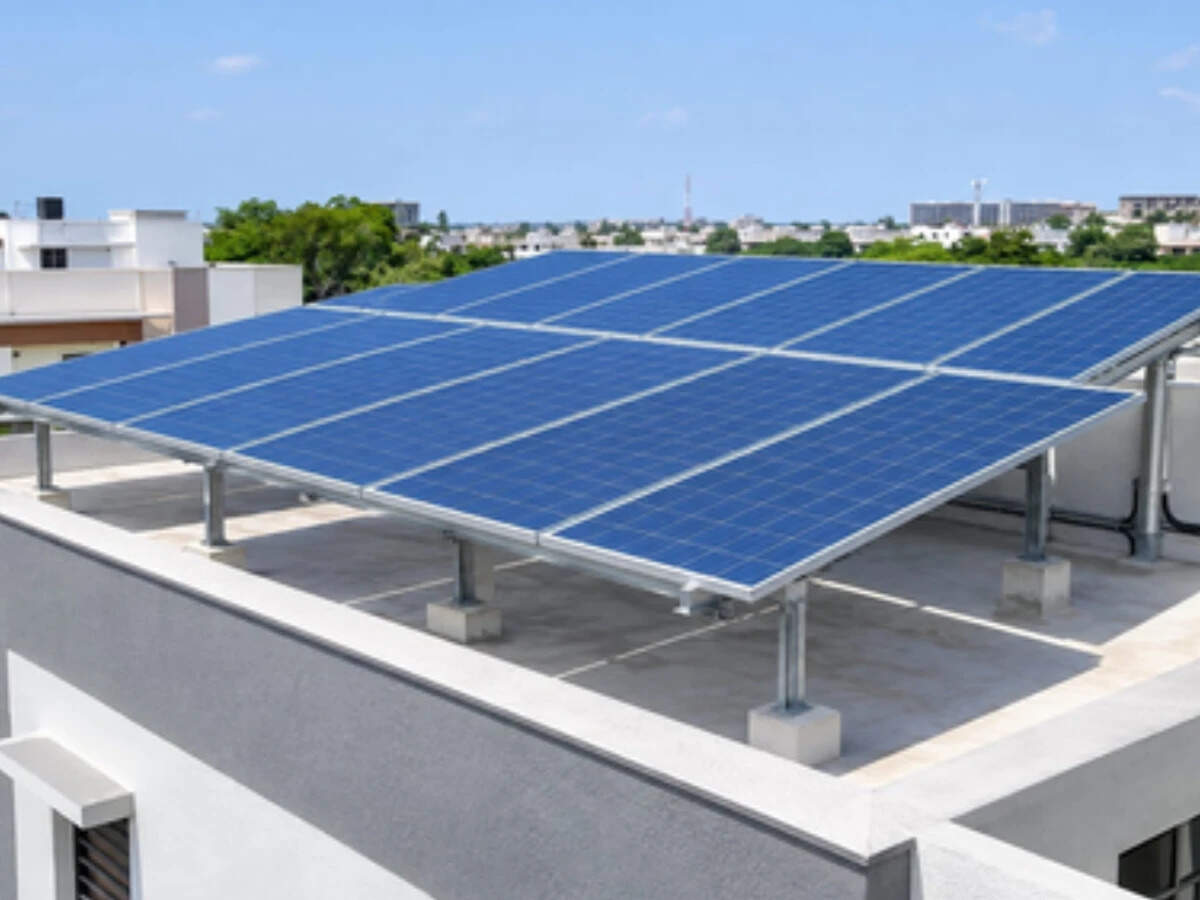
    Tamil Nadu’s additional subsidy for rooftop solar installations under PM Surya Ghar has boosted applications in Trichy district.
    Tamil Nadu’s additional subsidy for rooftop solar installations under PM Surya Ghar has boosted applications in Trichy district.

    Tamil Nadu govt’s top-up subsidy announcement for rooftop solar power plant installation under the PM Surya Ghar scheme has doubled enquiries and applications. While TN Green Energy Corporation Limited (TNGECL) has set 3,653 rooftop solar installations as the target for Trichy district till March 31, 2027, as many as 1,020 applications have already been received in just two months. Normally, it would take five to six months to receive 1,000 applications.

    TNGECL said that the top-up subsidy from the state govt varying between a minimum of ₹5,000 for 1 kW capacity installation and a maximum of up to ₹22,000 for 3 kW rooftop solar unit will be available for applications submitted from Aug 5.

    “Already, 183 rooftop solar plants have been installed in the last two months. The subsidy announcement made in the assembly has widely reached the people and our empanelled service providers are enthusiastic to tap the spurt in the demand,” an official with TNGECL said.

    So far, people were enjoying only the Centre’s subsidy. People should apply for the scheme on the PM Surya Ghar online portal. Tamil Nadu Power Distribution Corporation Limited (TNPDCL) will acknowledge and approve the application based on the feasibility. Consumers can select an empanelled vendor and pay for the rooftop solar installation based on their individual consumption. TNPDCL will inspect and fix meters to commission the rooftop solar plant. Within a month, consumers will be reimbursed with the subsidies for which they are eligible from both state and Union govts, officials promised.

    “Solar panels have 30 years’ life; routine maintenance involving cleaning and gentle washing will be sufficient. Consumers can get back the invested sum on rooftop solar plants in just three years,” K Muthuraman, executive engineer, Tangedco Trichy Urban, said.

    Banks are providing loans for rooftop solar installations at low interest rates. The overall target for Trichy district under the PM Surya Ghar scheme has been fixed at 15,000 rooftop units for the period 2024-27, of which around 4,600 have been commissioned. TNGECL said that special outreach programmes for rooftop installation with subsidies are planned at Musiri and Mannarpuram units on Oct 13 and 14 respectively.

    Join the community of 2M+ industry professionals.

    Subscribe to Newsletter to get latest insights & analysis in your inbox.

    All about ETEnergyworld industry right on your smartphone!

  • Andhra thermal power stations generate record 19,268 MU of electricity in first half of FY27

    Andhra thermal power stations generate record 19,268 MU of electricity in first half of FY27

    Andhra Pradesh has stepped up coal procurement and advance power purchases after thermal generation rose to a record 19,268 million units in April-September.
    Andhra Pradesh has stepped up coal procurement and advance power purchases after thermal generation rose to a record 19,268 million units in April-September.

    Andhra Pradesh energy special chief secretary K Vijayanand on Thursday said the state’s thermal power stations generated a record 19,268 million units (MU) of electricity during the first half (April-September) of the current financial year, up 13.1 per cent from FY26.

    The official said 17,037 MU of power was generated during the same period last year, which is 2,231 MU lower than the current fiscal year, an official release said.

    “The state-owned thermal power stations of Andhra Pradesh generated a record 19,268 million units (MU) of electricity during the first half (April-September) of the financial year 2026-27. This is 13.1 per cent higher than the 17,037 MU generated during the same period last year,” said Vijayanand in the release.

    Assuring consumers of uninterrupted power supply in the coming months, he said the government has put in place a robust fuel security system and a comprehensive advance power purchase plan in view of the revised El Niño advisories of the State Load Despatch Centre (SLDC).

    El Niño conditions typically bring weaker rainfall and higher temperatures, which can push up electricity demand.

    According to Vijayanand, average availability of thermal stations rose from 66 per cent to 79 per cent while Plant Load Factor improved from 58.7 per cent to 66.4 per cent. Dr Narla Tata Rao Thermal Power Station’s (Dr NTTPS) Unit-7 ran non-stop for 146 days and Unit-8 for 101 days without a single trip.

    Reviewing the performance of power stations, Vijayanand explained that the average plant availability, the share of time a plant is ready to generate power, across Andhra Pradesh Power Generation Corporation Ltd (APGENCO) and Andhra Pradesh Power Development Company Ltd (APPDCL) thermal stations rose sharply by 13 percentage points, from 66 per cent to 79 per cent.

    As a result, the Plant Load Factor (PLF), which measures actual generation against a plant’s maximum capacity, improved from 59 per cent to 66 per cent, he said, observing that all three thermal power stations delivered outstanding results in the first six months

    Vijayanand said alternative coal sources have been arranged after the steep fall in Singareni supplies, and that imported coal is arriving on schedule.

    He noted that coal supplies from Singareni Collieries Company Limited (SCCL) against allotted linkages fell steeply during H1, 2026.

    Only 35 per cent of the allotted quantity reached Dr NTTPS while 14 per cent reached Dr MVR RTPP, and supplies to Dr NTTPS stopped completely in August, he said.

    Consequently, the southern state responded with some corrective measures, which included requesting the Ministry of Coal to transfer the SCCL linkages to Mahanadi Coalfields Limited (MCL) and Eastern Coalfields Limited (ECL), among others.

    Vijayanand said 1 lakh metric tonnes (LMT) of coal per month is being allocated from SDSTPS Stage-I to APGENCO from October to December 2026 while imported coal is arriving on schedule.

    Under APPDCL’s 5 LMT contract, three vessels have already reached Krishnapatnam Port, he said, adding that the fourth vessel is due by mid-October and supply schedules are in place up to mid-2027.

    On October 7, he said the board approved the procurement of 3 LMT of imported coal for APGENCO stations (2 LMT for Dr NTTPS and 1 LMT for Dr MVR RTPP) at APPDCL benchmark rates while the Letter of Intent (LOI) is being issued immediately.

    Recalling that the DISCOMs successfully managed the outages caused by boiler tube leakages in September by purchasing 989.3 MU from the open market, Vijayanand outlined the month-wise power purchase plan under an advanced power purchase plan from October 2026 to March 2027.

    To keep the grid stable, the plan includes a 700 MW spinning reserve, which is standby capacity kept ready to meet any sudden rise in demand or unexpected plant outage.

    Between October 2026 and March 2027, 4,185 MU will be purchased, he said.

    Vijayanand affirmed that the supply system has been further strengthened, particularly for the evening peak hours through bilateral banking arrangements ranging from 130 MW to 665 MW during evening peak hours and purchases through the term-ahead market (TAM).

    Other measures include round-the-clock (RTC) and peak-hour tenders through the DEEP portal, 150 MW to 557 MW of Battery Energy Storage Systems (BESS) to serve evening peak-hour demand and 150 MW to 600 MW for morning peak-hour demand in winter.

    Likewise, he said standby gas-based power arrangements have been made through NTPC Vidyut Vyapar Nigam (NVVN).

    With phased annual overhaul schedules and an optimised coal transport network, the Energy Department is fully prepared to supply quality and uninterrupted power to agricultural, industrial and domestic consumers across the state, Vijayanand added.

    • Published On Oct 10, 2026 at 08:24 AM IST

    Join the community of 2M+ industry professionals.

    Subscribe to Newsletter to get latest insights & analysis in your inbox.

    All about ETEnergyworld industry right on your smartphone!

  • Streetlight power supply test triggers traffic signal outage in Pune

    Streetlight power supply test triggers traffic signal outage in Pune

    Prasad Kulkarni

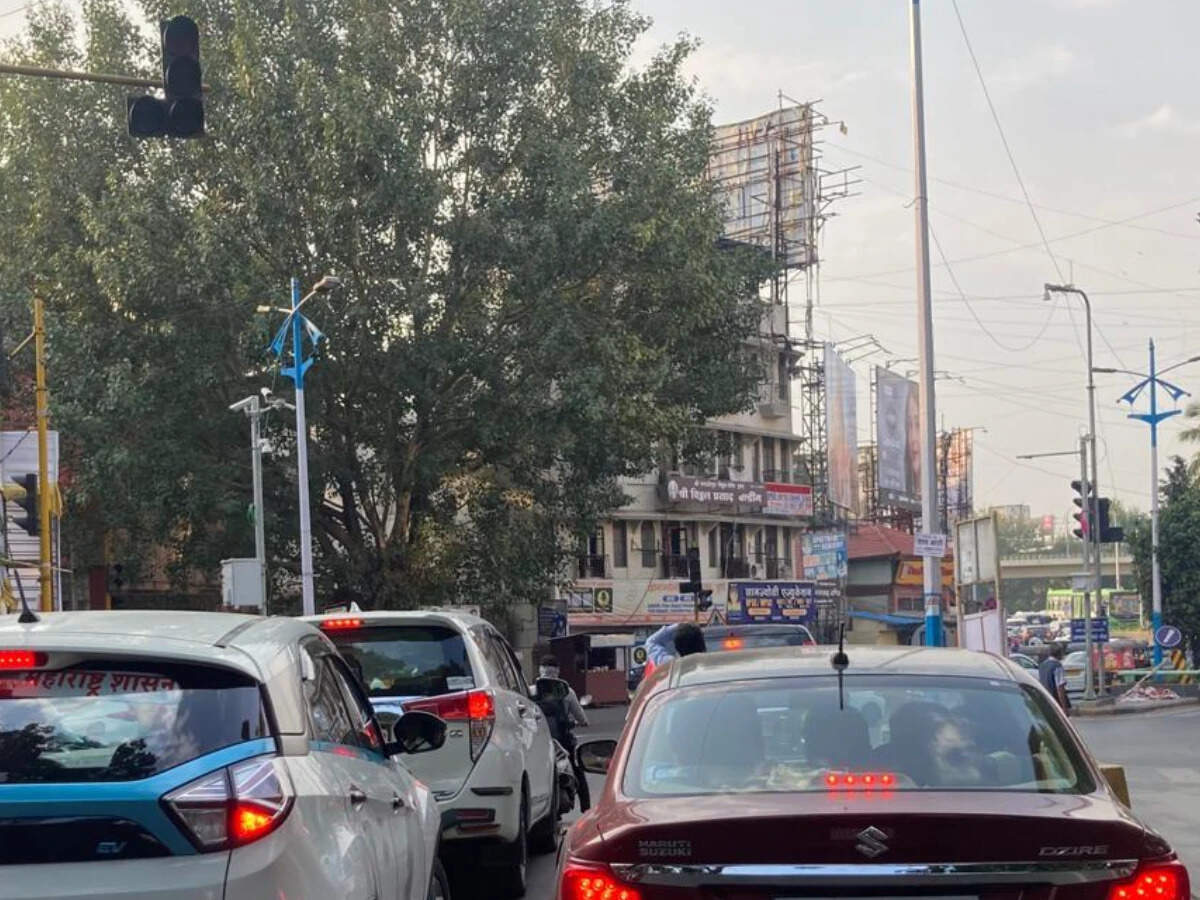
    Around 50 traffic signals across Pune stopped functioning after power supply to streetlights was disconnected during smart meter testing.
    Around 50 traffic signals across Pune stopped functioning after power supply to streetlights was disconnected during smart meter testing.

    Testing of smart meters and stoppage of power supply to streetlights caused a sudden disruption to around 50 traffic signals in different areas under Pune Municipal Corporation (PMC) on Friday.

    According to PMC officials, they approached Maharashtra State Electricity Distribution Company Limited (MSEDCL) to restore the supply and restart the signals. “The power supply to traffic signals and streetlights is combined in many locations. A private agency in charge of supplying power to streetlights disconnected it. Their officials wanted to test the impact when supply to these poles is stopped during daytime,” said Pramod Unde, superintending engineer (electrical).

    Asked about claims in a widely circulated social media post that PMC did not clear its electricity bill dues, leading to the power disconnection, Unde said those claims were false. “The bills are prepaid. Adequate funds were given in advance, so the issue of non-payment of bills does not arise,” he said.

    As per PMC and traffic police officials, the traffic signals were not functioning during the day, which led to major traffic disruptions. Following complaints from the traffic police department, a delegation of PMC officials visited the MSEDCL office and reported the incident.

    The PMC’s electrical department shoulders the responsibility of providing streetlights on roads across Pune city, managing the streetlights, and carrying out their maintenance and repairs. It also handles the installation and maintenance of traffic control lights at city intersections in coordination with the additional commissioner and the traffic police.

    According to officials, civic areas, including the 32 newly merged villages, have over 1 lakh streetlights. The city has around 400 traffic signals, of which 30 per cent source power directly from streetlights.

    Join the community of 2M+ industry professionals.

    Subscribe to Newsletter to get latest insights & analysis in your inbox.

    All about ETEnergyworld industry right on your smartphone!

  • Karnataka discoms face ₹1,005 crore Adani Power bill as tariff dispute continues

    Karnataka discoms face ₹1,005 crore Adani Power bill as tariff dispute continues

    Niranjan Kaggere

    Karnataka’s electricity distribution companies have paid ₹1,005 crore to Adani Power over tariff revisions linked to the Udupi power project, with BESCOM accounting for ₹456 crore.
    Karnataka’s electricity distribution companies have paid ₹1,005 crore to Adani Power over tariff revisions linked to the Udupi power project, with BESCOM accounting for ₹456 crore.

    What began as a tariff dispute with Adani Power-owned Udupi Power Corporation (UPCL) has now become a ₹1,000-crore-plus liability for Karnataka’s electricity supply companies (ESCOMs). In August, the Supreme Court refused to stay Adani Power’s invoices even as an appeal before theAppellate Tribunal for Electricity (APTEL) is pending.

    UPCL project’s tariff has been locked in litigation and subjected to repeated revisions since 2012. Adani Power had raised a ₹786-crore claim: ₹423 crore in carrying cost and ₹363 crore as accrued interest. Acting on its own reconciliation, Power Company of Karnataka (PCKL) and the discoms disputed the claim, putting the amount payable at ₹419 crore, including ₹215 crore towards carrying cost, which they said had already been paid.

    Discoms have made the payment under protest, while maintaining their legal battle is far from over.

    Since APTEL is set to pronounce its decision following the Supreme Court’s direction, ESCOMs are hoping theKarnataka Electricity Regulatory Commission (KERC) will approve their request to recover the excess payment towards compound interest on the initial tariff amount from electricity consumers.

    In its Jan 7, 2026 order, the Central Electricity Regulatory Commission rejected Karnataka discoms’ argument that carrying cost arising from APTEL’s interim orders could be excluded. It held that successive tariff revisions flowing from APTEL and CERC orders had created differential amounts for which Adani Power was entitled to carrying costs. Energy department sources said that out of the ₹1,005 crore paid to Adani Power, Bescom alone has paid ₹456 crore, accounting for 45 per cent of the payout.

    Tariff pe tariff

    * In 2010, Central Electricity Regulatory Commission determines provisional and final tariffs for Udupi project

    * Appellate Tribunal for Electricity, in 2013 and 2014, directs Escoms to pay tariffs and arrears in instalments

    * Later, CERC revises tariff following APTEL’s final directions, setting off chain of differential payments and carrying-cost claims

    * At heart of dispute is how much interest discoms must pay on tariff differentials that accumulated as various tariff orders were revised over the years

    Who’ll bear ₹1,005 crore burden?

    * Bescom has already paid dues to Adani Power and has since recovered it from consumers through Fuel and Power Purchase Cost Adjustment (FPPCA) arrangement levied through monthly electricity bills

    * Now, Karnataka Electricity Regulatory Commission has refused to validate the entire recovery

    * Contends Escoms can recover only simple interest, and not compounded interest

    Join the community of 2M+ industry professionals.

    Subscribe to Newsletter to get latest insights & analysis in your inbox.

    All about ETEnergyworld industry right on your smartphone!

  • UP bets on renewable energy to power industrial and agricultural growth

    UP bets on renewable energy to power industrial and agricultural growth

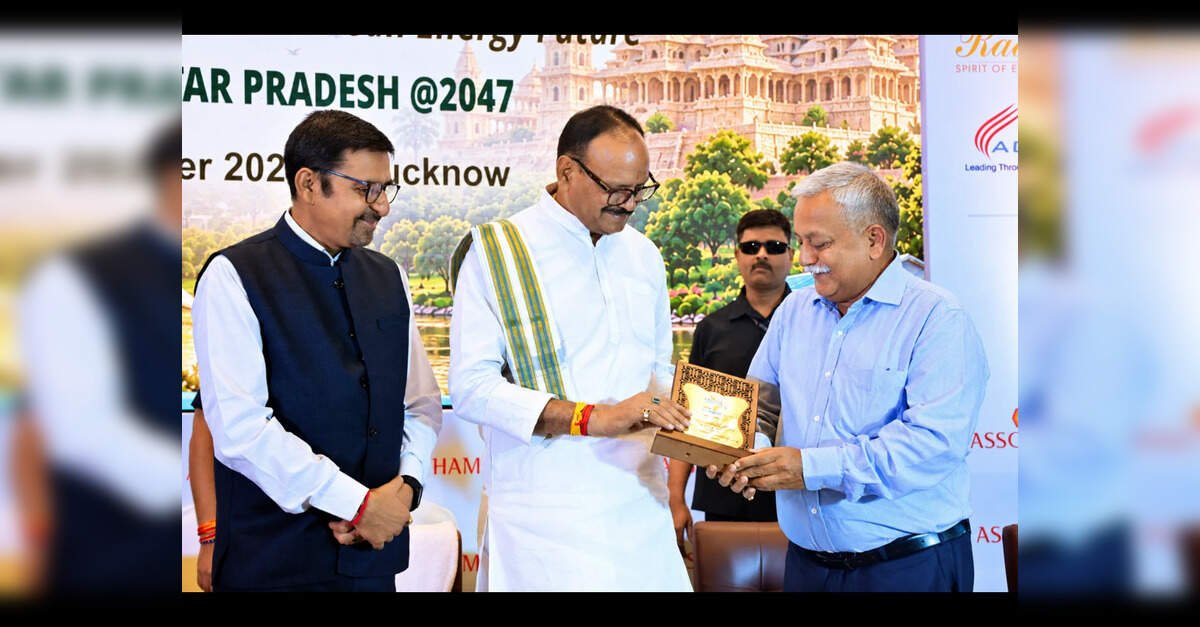
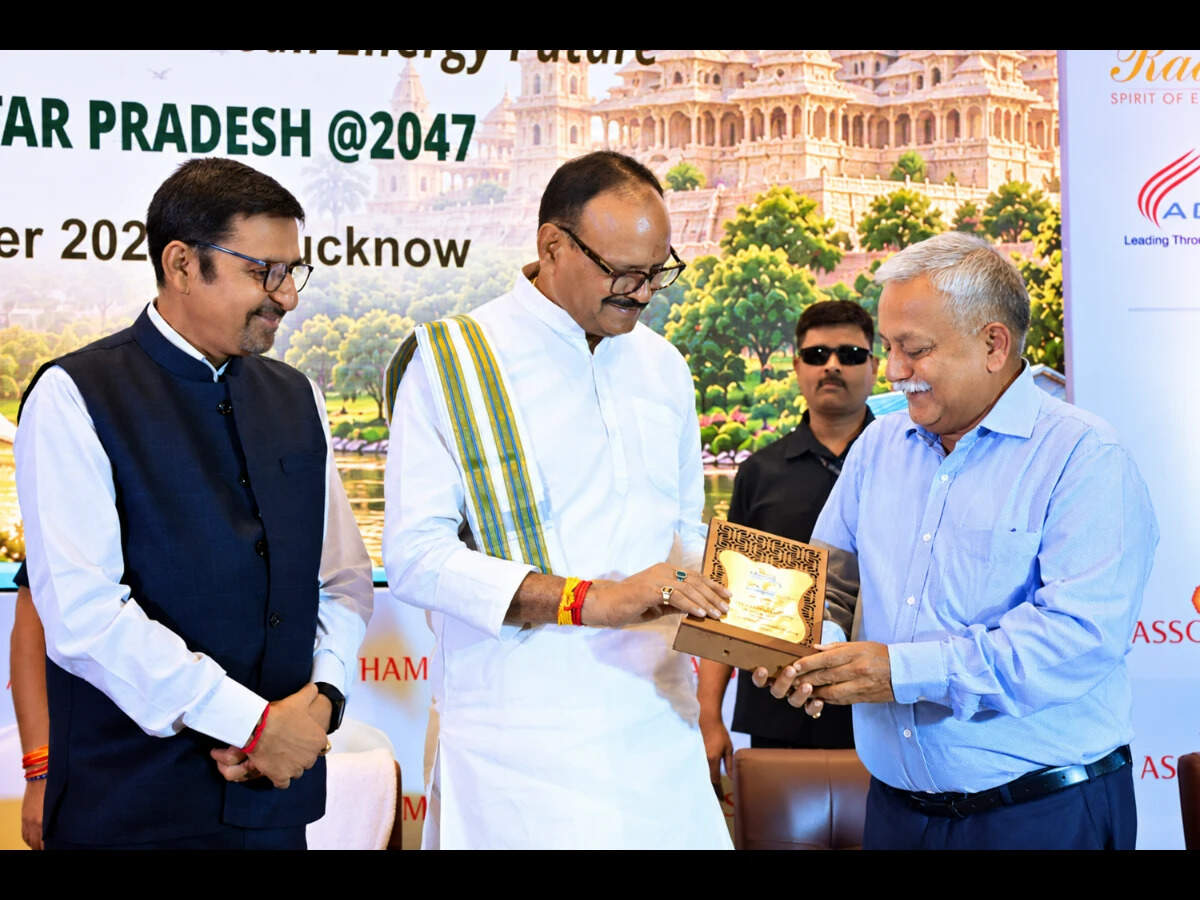
    Deputy Chief Minister Brajesh Pathak, who attended the event as chief guest, said the state was stepping up investment in renewable energy, which he described as a priority sector.
    Deputy Chief Minister Brajesh Pathak, who attended the event as chief guest, said the state was stepping up investment in renewable energy, which he described as a priority sector.

    Uttar Pradesh is looking to strengthen its renewable energy ecosystem to support industrial expansion and agricultural growth, with the state government signalling continued investment in clean energy infrastructure, green hydrogen and emerging energy technologies.

    The focus was highlighted at Uttar Pradesh Urja Sangam 2026, organised by the ASSOCHAM India in association with the Uttar Pradesh New and Renewable Energy Development Agency (UPNEDA) and Invest UP. The conclave brought together government representatives, industry stakeholders and financial institutions to discuss opportunities across manufacturing, project execution and power offtake.

    Renewable energy push gathers pace

    Deputy Chief Minister Brajesh Pathak, who attended the event as chief guest, said the state was stepping up investment in renewable energy, which he described as a priority sector. He pointed to the expansion of the sector since 2017, including the establishment of new distribution units and progress in grid integration, as part of the state’s efforts to reduce carbon emissions.

    Pathak also highlighted India’s role in establishing the International Solar Alliance and underscored the importance of central government programmes such as the PM Surya Ghar Muft Bijli Yojana and PM-KUSUM in advancing solar adoption.

    These initiatives, he said, were encouraging farmers to use available land for solar power generation while reducing their electricity costs. He also said Uttar Pradesh had emerged as the country’s leading state in rooftop solar installations.

    Biogas and green energy open investment avenues

    Awanish Kumar Awasthi, Advisor to the Chief Minister, said Uttar Pradesh offered significant opportunities for investment in green energy, adding that the state was well placed to expand its sustainable energy ecosystem. He also expressed confidence in India’s potential to emerge as a global leader in the sector.

    Highlighting the state’s compressed biogas (CBG) ecosystem, Awasthi said Uttar Pradesh had 37 CBG plants installed or operational, with a combined production capacity of approximately 237 tonnes per day (TPD).

    He also pointed to the Centre’s GOBARdhan initiative, which seeks to convert cattle dung, agricultural residue and other organic waste into commercially valuable products, including biogas, compressed biogas and organic manure.

    The potential to link agricultural waste management with clean energy production offers another avenue for investment, particularly as the state looks to develop a broader ecosystem around bioenergy and other low-carbon fuels.

    Green hydrogen and electrolysers in focus

    A key panel at the conclave examined electrolyser manufacturing and green hydrogen, with discussions centred on technology, policy frameworks, market opportunities and investment prospects.

    The panel brought together Sandeep Singh Chadha, Chief of Staff and Vice President, Growth and Strategy, SAEL; Zeeshan Raza, Deputy General Manager at Tata Motors; Rohit Mahajan, Assistant General Manager at J&K Bank; Himanshu Joshi, Assistant Sales Manager at IDFC FIRST Bank; and Mallika Modi, Director and Chief Business Development Officer at Zero Footprint Industries Ltd.

    The participation of industry representatives and financial institutions reflected the importance of linking technology development and manufacturing with access to capital, commercial viability and the development of markets for green hydrogen. These factors will be central to building a competitive domestic electrolyser manufacturing ecosystem and scaling green hydrogen projects.

    Solar manufacturing and project execution

    A separate session focused on solar manufacturing and project execution, covering floating solar, solar manufacturing policy and industry readiness, as well as the implementation of government programmes designed to expand solar adoption.

    Discussions covered the PM Surya Ghar scheme, PM-KUSUM and PM-SSY, with the broader agenda addressing the policy and execution requirements for scaling solar manufacturing and deployment. The session highlighted the importance of translating policy support into investment, manufacturing capabilities and projects that can be implemented at scale.

    Linking clean energy with agriculture

    Agriculture also featured in discussions on the transition to cleaner energy. Awasthi highlighted inefficiencies in conventional fertiliser use, noting that a significant proportion of nitrogen applied through urea does not reach crops. He also referred to the growing use of green ammonia, which can play a role in reducing the carbon intensity of fertiliser production.

    The intersection of renewable power, green hydrogen, ammonia and bioenergy could create opportunities across manufacturing, agricultural inputs and waste-to-energy projects, provided these technologies can be scaled commercially.

    Join the community of 2M+ industry professionals.

    Subscribe to Newsletter to get latest insights & analysis in your inbox.

    All about ETEnergyworld industry right on your smartphone!

  • GSFC seeks joint venture partner for green ammonia factory in Gujarat

    GSFC seeks joint venture partner for green ammonia factory in Gujarat

    Shambhavi Anand

    Gujarat State Fertilizers and Chemicals plans to develop a green ammonia plant at its Sikka facility in Jamnagar, with an annual capacity of at least 500,000 tonnes.
    Gujarat State Fertilizers and Chemicals plans to develop a green ammonia plant at its Sikka facility in Jamnagar, with an annual capacity of at least 500,000 tonnes.

    Gujarat State Fertilizers and Chemicals (GSFC) is looking for a joint venture partner to set up a green ammonia plant with an annual capacity of at least 500,000 tonnes at its Sikka facility in Jamnagar, Gujarat, as India steps up efforts to replace fossil fuel-based ammonia used in fertiliser manufacturing.

    The Gujarat government-promoted company is looking at joining hands with Indian and overseas companies, investors and consortiums to develop the project, which it aims to commission before December 2030.

    GSFC is seeking partners who can bring investment, technology and renewable energy expertise, along with long-term purchase commitments from potential customers. The company is particularly targeting export markets in Europe, Japan and South Korea.

    According to the company’s proposal, the project would require about 2-3 gigawatts of solar and wind power capacity to produce an estimated 90,000-100,000 tonnes of green hydrogen annually, which would then be used to manufacture ammonia.

    GSFC plans to sell about 90 per cent of the proposed output to overseas and domestic customers, while using the remaining 10 per cent in its own fertiliser operations. The proposed joint venture structure allows GSFC to hold up to 51 per cent equity, although the final terms will depend on discussions with prospective partners.

    Join the community of 2M+ industry professionals.

    Subscribe to Newsletter to get latest insights & analysis in your inbox.

    All about ETEnergyworld industry right on your smartphone!

  • Prozeal Green Energy to handover 100 MW RE project to European IPP in ₹460 crore deal

    Prozeal Green Energy to handover 100 MW RE project to European IPP in ₹460 crore deal

    Gujarat-based Prozeal Green Energy is an independent power producer (IPP) and provides engineering, procurement, and construction (EPC) in the renewable energy space.
    Gujarat-based Prozeal Green Energy is an independent power producer (IPP) and provides engineering, procurement, and construction (EPC) in the renewable energy space.

    Prozeal Green Energy has signed an agreement to hand over a 100-megawatt solar project to a European entity in a ₹460 crore deal.

    The proposed transaction remains subject to necessary approvals, Prozeal Green Energy said in a statement.

    The company said it has entered into a framework agreement with a European IPP (independent power producer) to divest a 100 MW solar project in Gujarat for about ₹4,600 million (₹460 crore).

    The project is currently scheduled to become operational in 2027.

    Manan Thakkar, co-founder and Managing Director of Prozeal Green Energy, said demand for renewable energy solutions is growing in India’s commercial and industrial sector, and this partnership is structured to meet those needs.

    Gujarat-based Prozeal Green Energy is an independent power producer (IPP) and provides engineering, procurement, and construction (EPC) in the renewable energy space.

    • Published On Oct 9, 2026 at 03:39 PM IST

    Join the community of 2M+ industry professionals.

    Subscribe to Newsletter to get latest insights & analysis in your inbox.

    All about ETEnergyworld industry right on your smartphone!

  • Swastika Infra gets over ₹600 crore order from Maharashtra power distribution company

    Swastika Infra gets over ₹600 crore order from Maharashtra power distribution company

    Swastika Infra has secured a ₹615.76 crore contract from MSEDCL to upgrade power distribution infrastructure in Maharashtra’s Bhandup Zone.
    Swastika Infra has secured a ₹615.76 crore contract from MSEDCL to upgrade power distribution infrastructure in Maharashtra’s Bhandup Zone.

    Swastika Infra Ltd has secured an order worth over ₹600 crore from power distribution company MSEDCL for the development of distribution infrastructure and system-strengthening works.

    The scope includes developing new substations, HT/LT lines, and distribution transformers; augmenting existing infrastructure; underground cabling; renovation works; GIS mapping; asset tagging; and other allied works, the EPC player in the power T&D segment and renewable sector said in a statement on Thursday.

    In electrical systems, HT stands for high tension (operates at voltages above 1,000 volts), and LT for low tension (1000 volts and below).

    The company said it has secured a Letter of Award (LoA) worth about ₹615.76 crore from Maharashtra State Electricity Distribution Company Limited (MSEDCL) to develop distribution infrastructure and carry out system-strengthening works in Bhandup Zone, Maharashtra.

    The order is to be completed in 24 months.

    • Published On Oct 9, 2026 at 03:28 PM IST

    Join the community of 2M+ industry professionals.

    Subscribe to Newsletter to get latest insights & analysis in your inbox.

    All about ETEnergyworld industry right on your smartphone!

  • Aditya Birla Renewables seeks $1.5 billion in rupee loans to acquire Shell unit

    Aditya Birla Renewables seeks $1.5 billion in rupee loans to acquire Shell unit

    ETEnergyWorld Desk

    Aditya Birla Renewables is now exploring longer-term, project-level financing, backed by assets and generally costing less than bridge loans. (Representational image)
    Aditya Birla Renewables is now exploring longer-term, project-level financing, backed by assets and generally costing less than bridge loans. (Representational image)

    Aditya Birla Renewables is seeking $1.5 billion in rupee-denominated loans to fund its $1.8 billion acquisition of Shell’s Indian renewable energy business, aiming to avoid costlier bridge financing, Reuters reported, citing sources familiar with the discussions.

    The renewable energy arm of the Aditya Birla Group had earlier secured a $1.6 billion bridge loan commitment from MUFG Bank to finance the acquisition of Solenergi Power, a Shell unit that includes the Sprng Energy group companies.

    The two companies agreed to the deal in July.

    Aditya Birla Renewables is now exploring longer-term, project-level financing, backed by assets and generally costing less than bridge loans. The proposed loans are expected to have a tenor equivalent to about 80 per cent of the projects’ lifecycles, a source said.

    The financing is likely to be split across 17-20 special purpose vehicles holding individual projects, including operational assets and projects under construction, the report added.

    Bridge loans are short-term borrowings used to meet immediate funding needs and typically carry higher borrowing costs, while longer-term project financing is backed by assets and reduces the cost of funding. Rupee-denominated loans are borrowed and repaid in Indian currency, which can help reduce foreign exchange risk compared with dollar-denominated borrowing.

    Banks approached for project financing

    Aditya Birla Renewables has approached several Indian lenders, including State Bank of India and HDFC Bank, for the proposed loans, according to the report.

    The company is not immediately required to pay Shell because the transaction has yet to close, giving it time to finalise the financing structure.

    Aditya Birla Renewables is yet to comment on the matter. MUFG Bank, SBI and HDFC Bank also did not respond to requests for comment.

    The sources declined to be identified, saying they were not authorised to speak to the media.

    Join the community of 2M+ industry professionals.

    Subscribe to Newsletter to get latest insights & analysis in your inbox.

    All about ETEnergyworld industry right on your smartphone!