Category: Electric Vehicles and Battery Technology

  • First Look: Alpine PS1 concept looks refreshingly different

    First Look: Alpine PS1 concept looks refreshingly different

    The Alpine PS1 concept, officially named A310 VISION, made its world premiere at the 2026 Paris Motor Show, where we got a closer look at this retro-futuristic reinterpretation of the original A310 and how the 1971 sports car might look if reimagined for the modern era.

    Design

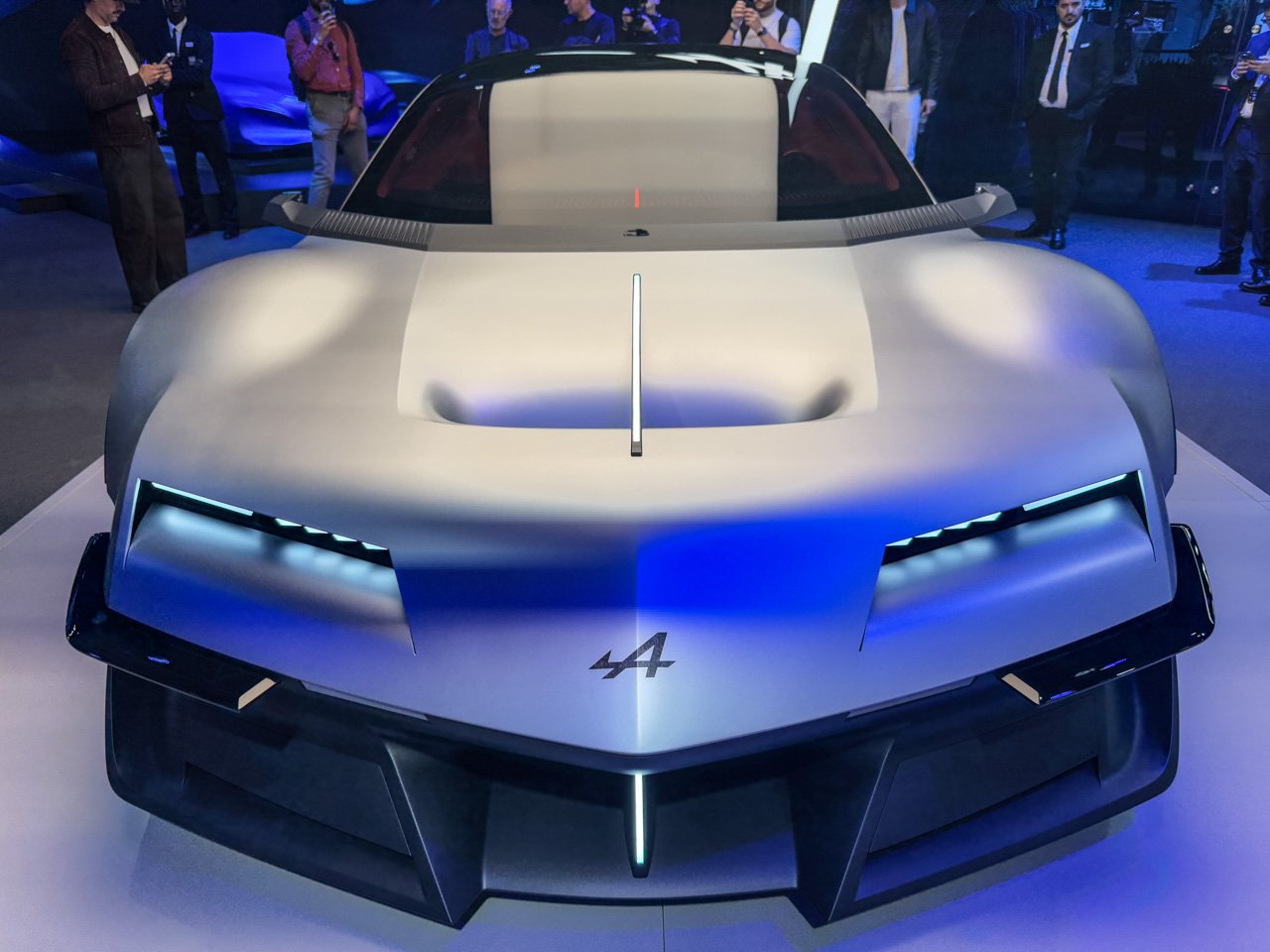
    The A310 VISION’s dramatic proportions, sharp detailing, and contrasting silver and black surfaces give it a futuristic look that brings cyberpunk imagery to mind.

    Ultra-slim headlights sit deep within sharply cut recesses, creating what Alpine calls a “pop-down” effect and giving the concept an intense expression above its prominent splitter and sculpted lower intake. The bonnet incorporates an “S-duct,” while a central “Y zero” blade draws the eye toward the rear. 

    Alpine PS1 Concept front three quarter
    Alpine PS1 Concept side
    I particularly like the central lighting theme, with aligned strips on the front intake, bonnet, dashboard and rear deck creating a visual thread that ends in two vertically stacked red lights below the tail.

    A low, sweeping roofline flows into pronounced rear shoulders, while muscular wheel arches and deeply sculpted lower bodywork give the A310 VISION a powerful stance. The bodywork combines aluminium panels with a black lower section featuring an organic treatment inspired by Formula 1. 

    Triangular three-spoke wheels bring a retro-futuristic touch to the A310 VISION, contrasting with the more intricate wheel designs common on contemporary concepts. Their triangular shape references the full-metal wheels fitted to early Alpine A310 models. I noticed a staggered setup with 245/35 R20 tyres at the front and wider 275/35 R21 tyres at the rear.

    Alpine PS1 Concept rear three quarter
    The concept’s extensive wraparound glazing is its most captivating feature to me, with a curved divider splitting each door window and adding to the cockpit-like appearance

    The smooth rear deck contrasts with a dramatically sculpted lower section, where sharp fins, deep channels and partially exposed rear tyres give the A310 VISION a race-car-inspired finish.

    A broad rear wing sits above segmented red lights and illuminated Alpine lettering, adding another striking layer to the concept’s wide, low tail. Alpine says the two-part split rear wing uses transparent detailing inspired by ice and mountains, while its blade-shaped rear lights incorporate an aerodynamic downforce function. 

    Interior

    Getting inside, the cockpit feels like a visual extension of the exterior design. The floating instrument display combines three circular readouts with red illuminated accents, complementing the cabin’s sci-fi appearance and sporting character.

    Alpine PS1 Concept interior
    Alpine PS1 Concept instrument cluster steering
    Alpine PS1 Concept seat
    My favourite interior detail is the sports seats’ wide, cylindrical headrests, whose large circular end pieces remind me of the speakers on a portable boombox. 

    The interior is built around bold colour blocking, organic forms and physical controls inspired by high-fidelity audio equipment. My favourite interior detail is the sports seats’ wide, cylindrical headrests, whose large circular end pieces remind me of the speakers on a portable boombox. 

    Specifications

    The Alpine A310 VISION measures 4,550 mm (179.1 inches) long, 1,180 mm (46.5 inches) high and 2,030 mm (79.9 inches) wide at its broadest point at the rear, with a 2,450 mm (96.5-inch) wheelbase. 

    Alpine PS1 Concept rear three quarter
    Alpine A310 VISION showcases the creative possibilities of the new Alpine Performance Platform (APP), which is designed to support different sports-car proportions and layouts.

    Pricing & Availability

    Alpine PS1 Concept rear

    The A310 VISION is a one-off design study celebrating the original A310’s heritage and is not intended to become a production model.

  • First Look: Peugeot RCZ Vision hints at the comeback of a familiar name

    First Look: Peugeot RCZ Vision hints at the comeback of a familiar name

    At the 2026 Paris Motor Show, we attended the public premiere of the Peugeot RCZ Vision, and here are our observations following our time with the vehicle.

    Design

    The Peugeot RCZ Vision previews a successor to the iconic RCZ coupé (2009–2015). It features sculpted sides, pronounced shoulders and a low roofline. Horizontal three-claw lighting sits beneath compact LED headlights, while the front bumper incorporates RCZ graphics.

    Peugeot RCZ Vision front three quarter
    To my eye, the exterior feels relatively close to something Peugeot could put into production, with sharp detailing that does not overwhelm the overall shape.

    The double-bubble roof and slim cabin arches recall the original RCZ. Forged-aluminium wheels measure 21 inches at the front and 22 inches at the rear. An active rear spoiler remains concealed when stationary.

    Seeing the Peugeot Vision RCZ in person, I was struck by how compact it looks despite its bold, muscular styling, with proportions that seem well suited to Europe’s narrower streets.

    Front

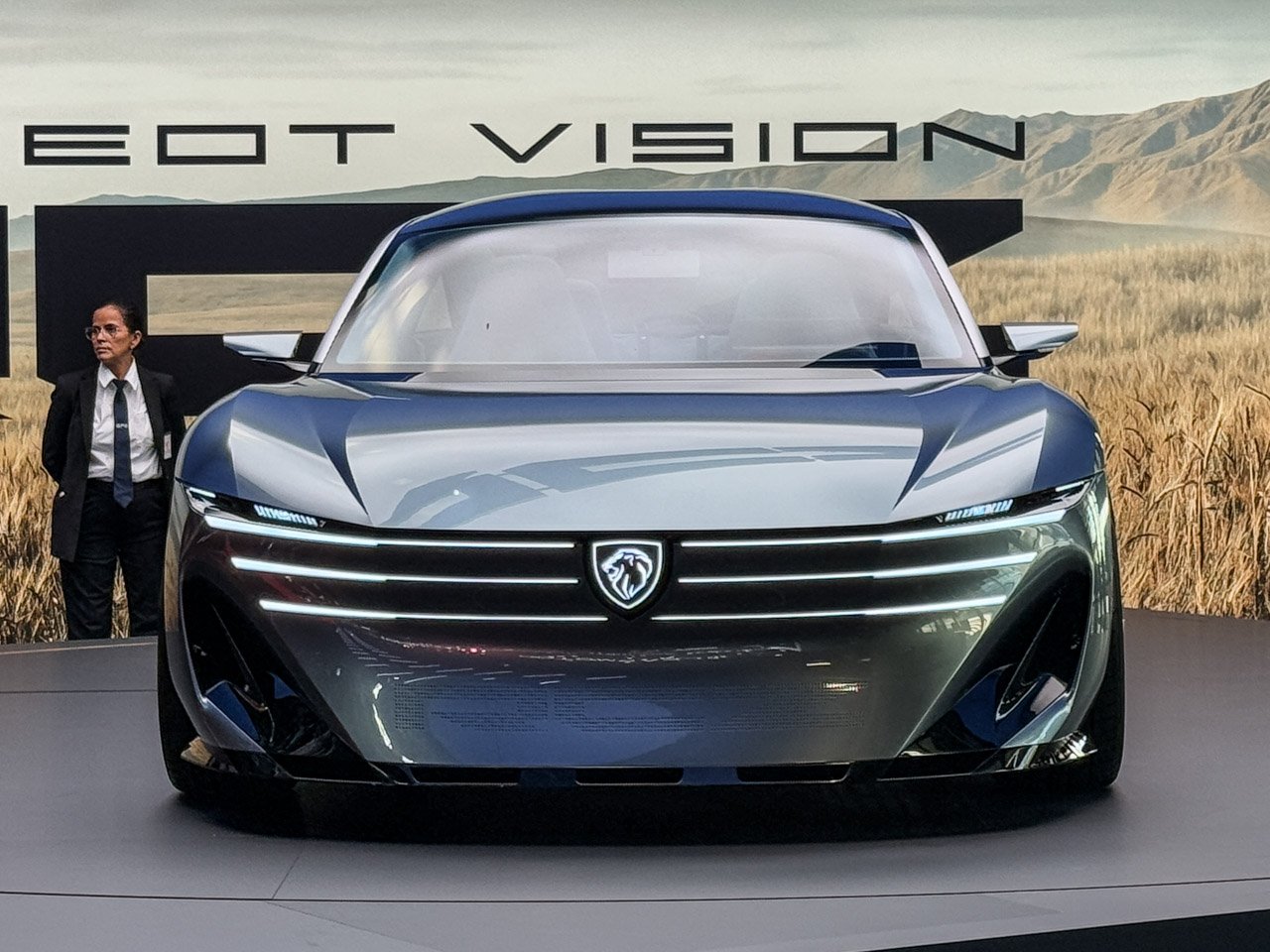
    What stood out most to me was the elegant reinterpretation of Peugeot’s three-claw signature, with three slim horizontal light strips on either side of the illuminated lion badge. Together, they give the broad, subtly V-shaped nose a clean, harmonious look.

    Meanwhile, the narrow headlights above contain an intricate zigzag pattern. Perforated RCZ lettering sits low on the bumper, above a row of angular openings, with tall, slanted recesses at the corners adding a sportier edge.

    Side

    The Peugeot Vision RCZ combines muscular rear haunches with open, geometric wheel designs that keep its electric identity visually understated.

    I also noticed that the roof remains relatively level over the front seats before descending more sharply towards the rear, suggesting less of a compromise in front headroom than its low stance might imply.

    Peugeot RCZ Vision side
    The proportions of Peugeot Vision RCZ give me the impression of an everyday 2+2 coupe in the mould of the Audi TT, combining a sporty character with occasional rear-seat use

    The sculpting beneath the doors caught my attention, with a deeply recessed section flowing into a pronounced lower blade. I also like the angular side glazing and sizeable rear quarter windows, which could help the rear seats feel less enclosed if Peugeot carries this design into production.

    Rear

    The roof and rear glass flow into a smooth, sloping tail, where three slim light strips on each side sit almost flush with the bodywork around illuminated Peugeot lettering. The treatment looks particularly sleek to me.

    Peugeot RCZ Vision rear three quarter
    The angle of the tail and neatly integrated lighting bring the 992-generation Porsche 911 to mind.

    A concave bumper, dark corner recesses and perforated RCZ lettering give the Peugeot Vision RCZ a sporty finish without making the rear look overly busy.

    Interior

    The RCZ Vision previews a new Peugeot i-Cockpit, with the Hypersquare steering control central to its onboard experience.

    Peugeot RCZ Vision steering
    Peugeot RCZ Vision interior
    Positioned right above Hypersquare, the Peugeot i-Cockpit transparent display presents all the information the driver needs directly within their line of sight.

    Compared with the exterior, the Peugeot Vision RCZ’s cabin feels much more experimental, and I would expect it to need greater changes for production.

    A slim dashboard stretches across the cabin, while the rectangular steering control features four circular openings around an illuminated Peugeot badge. Circular motifs also appear in the seats, pedals and floor detailing, giving the interior a consistent and unusual design theme.

    Peugeot RCZ Vision front seats legroom
    Peugeot RCZ Vision seats
    The four-seat cabin features light-blue Alcantara and recycled leather. Rear seatbacks fold to expand luggage space, while unused air vents retract into the dashboard.

    The instrument display particularly interests me, pairing a slim transparent panel with graphics that recall traditional analogue dials.

    A portrait-oriented central touchscreen adds a more contemporary touch, while a floating, wave-shaped centre console brings some softness to the cabin’s technical design. The central screen can switch off and virtually disappear, while physical aluminium controls sit on a frosted-glass console.

    Specifications

    The RCZ Vision uses an architecture based on the STLA One platform. Steer-by-wire replaces the mechanical connection between the steering control and wheels.

    Steer-by-wire and Hypersquare steering wheel should lead to quick and easy manoeuvres, without requiring the driver to move their hands or make multiple turns of the steering control

    Peugeot RCZ Vision steering
    I find the overall treatment inspiring, with enough distinctive ideas to give a production RCZ an interior of its own.

    Peugeot quotes 500 hp and up to 600 km of range. Its 110 mm-thick solid-state battery uses a 1,000 V architecture, enabling a claimed 10-80% charge in 10 minutes.

    Target WLTP combined consumption stands at 11.5 kWh/100 km, subject to confirmation.

    Price

    Peugeot RCZ Vision center console
    The concept revives a name associated with the original RCZ coupé, which was on sale from 2009–2015.

    Peugeot has not announced a price or production launch date for the RCZ Vision yet. More than a decade after its discontinuation, the RCZ returns as a showcase for the brand’s future, although a showroom comeback remains unconfirmed at the time of filing.

  • First Look: Citroën 2CV-inspired future E-Car concept wants to go back to the basics

    First Look: Citroën 2CV-inspired future E-Car concept wants to go back to the basics

    We checked out the Citroën 2CV-inspired future E-Car concept at its world premiere, which took place at the Paris Motor Show. The concept is expected to enter production by 2028 as an affordable EV costing around £13,000, and here’s everything we observed.

    Design

    The design of the Citroën 2CV-inspired future E-Car concept stays true to the original 1948 model, reinterpreted in an all-new electric city car. On first impressions, the rounded silhouette and vintage detailing give it an unmistakable connection to its predecessor.

    Citroën 2CV-inspired future E-Car concept front
    Citroën 2CV-inspired future E-Car concept bonnet details
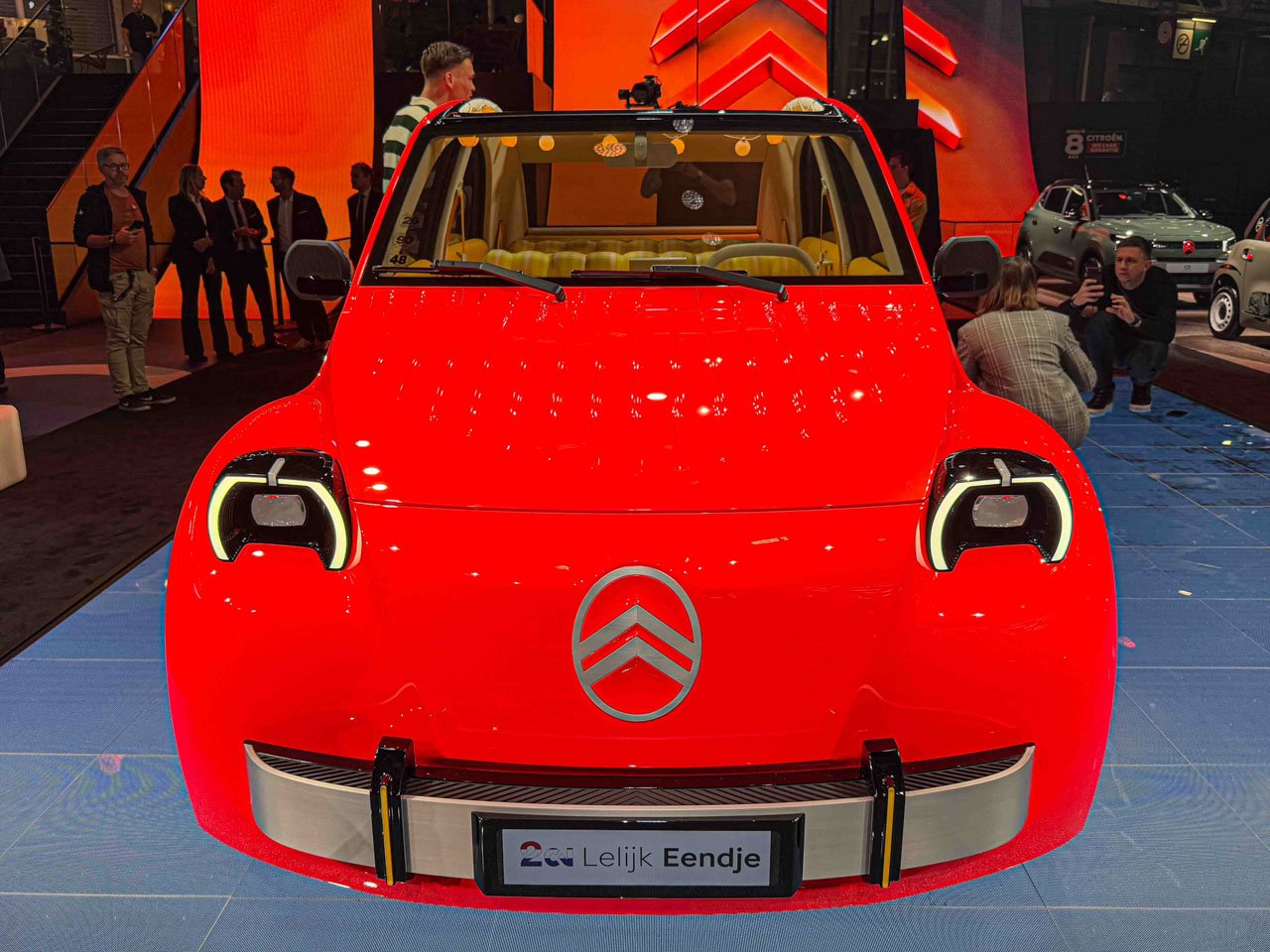
    Eye-like headlights and an oversized Citroën badge give the 2CV concept a friendly face, while grooves running along the bonnet and a simple silver bumper reinforce its retro character.

    The front-end design is dominated by domed headlights mounted high on the front fenders, much like the bug-eyed original 2CV. We noted deep longitudinal ribs on the bonnet, while open channels on top of the front wings add another nostalgic link to historic versions.

    Citroën 2CV-inspired future E-Car concept side
    The arched roofline and pronounced wings recall the original 2CV, with nearly full wheel covers and three tiny classic 2CV silhouettes on the rear side window completing the nostalgic look.

    The sides carry this retro theme further with large stamped-steel wheels wrapped in Michelin tyres. Up close, the classic body lines are quite apparent and do well to maintain the distinctive profile of the famous ‘Tin Snail’

    Citroën 2CV-inspired future E-Car concept rear
    Citroën 2CV-inspired future E-Car concept rear three quarter
    A sloping black tailgate and rolled-back fabric roof preserve the old-school silhouette, while slim vertical lights add a modern touch.

    Pricing & Availability

    The Citroën 2CV-inspired future E-Car concept is a preview of the production version slated to arrive by 2028 as part of the Stellantis “E-Car project”.

    Citroën 2CV-inspired future E-Car concept steering
    Citroën 2CV-inspired future E-Car concept interior front legroom
    Citroën 2CV-inspired future E-Car concept passenger dashboard
    A vintage radio-style audio panel and a centre console resembling a wicker picnic basket add to the charm, alongside a slim digital instrument display and a centrally mounted screen.

    With a targeted starting price of around €15,000 (£13,000), the production car is likely to be manufactured at the Pomigliano d’Arco plant in Italy, sharing its low-cost architecture with a next-gen electric Fiat Panda. 

    Citroën 2CV-inspired future E-Car concept front seats
    Citroën 2CV-inspired future E-Car concept rear seat legroom
    Plump yellow plaid seats resemble an old-fashioned sofa, giving the cabin a cosy, distinctly retro feel.

  • The Expansion of Electric Vehicle Tech with IDTechEx

    The Expansion of Electric Vehicle Tech with IDTechEx

    Electric vehicles are continuing to play a vital role in decarbonizing the transport industry as they help with the shift away from fossil fuel reliance with their utilization of battery technologies. IDTechEx’s portfolio of Electric Vehicles Research Reports and Subscriptions is home to a well-rounded overview of the electric vehicle sector, and includes different vehicle types, materials, and thermal management strategies.

    Micro EVs for cityscapes

    Micro vehicles including two-wheelers, three-wheelers, and microcars have long been a huge target for electrification, due to their smaller size and presence within cities as well as their use for delivery applications. The many short journeys these vehicles make across built-up areas mean that recharging should not be an issue, as charging stations are likely to be more widely available in cities than in rural areas, while also creating frequent opportunities for regenerative braking. IDTechEx’s report, “Micro EVs 2026-2046: Electric Two-Wheelers, Three-Wheelers, and Microcars“, explores drivers for micro EVs, including their nimble nature and ability to weave through traffic, alongside the lower cost of electrification when compared with larger vehicles like passenger cars and trucks. The smaller battery size and weight mean they can be cheaper to manufacture and maintain, and easier to deploy. Micro EVs, particularly two-wheelers, have a dominant presence across Asia, where they have long been used within big cities. IDTechEx also reports that grants for micro-EV purchasing are in place as an incentive for the movement away from combustion vehicles.

    Materials and thermal management strategies

    While lead-acid batteries are commonly used for micro EVs, lithium-ion batteries are widespread for larger electric vehicles. Li-ion batteries could prove to be a better alternative for micro EVs, with improved performance and less need to be replaced, while also recently being subject to reductions in price. With multiple Li-ion chemistry options for EVs ranging from NMC, LFP, and LMFP, depending on vehicle type or performance requirements, the landscape for EV battery development is sizable. The increase in global environmental regulations affecting the EV market, including emission regulations, is also pushing uptake, and raising battery material demand globally. IDTechEx’s report, “Materials for Electric Vehicle Battery Cells and Packs 2026-2036: Technologies, Markets, Forecasts“, predicts that the global material demand for EV battery materials will reach 22.2 million tonnes by 2036, growing at a compound annual growth rate of 11.8%, highlighting the expected success of the EV market.

    Many of the materials accounted for within this 2036 figure are those for thermal management systems within electric vehicles, which are necessary to ensure risks of thermal runaway and fires are minimized. Batteries, motors, and other EV components each have their own optimal operation temperatures, with IDTechEx’s report, “Thermal Management for Electric Vehicles 2026-2036: Materials, Markets, and Technologies“, exploring each component individually and the ranges either side of their optimal temperatures at which performances may begin to decline or lose efficiency.

    Thermal interface materials, fire protection materials, thermal management strategy, and heat pumps and architecture are four battery thermal management categories outlined within the report, each with their own intra-competitiveness between materials. Ceramics, mica, aerogels, foams, encapsulants, and coatings, are just some of the material options for fire protection, each with their own benefits and drawbacks. For thermal management, air (passive or forced), liquid (water-glycol), refrigerant, phase change materials, and immersion are all potential strategies, showing the vast landscape for EV thermal management that exists as a result of the importance of safety prioritization. IDTechEx’s report dives into forecasts for the uptake of different material types spanning the next decade.

  • Sun-Powered Cars and Seaweed Plastic Picnics – Sustainable Homes

    Sun-Powered Cars and Seaweed Plastic Picnics – Sustainable Homes

    Living in a home that harnesses the power of nature is becoming increasingly possible. Sourcing power from solar energy and using bioplastics and chemicals made from bio-sources, are just some examples of how sustainable switches in everyday life could contribute to a healthier environment. IDTechEx’s portfolio of Sustainability Research Reports and Subscriptions is home to the latest research into the sectors prioritising sustainability.

    An infographic depicts scenes of bioplastics, biomanufacturing, electric vehicles, and photovoltaics

    Source: IDTechEx.

    Powering home appliances with the sun

    Watching the TV or turning on the lights can be the product of harnessing sunlight with the implementation of photovoltaic technology and its integration into a home’s energy system. IDTechEx’s report, “Perovskite Photovoltaics 2027-2037: Technologies, Markets, and Trends“, explores some of the most recent solar power technologies, including the use of perovskites.

    Perovskites are a group of materials with a specific material, with the particular perovskite used in photovoltaic applications being known for specific electronic and optical properties. The development of deposition techniques for perovskite, including thin-film methods such as sheet-to-sheet or roll-to-roll, make it ideal for scalability prospects, automation, and streamlining. Perovskite is known within the photovoltaic industry for high efficiency and performances similar to silicon photovoltaics, though comes with some stability challenges outlined within IDTechEx’s report. Perovskites can therefore be used as a performance enhancer alongside traditional silicon technologies.

    The use of solar panels globally is becoming increasingly attractive as one means to decarbonize the energy sector, and to provide a means of generating renewable energy that can be used to power all kinds of appliances within the home. Despite initial instalment costs, solar technology could also be a long-term solution to high energy costs.

    Solar panels are shown on the roof of a house on a sunny day

    Source: IDTechEx.

    EVs and lowering fossil fuel reliance

    Renewable energy like solar could not only power main appliances within the home but help support an at-home electric vehicle recharging station. This could contribute to lowering the household carbon footprint by using electricity generated by the sun rather than relying on the grid. Driving an electric car to and from work or to run errands could drastically reduce the number of emissions being produced on short everyday journeys and have significant benefits on the environment as the switch is made from traditional ICE vehicles around the world, particularly in China, the USA, and Europe, where the highest number of electric car sales are made.

    Electric vehicles in general have been an up-and-coming way to decarbonize the transport sector for some time, with regulations and incentives to drive their uptake having been implemented globally by governments to encourage a move away from fossil fuel reliance. Electric cars in particular makeup the largest electric vehicle segment in terms of battery demand and value, with 70 million electric passenger car sales expected in 2045, up from 14.4 million in 2023, representing a compound annual growth rate of 9.8% between these years.

    Plug-in hybrid (PHEV), fuel cell electric (FCEV), and other types of alternatives to fully electric vehicles are also on the horizon in an effort to decarbonize the industry, though none currently provide much competition with battery electric. IDTechEx’s portfolio of Electric Vehicles Research Reports and Subscriptions covers the entire electric vehicle market, from passenger cars to trucks and micro EVs.

    An electric vehicle is being charged at a home charging station

    Source: IDTechEx.

    Bio-sourced chemicals

    Inside the home, makeup and detergents can be manufactured from microorganisms and natural sources, rather than originating from fossil fuels. White biotechnology is one branch of biotechnology that uses living cells and microorganisms as feedstocks to produce things like cosmetic additives, chemicals, and textiles, meaning everyday items could be created with natural sources to support overall household sustainability.

    With the increased uptake of white biotechnology, or industrial biomanufacturing, many sectors are hoping to improve sustainability and achieve carbon-neutral goals, so carbon footprints could start to decrease. Reductions in the harmful environmental effects of the traditional manufacturing and end of life processes of many products could also be a possibility. IDTechEx’s report, “Biomanufacturing Specialty Chemicals 2026-2036: Technologies, Markets, Players, Forecasts“, covers speciality chemicals in particular, which are high-value products with specific characteristics and performance qualities.

    Chemicals made from natural origins using white biotechnology are lined up

    Source: IDTechEx.

    Bioplastic picnics and packaging

    Disposable plates and cutlery made from seaweed could be the next thing for making picnics and general food packaging more sustainable. With many bioplastics being biodegradable, they can contribute to a circular plastic economy where they can decompose and then be used for the production of the next round of bioplastics as feedstock. Within the home, non-biodegradable bioplastics could also make a difference to decarbonizing the plastics sector, as they are still made with natural feedstocks as opposed to being of fossil fuel origins. IDTechEx’s report, “Bioplastics 2026-2036: Technology, Market, Players, and Forecasts“, states that over 99% of plastics are still made from monomers derived from petrochemicals, meaning the industry has a long way to go to reduce its carbon footprint and improve its sustainability.

    Alternative bioplastics such as PLA and PHAs are biodegradable types of bioplastics, which are chemically and mechanically different to traditional plastics. These types, while offering great benefits, are costly to produce and may struggle to compete. ‘Drop-in’ bioplastics, on the other hand, are non-biodegradable types, made using biomass feedstocks which are chemically identical to fossil fuel feedstocks. These bioplastics have the same mechanical properties as regular plastics, meaning they can use existing production methods.

    For more information on sustainable innovations across a wide number of sectors including energy, transportation, and plastics, visit IDTechEx’s portfolio of Sustainability Research Reports and Subscriptions for the latest research.

  • Electric Vehicles in Mining: Overview Video

    Electric Vehicles in Mining: Overview Video

    Diesel mining machines make up over 1% of all global emissions and their electrification will be key to meeting sustainability goals of countries and individual companies.

    As a result, electric vehicles in mining have seen significant interest and investment over the last five years, and in this brief video we cover some of the recent progress in this sector, based on our latest research.

  • IDTechEx Attends Chinese Embassy Reception Celebrating National Day

    IDTechEx Attends Chinese Embassy Reception Celebrating National Day

    On 25 September 2026, IDTechEx Senior Analyst Shihao Fu attended, by invitation, a reception hosted by the Chinese Embassy in the United Kingdom to mark the 77th anniversary of the founding of the People’s Republic of China. Coinciding with the Mid-Autumn Festival, the event brought together guests from across the UK and Chinese communities.

    Source: IDTechEx photo

    Chinese Ambassador Zheng Zeguang addressed the reception, while Baroness Winterton, Parliamentary Under-Secretary of State at the UK Foreign, Commonwealth and Development Office, spoke on behalf of the UK Government. More than 500 guests attended, including representatives from British public life, the diplomatic community, Chinese businesses and organisations, and students. In his remarks, Ambassador Zheng highlighted opportunities for UK-China cooperation in technological innovation, artificial intelligence, new energy and climate action.

    These areas closely align with IDTechEx’s research. As an independent research firm specialising in emerging technologies and their markets, IDTechEx provides reports, subscriptions and bespoke consulting to help clients assess technological developments, understand supply chains and identify commercial opportunities. Our coverage includes robotics and autonomy, electric vehicles, batteries and energy storage, advanced materials, and sensors, combining primary research with global market analysis to inform R&D, investment and strategic decisions.

    IDTechEx aims to strengthen its role in connecting the UK and Chinese technology ecosystems. We help UK and international businesses understand China’s innovation landscape, supply chain capabilities and market opportunities, while supporting Chinese companies in assessing overseas demand, competition and technology applications. Our independent, evidence-based analysis provides a foundation for informed decisions and cross-border collaboration.

    Participation in the reception reflects IDTechEx’s continued engagement with UK-China exchange and industry relationships. We look forward to deepening our dialogue with businesses, research institutions and industry organisations in both countries, bringing local insights into our global research and delivering timely technology and market intelligence to our subscribers.

    Source: IDTechEx photo

  • At the Heart of Batteries – Extracting Lithium With DLE

    At the Heart of Batteries – Extracting Lithium With DLE

    Lithium is a naturally occurring metal sourced for its demand across numerous applications, especially in batteries for electric vehicles and energy storage. IDTechEx’s portfolio of Advanced Materials & Critical Minerals Research Reports and Subscriptions is home to the latest research into the methods of lithium extraction and its most common applications.

    A lithium overview

    Lithium is a naturally occurring element which can be found in three different sources, including brine, hard rock, and sediment-hosted deposit. Brines make up almost two thirds of global lithium resources, while hard rock ore makes up 20-30% and clays and evaporites 5-10%. Despite these figures, hard rock sources account for approximately 67% of global production as high-grade lithium can be obtained from these sources, which have long been the focus of established mining processes. Only around 33% of lithium is produced from brine, with this source producing much lower grade lithium. Sediment-hosted deposits are responsible for less than 1% of global production, as these methods are not yet commercialized, according to IDTechEx’s report, “Direct Lithium Extraction 2026-2036: Technologies, Players, Forecasts“.

    Hard rock mining and brine evaporation

    Hard rock mining and brine evaporation are both mature technologies which have been commercialized, however both present different challenges which make scalability difficult. Hard rock mining has many negative environmental impacts stemming from energy intensive processes, including heavy mining operations to extract ore from the ground and extensive concentrating and refining processes necessary to produce battery-grade lithium.

    Brine lithium uses large evaporation ponds which are responsible for high water and land consumption, while the process takes between one and two years and only generates a small amount of lithium. Most hard rock lithium is found in Canada, China, and Australia, while brines are mostly found in Argentina, Bolivia, Chile, and China, meaning lithium production is restricted to only a few key regions which control most of the world’s lithium sources. This could potentially cause supply issues for North America and Europe in particular.

    Direct lithium extraction and sustainability

    Direct lithium extraction (DLE) is now being explored as an alternative option to sourcing lithium from brines. DLE processes include the use of specialized lithium-selective materials such as sorbents, solvents, or membranes, which can extract lithium from brines more sustainably and more quickly, in as little as a number of hours or days, without the need for evaporation processes. IDTechEx’s Direct Lithium Extraction report covers six main DLE technologies. These include adsorption, ion exchange, solvent extraction, membrane, electrochemical, and chemical precipitation. Brine DLE also has a typical lithium yield of around 80-95%, which could be over double the yield from brine evaporation.

    Growing lithium demand comes as a result of the Li-ion battery industry seeing increased interest from energy storage and electric vehicle companies, which are also acting in line with sustainability goals and decarbonization regulations worldwide. While DLE uses more energy than brine evaporation, it can be more sustainable overall, with low land usage, no weather dependence, and low-medium water usage.

  • Electric Mining Vehicles Set to Become a US$27 Billion Global Market

    Electric Mining Vehicles Set to Become a US$27 Billion Global Market

    With the mining industry transitioning from diesel to electric machines, this article highlights the key drivers that will further machine electrification, the key challenges that have hampered adoption to date, and the direction the market may take over the next 20 years.


    Over the last 5 years, the global market for mining machines has seen considerable evolution, as decades-old machine technologies are disrupted by the prospect of electrification. Machine manufacturers, mining companies, and governments are now increasingly aligned in their aim of electrifying the mining industry, leading to greater implementation of electric machines in mines today. While the market still faces challenges that will need to be addressed in the coming years, IDTechEx’s new “Electric Vehicles in Mining 2027-2047: Technologies, Players, Forecasts” report details how the global market for electric mining machines is forecasted to grow to over US$27 billion by 2047.

    What is driving the adoption of electric machines?

    With increasing attention being paid to decarbonization and sustainability across global sectors, the mining industry has also come under greater scrutiny. Mining accounts for 2-3% of all global greenhouse gas emissions, with over half of this coming from the direct emissions of diesel mining machines. Therefore, their electrification will go some way towards reducing global emissions and help countries to achieve their sustainability targets.

    On top of their environmental credentials, electric vehicles (EVs) can facilitate operational benefits too. They produce far less heat, noise, and vibration than diesel combustion engines, creating a cleaner and safer working environment. The lack of direct tailpipe emissions also benefits working crews, especially when working underground, and drastically reduces the requirement for expensive and power-hungry ventilation systems. Additionally, EVs have fewer moving parts and less frequent need for repair, while also not consuming any energy while idling or stationary.

    However, the most significant driver leading to electrification in mining is the financial benefits that EVs can offer over diesel. This comes largely through the use of cheaper electricity, with savings able to compound quickly due to the high rate of utilization of many machines (including up to 24/7 operation). IDTechEx’s new report finds that, even though electric machines will come at a greater upfront cost, the savings generated through energy costs are more than sufficient to overturn this and make EVs financially favorable on a total cost of ownership (TCO) basis. This is before other sources of savings are considered, such as reduced maintenance costs and improved drivetrain efficiency.

    Adoption of electric mining machines is driven by environmental, operational, and financial benefits. Source: IDTechEx

    What roadblocks are EVs facing?

    In spite of all the development that has taken place in machine electrification in the last 5 years, the industry still faces considerable technical and market factors that are hampering adoption. In particular, the high utilization rates of mining machines pose significant challenges for both the battery technologies and charging systems used in mining. Most machines are now equipped with batteries large enough to enable around 6 hours of continuous operation before they need to be recharged. This is the result of significant developments made by machine manufacturers in recent years to improve runtimes, but it remains far from the near-constant operation that mining companies are accustomed to with existing diesel equipment. To enable the productivity enhancements that mines demand will call for a combination of larger battery packs, more energy-dense battery technologies, and faster charging systems to minimize downtime.

    Charging in itself poses a challenge for many mines, with those in remote locations often having poor or inconsistent grid access to enable fast charging. Future widespread adoption of EVs in mining will increase electricity loads substantially and demand upgrades to on-site electrical infrastructure. This may include solutions such as BESS installations or microgrids in the longer term.

    At a legislative level, while governments are interested in the decarbonization of mining activities, there has been little regulation to date that is specifically targeted towards the electrification of mining machines. Canada is the only country to have done so, while other regions including China, India, and Australia have catch-all policies targeted at mobility more broadly which have led to some electrification in machines. Crucially, the US has a large mining industry but no regulatory framework to encourage EV adoption in it.

    What does the future hold for electric mining machines?

    Electric machines have already proven their capability to provide environmental, operational, and financial benefits to mines, leading to growing rates of adoption into mining fleets. This adoption is expected to accelerate over the next 20 years as OEMs continue developing vehicle, battery, and drivetrain technologies and as charging infrastructure becomes optimized for the mining environment. Crucially, adoption is likely to be driven less by regulatory pressure and more by the independent adoption of EVs by mining companies.

    The maturation of the battery industry will also be key to growth, allowing large MWh-scale batteries to become more commonplace in the largest electric mining trucks and helping to prolong runtime and improve machine productivity. As battery innovation continues, the falling prices of Li-ion battery packs are expected to make their way into mining, reducing the upfront price premium that EVs come at and potentially growing their adoption further.

    IDTechEx’s market outlook

    IDTechEx’s “Electric Vehicles in Mining 2027-2047: Technologies, Players, Forecasts” report goes into additional detail on all of these factors and more, highlighting how the global market for electric mining vehicles is set to grow to over US$27 billion by 2047. The myriad benefits that EVs offer on mines coupled with continuing technology development, including for batteries and charging, will be key drivers for their adoption and the growth of the industry.

    The IDTechEx report dives deep into key drivers and barriers for adoption, provides benchmarking and case studies of state-of-the-art machine models from key OEMs, financial analysis of machine TCO, and in-depth technology appraisals of batteries, charging systems, motors, and inverters. Granular 20-year forecasts are provided for global mining EV sales (in 1000s of units), battery demand (in GWh), and market size (US$ billion), segmented by region (USA, Canada, Europe, China, Australia, Rest of the World) and by machine type (haul trucks, dump trucks, wheel loaders, underground loaders, underground trucks, mining light vehicles, other mining vehicles).

    For more information on this report, including downloadable sample pages, please visit www.IDTechEx.com/EVMining, or for the full portfolio of related research available from IDTechEx, see www.IDTechEx.com.
  • Biofuels Made from Waste and Turning Alcohol to Jet Fuel

    Biofuels Made from Waste and Turning Alcohol to Jet Fuel

    Biofuels are necessary in helping to decarbonize the entire transport sector, from which around 20% of global emissions are generated. From bioethanol for cars to SAF for planes, the entire fuel market is being re-evaluated in a light of sustainability. IDTechEx’s portfolio of Sustainability Research Reports and Subscriptions covers an entire range of initiatives which aim to significantly lower harmful emissions.

    Bioethanol, biodiesel, and advanced biofuels

    Although electric vehicles are one solution to decarbonizing road transport covered in IDTechEx’s portfolio of Electric Vehicles Research Reports and Subscriptions, for the wider transportation landscape including aviation and shipping, electrification is not a feasible option. Low-carbon fuels, many of which can be drop-in fuels requiring minimal infrastructure changes, will therefore be a better-suited alternative. Bioethanol and biodiesel are also already used globally for cars in gasoline and diesel blends, to reduce the number of harmful emissions created from existing combustion engine vehicles. IDTechEx’s report, “Sustainable Biofuels & E-Fuels Market 2026-2036: Technologies, Players, Forecasts“, goes into further detail.

    Bioethanol is mostly created from sugarcane, while biodiesel is traditionally made from vegetable oils, meaning both are created from natural feedstocks rather than coming from fossil fuels. However, one of the main issues with these feedstocks is the high land and water usage required in their production, which can come at the cost of deforestation and loss of biodiversity. Many traditional 1st generation biofuels are therefore also still responsible for a significant amount of greenhouse gas emissions. According to IDTechEx, government subsidies are now shifting more towards the production of advanced biofuels and e-fuels that generate even less emissions, and as a result, scalability of 1st generation biofuels is currently limited.

    Advanced biofuels encompass 2nd, 3rd, and 4th generation biofuels. 2nd generation biofuels are created from lignocellulose or waste biomass and vegetable oils, as to recycle pre-used materials and to not demand excess land usage, while 3rd generation biofuels are expected to be made from algae, and 4th generation from genetically engineered microorganisms, algae, or even captured CO2. IDTechEx’s report, “Industrial Biomanufacturing 2027-2037: Technologies, Markets, Players, Forecasts“, report covers a whole range of biomanufacturing routes and applications including fuels.

    SAF, HEFA, and alcohol-to-jet fuel

    Sustainable aviation fuel (SAF) for planes is one market seeing significant growth and investment. SAF is created via the HEFA (hydrotreated esters and fatty acids) route, which sees oils and other waste materials treated with hydrogen to remove oxygen and collect hydrocarbons which are chemically the same as regular diesel or kerosene. Globally, there is reportedly a few million tonnes of HEFA- SAF capacity a year, with IDTechEx forecasting the global SAF market to reach US$50 billion in 2036.

    Alcohol-to-jet is an alternative biofuel pathway, which sees ethanol or methanol being upgraded to hydrocarbon fuels, which can then be blended with regular jet fuel. This process sees ethanol and methanol undergoing dehydration, oligomerization, hydrogenation and isomerization, and finally fractional distillation. Details of these processes can be found in IDTechEx’s “Sustainable Biofuels & E-Fuels Market” report.

    Many companies have already begun commercial operation of alcohol-to-jet fuel which IDTechEx states will pave the way for even bigger SAF production capabilities. One of LanzaJet’s facilities has been reported to produce 9 million gallons of SAF and 1 million gallons of renewable diesel a year, highlighting the great scope for further growth within the market and encouraging many other companies to follow suit.

    For more information on the biofuel market and other sustainable initiatives within the transport sector, visit IDTechEx’s portfolio of Sustainability Research Reports and Subscriptions for the latest developments.