India’s electricity transition is entering a new phase. For much of the past decade, policy attention has centred on accelerating renewable energy capacity addition and developing the transmission infrastructure required to integrate large-scale solar and wind projects. These priorities remain critical.
However, the rapid growth of distributed renewable energy is creating a parallel challenge: how to govern and operate an electricity system that is becoming increasingly decentralised.
Distributed renewable energy includes rooftop photovoltaic systems, agricultural solarisation, small captive plants, behind-the-meter generation and other decentralised resources.
Recent policy interventions such as PM-KUSUM and PM-Surya Ghar, along with regulatory innovations including Virtual Net Metering and Group Net Metering, have accelerated the penetration of DRE.
Unlike utility-scale projects, distributed energy assets are geographically dispersed, connected at different points across the distribution network and often involve large numbers of consumers as well as multiple implementing agencies.
The scale of this transition is already significant. During 2025–26, distributed solar accounted for approximately 16.3 GW, or around 36 per cent, of total solar capacity additions in India.
As distributed resources become an increasingly important part of renewable capacity, the electricity system must accommodate greater volumes of variable generation, bidirectional power flows and a significantly larger number of active participants.
The policy question is therefore evolving. It is no longer only about how rapidly renewable capacity can be added, but also about how effectively an increasingly distributed renewable energy system can be integrated and managed, while ensuring that the momentum in utility-scale projects is not adversely affected.
From renewable energy scale to distributed complexity
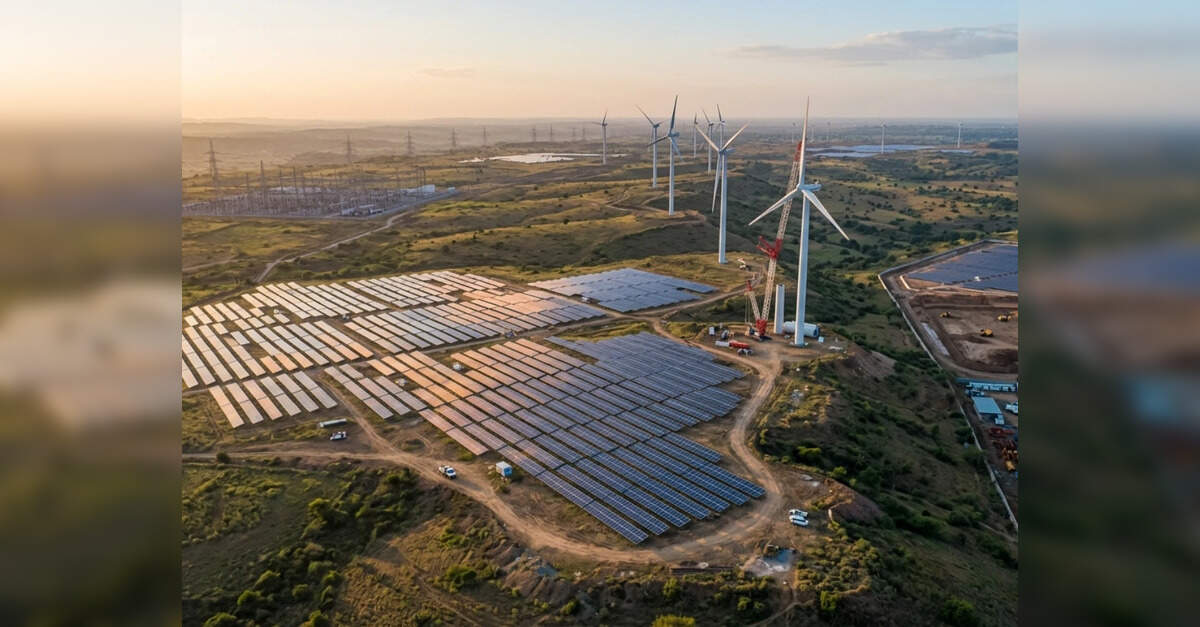
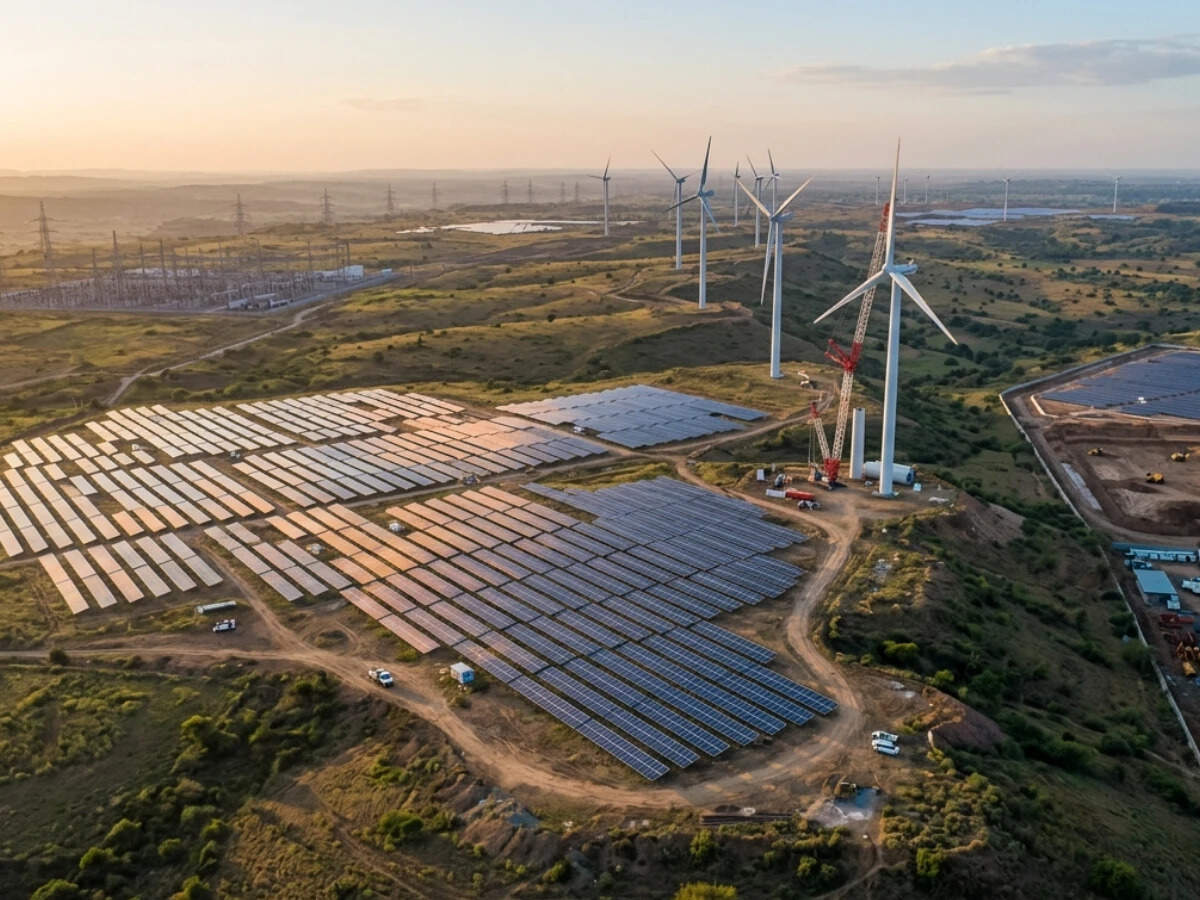
Rajasthan has emerged as one of India’s leading renewable energy states, with an estimated potential of approximately 828 GW of solar and 284 GW of wind energy.
The state has crossed 50 GW of installed renewable energy capacity, including approximately 44 GW of solar capacity, representing around 27 per cent of India’s total installed solar capacity.
But Rajasthan’s renewable energy transition is increasingly moving beyond large utility-scale projects.
Under PM Surya Ghar, rooftop solar adoption has accelerated, with more than three lakh installations achieved in Rajasthan by September 2026.
Agricultural solarisation under PM-KUSUM has also expanded significantly. Against an allocation of approximately 10.5 GW, around 5 GW has been installed, supporting daytime electricity supply to more than 3.34 lakh farmers by 18 August 2026.
These programmes are being complemented by the solarisation of government buildings, distributed generation for public infrastructure through virtual net metering and group net metering mechanisms, and an increasing number of small captive and behind-the-meter generation projects.
These developments represent a significant policy opportunity. At the same time, they fundamentally alter the management challenge.
A utility-scale renewable energy project typically involves a relatively small number of large assets whose location, capacity and generation profile are visible to system operators, including state load dispatch centres or SLDCs.
Distributed energy, by contrast, can involve thousands or even millions of smaller assets spread across the network.
The resulting challenge is fundamentally one of information, coordination and system visibility.
The visibility problem
As distributed renewable energy penetration rises, distribution utilities increasingly need granular information on quite a few factors, including the location and capacity of distributed resources; actual generation profiles; electricity injection at feeder and substation levels; consumer demand patterns; network loading and constraints; and the status of existing and proposed installations.
Without such information, distributed generation can effectively remain invisible from the perspective of system planning.
This creates three important challenges.
First, demand forecasting becomes more difficult as an increasing share of consumer demand is met through distributed renewable generation.
Second, network planning becomes less responsive, because conventional demand-based planning does not fully capture the changes resulting from distributed generation.
Third, renewable energy curtailment may increase, particularly for existing utility-scale projects, when local demand falls because of DRE while utility-scale renewable generation remains high.
Curtailment of renewable energy creates significant financial stress for utility-scale renewable energy projects, since traditional energy PPAs in India generally reward actual delivery of energy units and do not adequately mitigate the risk of financial losses arising from non-delivery caused by curtailment.
The institutional challenge
The visibility challenge is further complicated by institutional fragmentation.
DRE programmes involve multiple stakeholders — central ministries, state agencies, DISCOMs, consumers, developers, vendors and regulators.
Different schemes may operate through separate application processes, databases, inspection procedures and subsidy mechanisms.
For consumers, such fragmentation can mean navigating multiple interfaces while having limited visibility of their application status.
For implementing agencies, it can lead to duplication of data and difficulties in tracking projects across their lifecycle.
For DISCOMs, State Transmission Utilities and SLDCs, fragmented information can restrict access to timely data needed for network planning and system operations.
The conventional approach has often been incremental digitisation, with separate portals developed for individual schemes or administrative functions.
A more fundamental question, however, is whether these interventions can be brought together within a common digital and data architecture.
DRE-PMT: From digitisation to integrated governance
The DRE-PMT is being developed by Rajasthan Renewable Energy Corporation Ltd. (RRECL) to establish a unified digital platform for monitoring the DRE project lifecycle.
Launched on August 13, 2026 by the Energy Minister, Government of Rajasthan, the platform brings together information and workflows that have traditionally remained dispersed across multiple programmes and institutions.
DRE-PMT integrates functions including:
- project registration and monitoring;
- consumer application and tracking;
- technical feasibility and approval workflows;
- inspection and commissioning;
- subsidy and DBT monitoring;
- vendor management;
- rooftop solar and agricultural solarisation programmes;
- generation monitoring; and
- DISCOM-level dashboards and analytics.
Its significance can be viewed from two perspectives.
The first is administrative efficiency.
Standardised workflows, role-based access and centralised monitoring can reduce transaction costs, strengthen accountability and provide greater transparency to both prosumers and state agencies.
The second is system intelligence.
When project-level information is brought together with generation and network information, it can help identify where renewable generation is concentrated, how generation patterns differ across locations and where network constraints could potentially emerge.
This creates the possibility of moving beyond simply tracking individual projects towards developing a more comprehensive understanding of the distributed energy system.
From monitoring to DERMS
A critical distinction must nevertheless be maintained between a DRE monitoring platform and a full Distributed Energy Resource Management System (DERMS).
A monitoring platform primarily provides visibility.
A DERMS is ultimately intended to provide operational intelligence and coordinated management of distributed energy resources.
The evolution can be understood as:
Data → Visibility → Analytics → Forecasting → Optimisation → Active Management
DRE-PMT establishes important foundations for the initial stages of this progression.
Further evolution would require integration with:
- smart-meter data;
- SCADA and distribution management systems;
- geographic information systems;
- weather and renewable generation forecasts;
- battery energy storage;
- electric vehicle charging infrastructure; and
- demand-response resources.
Such integration could eventually allow utilities to forecast distributed generation at the feeder level, anticipate congestion, onboard DRE aggregators, coordinate storage, optimise renewable utilisation and improve voltage and power-quality management.
DRE-PMT can provide the foundational data architecture from which DERMS capabilities can progressively evolve.
Implications for distribution utilities
The growth of distributed renewable energy is changing the traditional architecture of the electricity system.
Historically, electricity systems have largely followed the model:
Generation → Transmission → Distribution → Consumer
The emergence of rooftop solar, agricultural solarisation, storage, electric vehicles and other distributed resources is creating a considerably more complex model:
Grid ↔ Distributed Resources ↔ Consumers (Prosumers)
Consumers are increasingly becoming prosumers, capable of both consuming and supplying electricity.
This transition requires corresponding changes in distribution utility capabilities.
First, planning must become more granular.
Utilities will need to understand changes at feeder, transformer and substation levels rather than relying primarily on aggregate demand growth.
Second, operations must become more data-driven.
Real-time or near-real-time visibility will become increasingly important for forecasting, balancing and congestion management.
Third, digital capability must become part of core utility infrastructure.
Digital platforms can no longer be viewed merely as administrative tools. They are increasingly becoming an essential layer of the electricity system itself.
A policy roadmap for DERMS
The Rajasthan experience suggests that states seeking to integrate DRE at scale could consider a phased approach.
Stage I — Digitalisation: Digitise applications, approvals, inspections and project workflows.
Stage II — Visibility:Create a unified registry of distributed energy assets and their generation characteristics.
Stage III — Analytics: Develop forecasting, network analytics and congestion identification capabilities.
Stage IV — Optimisation: Coordinate distributed generation, storage and demand-side resources.
Stage V — Active Management:Enable real-time or near-real-time coordination and control of distributed resources.
Four policy priorities cut across these stages.
First, interoperability and cybersecurity should be embedded into digital platforms through common data standards and APIs.
Second, asset-level visibility should progressively replace purely project-centric monitoring, enabling utilities to understand the location and behaviour of the distributed asset base.
Third, digital and physical planning should be integrated, so that distributed generation data can inform network investment decisions.
Fourth, institutional capacity must evolve alongside technology.
Digital infrastructure will have limited value unless DISCOMs possess the analytical and operational capabilities required to convert data into decisions.
Cybersecurity, data governance and privacy must also be incorporated into the architecture from the outset as distributed resources become increasingly digitally connected.
India’s renewable energy transition is moving from a phase dominated by capacity addition towards one increasingly defined by integration and system management.
Opportunities served with challenges
For Rajasthan, the rapid expansion of distributed renewable energy presents both an opportunity and a governance challenge.
Rooftop solar, agricultural solarisation and other decentralised resources can accelerate clean energy adoption and broaden consumer participation. At the same time, their geographical dispersion and operational variability demand greater visibility and coordination.
DRE-PMT represents an important response to this challenge.
Its immediate value lies in improving project governance, integrating workflows and creating a unified information environment. Its longer-term significance lies in the possibility of building on this foundation to develop increasingly sophisticated capabilities for distributed energy management.
The journey from DRE-PMT to DERMS should therefore be viewed not simply as a technology upgrade, but as a transition in the operating model of the distribution sector.
The ultimate objective is not merely to know how many distributed renewable energy assets exist. It is to understand where they are, how they behave, how they interact with the network and how they can be coordinated to maximise the value of renewable energy while maintaining reliability and affordability.
For Rajasthan, this creates an opportunity to demonstrate a broader principle for India’s energy transition:
The next generation of renewable energy infrastructure will require not only megawatts and wires, but also data, digital intelligence and institutional capacity to manage them.
(The author is IAS, Chairman & Managing Director, Rajasthan Renewable Energy Corporation Ltd. Views are personal.)
Join the community of 2M+ industry professionals.
Subscribe to Newsletter to get latest insights & analysis in your inbox.
All about ETEnergyworld industry right on your smartphone!
- Download the ETEnergyworld App and get the Realtime updates and Save your favourite articles.