Category: Electricity and Power Generation

  • Karnataka discoms face ₹1,005 crore Adani Power bill as tariff dispute continues

    Karnataka discoms face ₹1,005 crore Adani Power bill as tariff dispute continues

    Niranjan Kaggere

    Karnataka’s electricity distribution companies have paid ₹1,005 crore to Adani Power over tariff revisions linked to the Udupi power project, with BESCOM accounting for ₹456 crore.
    Karnataka’s electricity distribution companies have paid ₹1,005 crore to Adani Power over tariff revisions linked to the Udupi power project, with BESCOM accounting for ₹456 crore.

    What began as a tariff dispute with Adani Power-owned Udupi Power Corporation (UPCL) has now become a ₹1,000-crore-plus liability for Karnataka’s electricity supply companies (ESCOMs). In August, the Supreme Court refused to stay Adani Power’s invoices even as an appeal before theAppellate Tribunal for Electricity (APTEL) is pending.

    UPCL project’s tariff has been locked in litigation and subjected to repeated revisions since 2012. Adani Power had raised a ₹786-crore claim: ₹423 crore in carrying cost and ₹363 crore as accrued interest. Acting on its own reconciliation, Power Company of Karnataka (PCKL) and the discoms disputed the claim, putting the amount payable at ₹419 crore, including ₹215 crore towards carrying cost, which they said had already been paid.

    Discoms have made the payment under protest, while maintaining their legal battle is far from over.

    Since APTEL is set to pronounce its decision following the Supreme Court’s direction, ESCOMs are hoping theKarnataka Electricity Regulatory Commission (KERC) will approve their request to recover the excess payment towards compound interest on the initial tariff amount from electricity consumers.

    In its Jan 7, 2026 order, the Central Electricity Regulatory Commission rejected Karnataka discoms’ argument that carrying cost arising from APTEL’s interim orders could be excluded. It held that successive tariff revisions flowing from APTEL and CERC orders had created differential amounts for which Adani Power was entitled to carrying costs. Energy department sources said that out of the ₹1,005 crore paid to Adani Power, Bescom alone has paid ₹456 crore, accounting for 45 per cent of the payout.

    Tariff pe tariff

    * In 2010, Central Electricity Regulatory Commission determines provisional and final tariffs for Udupi project

    * Appellate Tribunal for Electricity, in 2013 and 2014, directs Escoms to pay tariffs and arrears in instalments

    * Later, CERC revises tariff following APTEL’s final directions, setting off chain of differential payments and carrying-cost claims

    * At heart of dispute is how much interest discoms must pay on tariff differentials that accumulated as various tariff orders were revised over the years

    Who’ll bear ₹1,005 crore burden?

    * Bescom has already paid dues to Adani Power and has since recovered it from consumers through Fuel and Power Purchase Cost Adjustment (FPPCA) arrangement levied through monthly electricity bills

    * Now, Karnataka Electricity Regulatory Commission has refused to validate the entire recovery

    * Contends Escoms can recover only simple interest, and not compounded interest

    Join the community of 2M+ industry professionals.

    Subscribe to Newsletter to get latest insights & analysis in your inbox.

    All about ETEnergyworld industry right on your smartphone!

  • Swastika Infra gets over ₹600 crore order from Maharashtra power distribution company

    Swastika Infra gets over ₹600 crore order from Maharashtra power distribution company

    Swastika Infra has secured a ₹615.76 crore contract from MSEDCL to upgrade power distribution infrastructure in Maharashtra’s Bhandup Zone.
    Swastika Infra has secured a ₹615.76 crore contract from MSEDCL to upgrade power distribution infrastructure in Maharashtra’s Bhandup Zone.

    Swastika Infra Ltd has secured an order worth over ₹600 crore from power distribution company MSEDCL for the development of distribution infrastructure and system-strengthening works.

    The scope includes developing new substations, HT/LT lines, and distribution transformers; augmenting existing infrastructure; underground cabling; renovation works; GIS mapping; asset tagging; and other allied works, the EPC player in the power T&D segment and renewable sector said in a statement on Thursday.

    In electrical systems, HT stands for high tension (operates at voltages above 1,000 volts), and LT for low tension (1000 volts and below).

    The company said it has secured a Letter of Award (LoA) worth about ₹615.76 crore from Maharashtra State Electricity Distribution Company Limited (MSEDCL) to develop distribution infrastructure and carry out system-strengthening works in Bhandup Zone, Maharashtra.

    The order is to be completed in 24 months.

    • Published On Oct 9, 2026 at 03:28 PM IST

    Join the community of 2M+ industry professionals.

    Subscribe to Newsletter to get latest insights & analysis in your inbox.

    All about ETEnergyworld industry right on your smartphone!

  • Iran will not abandon uranium enrichment or hand over its uranium, nuclear chief says

    Iran will not abandon uranium enrichment or hand over its uranium, nuclear chief says

    Nuclear tensions flare as Iran defies fresh US threats, refuses to halt uranium enrichment or surrender stockpile
    Nuclear tensions flare as Iran defies fresh US threats, refuses to halt uranium enrichment or surrender stockpile

    Iran will neither halt uranium enrichment nor hand over its uranium, the country’s Atomic Energy Organisation chief Mohammad Eslami said on Thursday, reaffirming Tehran’s position amid renewed US threats targeting its nuclear facilities, reported Reuters.

    According to Iranian state media, Eslami dismissed the latest US warnings as “nothing new” and maintained that uranium enrichment remained “an inseparable part” of the country’s nuclear process.

    His remarks signal Iran’s continued refusal to give up uranium enrichment activities or surrender its uranium despite pressure from Washington.

    • Published On Oct 9, 2026 at 09:32 AM IST

    Join the community of 2M+ industry professionals.

    Subscribe to Newsletter to get latest insights & analysis in your inbox.

    All about ETEnergyworld industry right on your smartphone!

  • India, Singapore eye 2,000 MW power corridor

    India, Singapore eye 2,000 MW power corridor

    • Published On Oct 9, 2026 at 07:42 AM IST
    The proposed interconnection has the potential to facilitate reliable cross-border electricity trade, support clean energy integration and strengthen regional energy security.​
    The proposed interconnection has the potential to facilitate reliable cross-border electricity trade, support clean energy integration and strengthen regional energy security.​

    India and Singapore are exploring options for a proposed 2,000 MW cross-border power interconnection, Minister of State for power and renewable energy Shripad Yesso Naik said on Thursday.

    One of the options under consideration is a land-based transmission corridor of around 3,000 km connecting Imphal in India to Singapore through Myanmar, Thailand and Malaysia, Naik said while addressing the East Asia Summit energy ministers’ meeting in Manila.

    The proposed interconnection has the potential to facilitate reliable cross-border electricity trade, support clean energy integration and strengthen regional energy security, he said. Naik said India was ready to share its experience in large-scale renewable energy deployment, grid integration, transmission planning, energy storage, green hydrogen and clean energy technologies with the participating easy Asian countries.

    He called for greater institutional linkages between the ASEAN Centre for Energy and Indian institutions, including NTPC, Power Grid Corporation, Central Electricity Authority, among others. There are opportunities for cooperation on strategic petroleum reserves, electricity system resilience, LNG and gas supply security, renewable energy forecasting, battery energy storage, green hydrogen and other emerging energy technologies in the region, he said.

    • Published On Oct 9, 2026 at 07:42 AM IST

    Join the community of 2M+ industry professionals.

    Subscribe to Newsletter to get latest insights & analysis in your inbox.

    All about ETEnergyworld industry right on your smartphone!

  • Why electric vehicle sales are lukewarm in America, but hot in Europe

    Why electric vehicle sales are lukewarm in America, but hot in Europe

    US consumers are shifting towards hybrids and used EVs as new electric vehicle sales decline after the federal tax credit expired.
    US consumers are shifting towards hybrids and used EVs as new electric vehicle sales decline after the federal tax credit expired.

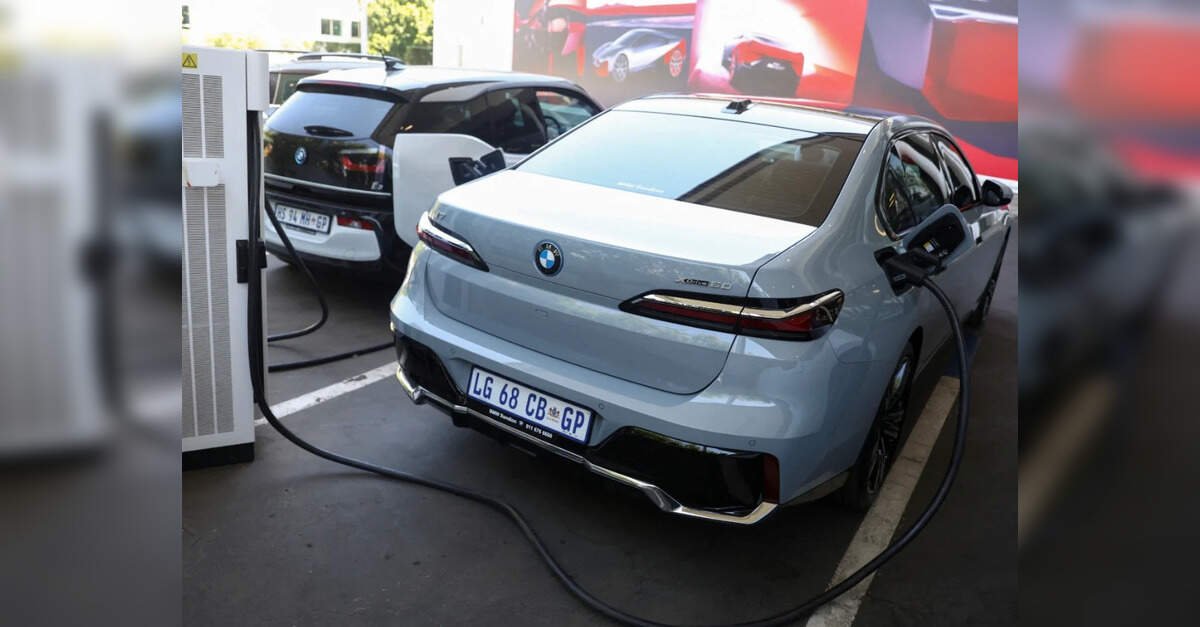
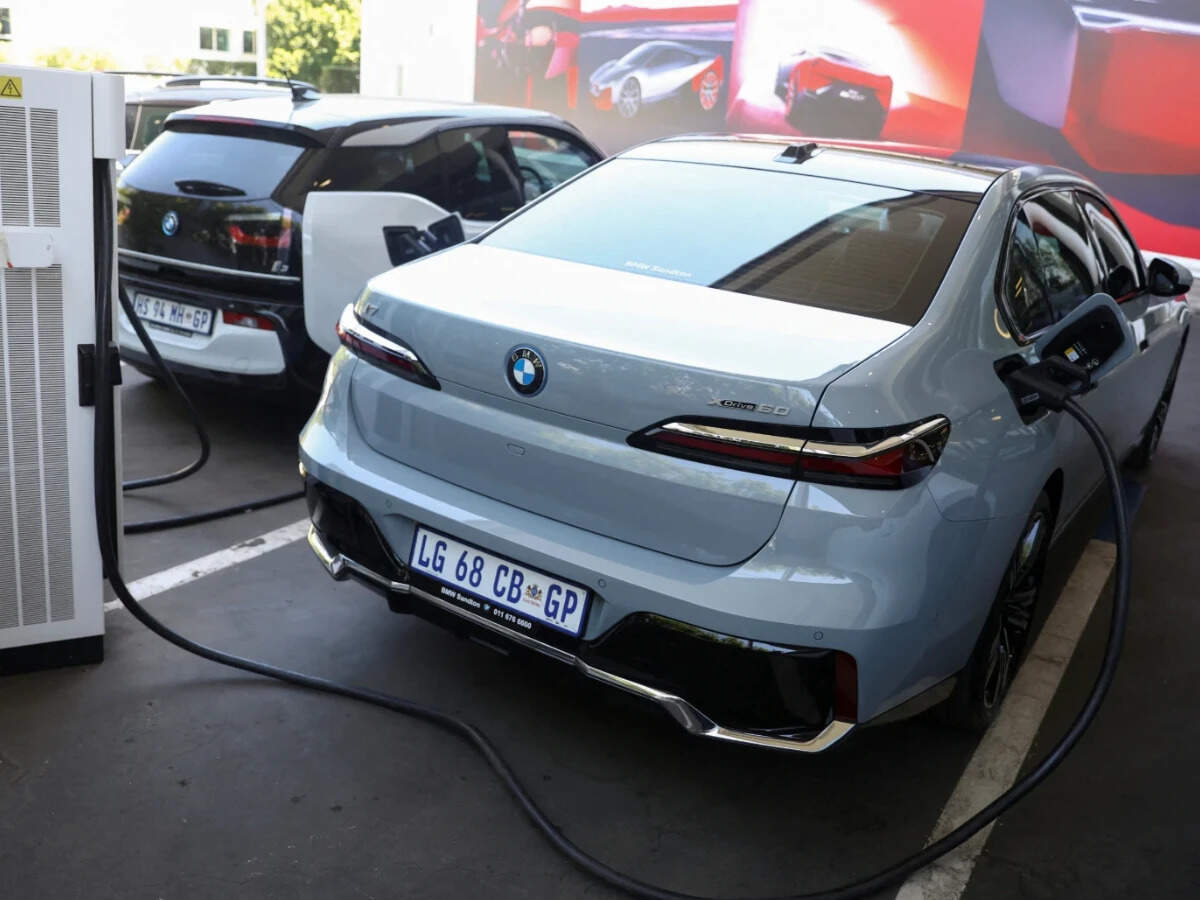
    US car shoppers have been slow to warm back up to electric vehicles since a key federal subsidy expired a year ago, despite persistently high gas prices, while Europeans have flocked to the cars.

    EV sales in the US are down 30.7 per cent this year through September, according to research firm Motor Intelligence, accounting for just 6 per cent of overall sales. That’s less than the 8.5 per cent at this time a year ago, when buyers rushed to beat the expiration of a $7,500 federal tax credit.

    In Europe, however, buyers have flocked to electrics for relief from higher fuel prices stemming from the war in Iran. EVs accounted for 23.2 per cent of the European auto market this year through September, up from 17.7 per cent a year earlier, according to the European Automobile Manufacturers’ Association.

    The divergence in the two markets is due in part to key policy differences between the two regions. In Europe, automakers continue to roll out electric models to meet stringent tailpipe-emissions regulations, and Chinese automakers have stormed the European market with a slew of imported EVs.

    In the US, the Trump administration worked with Congress to eliminate support for EVs, and watered down fuel-efficiency regulations. High tariffs and a ban on Chinese-made vehicle software have effectively blocked Chinese car brands.

    Meanwhile, there were more than 150 EVs on sale in Europe during the first half of 2026, up from about 100 models in 2024, according to Transport & Environment, a Brussels-based environmental advocacy group. Many are priced below 25,000 euros ($27,995), and many countries offer tax breaks to lower consumers’ out-of-pocket costs.

    US buyers go for hybrids, used EVs

    Since the expiration of the $7,500 federal tax credit a year ago, many US automakers have discontinued electric models or scrapped plans for new entries. Some have ended cheap leases that helped fuel demand.

    Buyers instead are seeking hybrids and used EVs, car dealers and analysts say. Hybrid sales jumped 23 per cent through the first three quarters from the year-earlier period, accounting for 15.6 per cent of total sales over that stretch.

    “There’s still demand out there [for EVs], but the energy and the masses are definitely running to hybrid technology,” said Thad Szott, a Detroit-area dealer with Ford, Stellantis and Toyota.

    Some automakers are adding hybrids to their showrooms. Nissan, for example, moved up the launch of a new hybrid system on its popular Rogue SUV by several months.

    Hybrids are “a safer choice” for consumers worried about driving range, said Tiago Castro, Nissan’s senior vice president of US marketing and sales. “When we had the government incentive” for EVs, he said, “it was a different story.”

    The market for used EVs is bustling, though, a sign that less affluent buyers are seeking relief from high fuel prices. Sales of used electric cars rose 19 per cent through September from the year-earlier period, according to research site CarGurus.

    Tesla, Rivian EVs fare better than legacy carmakers

    EV-only brands have fared better than traditional automakers’ EV sales. Tesla’s US sales fell only 14 per cent in the first three quarters, a milder decline than the broader electric vehicle market, according to an estimate from Motor Intelligence. Rivian’s US sales rose 29 per cent, helped by the release of a new SUV, the R2.

    By contrast, Ford’s EV sales are down 68 per cent this year through September, while crosstown rival General Motors saw a 43 per cent drop in EV sales.

    Honda has opted to end EV production after this year, while planning to expand hybrid sales. “Once they scaled back the $7,500, it became obvious” that EV market share would decline, said Lance Woelfer, vice president of US auto sales at Honda.

    However, South Korean automaker Hyundai has seen some recovery in EV sales since gas prices began rising in late winter, and dealers are asking for them, said Randy Parker, CEO of Hyundai Motor North America.

    “We’re not giving up on EVs by any stretch of the imagination,” Parker said.

    • Published On Oct 8, 2026 at 08:03 PM IST

    Join the community of 2M+ industry professionals.

    Subscribe to Newsletter to get latest insights & analysis in your inbox.

    All about ETEnergyworld industry right on your smartphone!

  • Vance says Iran must cut uranium enrichment capacity to meet US demands

    Vance says Iran must cut uranium enrichment capacity to meet US demands

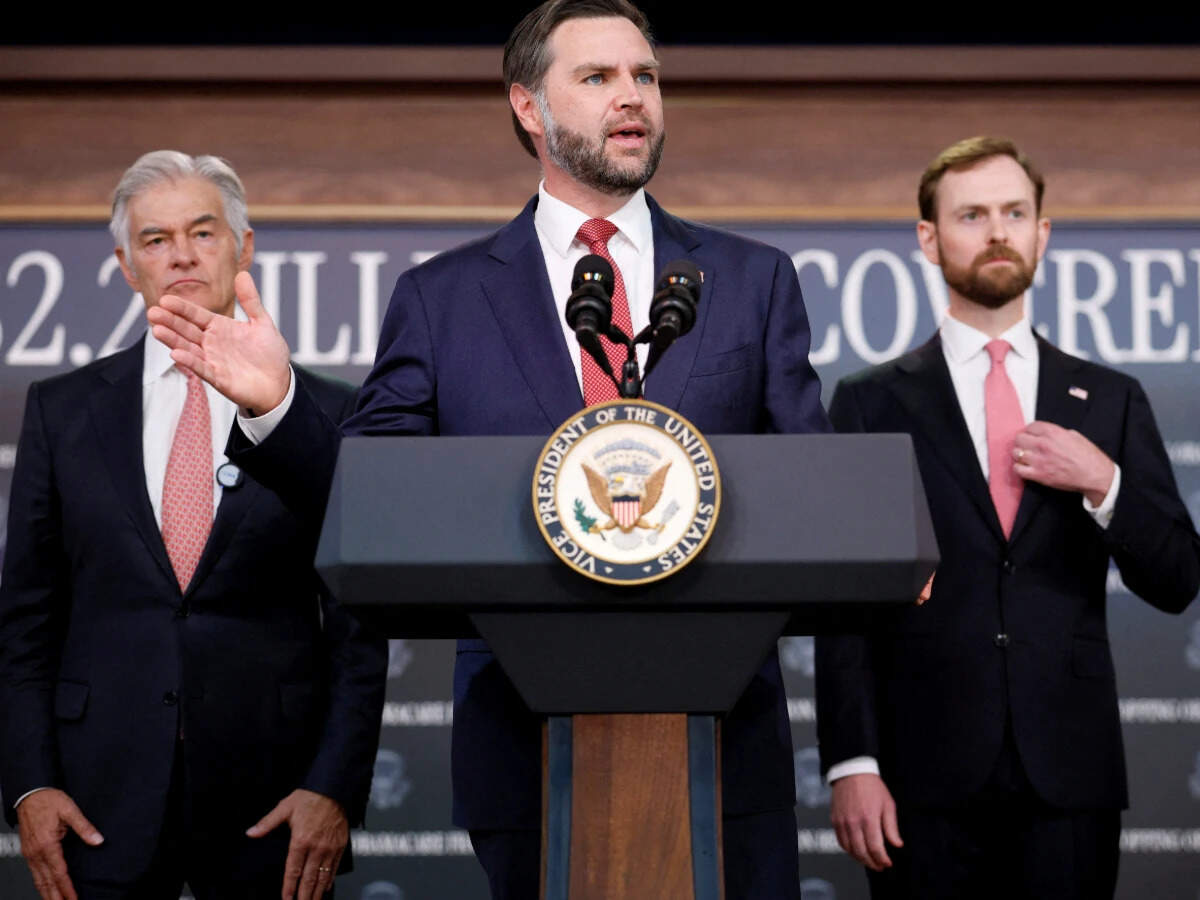
    US Vice President JD Vance has said Iran must reduce its uranium enrichment capacity to meet US demands.
    US Vice President JD Vance has said Iran must reduce its uranium enrichment capacity to meet US demands.

    US Vice President JD Vance told Reuters on Monday that Iran must make a “meaningful” reduction in its uranium enrichment capacity to satisfy US demands and end the country’s seven-month war.

    The Trump administration has sought to force Iran to denuclearise in slow-moving negotiations to end the conflict. Below is a summary of what is known, and not, about the current status of Iran’s uranium enrichment programme, which is at the heart of its nuclear infrastructure.

    What did Iran have before the US and Israel bombed?

    Israel launched airstrikes on Iran’s nuclear facilities on June 13 of last year, soon followed by the United States. In a 12-day campaign, they destroyed or badly damaged the three uranium-enrichment facilities that were known to be operating in Iran at the time.

    They argued that Iran was getting too close to being able to produce a nuclear weapon, but the UN nuclear watchdog, the International Atomic Energy Agency, said it had no credible indication of a coordinated weapons programme.

    Iran was, however, enriching uranium to up to 60 per cent purity, a short step from the roughly 90 per cent of weapons grade.

    The IAEA, which had access to all Iran’s declared nuclear sites, including its enrichment plants, until the US-Israeli bombing campaign, estimates Iran had 440.9 kg of uranium enriched to up to 60 per cent when the first bombs fell.

    That is enough, if enriched further, for 10 nuclear weapons, according to an IAEA yardstick. Iran also had stocks of uranium enriched to lower levels.

    No other country has enriched uranium to such a high level without producing nuclear weapons. The US and its European allies say there is no civil justification. The IAEA said the enrichment level and quantity produced were of serious concern.

    Iran has long held that it does not want and is not seeking to develop nuclear weapons.

    What remains?

    Iran has not told the IAEA how much of its enriched uranium survived the attacks or informed it of its whereabouts. It has also not let IAEA inspectors return to the bombed sites since they were attacked.

    Of the three enrichment plants, the only above-ground one, at the sprawling Natanz nuclear facility, was destroyed, the IAEA has said. The other two, at Natanz and Fordow, were at least badly damaged and are widely believed to be out of action.

    The day before Israel attacked, Iran informed the IAEA it was opening a new enrichment plant at Isfahan, which diplomats say is in a network of tunnels there that appears largely unscathed by US bombing. The IAEA says it does not know the status of that plant or whether it contains nuclear material.

    While some of Iran’s enriched uranium will have been destroyed in the US-Israeli strikes, IAEA chief Rafael Grossi said in March his agency believes “a bit more than 200 kg” of Iran’s uranium enriched to up to 60% remains in the tunnel complex at Isfahan, with some also still at Natanz.

    Where does that leave Iran’s enrichment capacity?

    Not even Iran’s arch-foe Israel alleges Iran is currently enriching uranium. How long it would need to restart is an open question, but as long as a significant portion of its 60% stock remains, it could in principle enrich to weapons grade with relatively little effort and few machines known as centrifuges.

    A 2015 deal between Iran and major powers gave the IAEA extra inspection powers, including oversight of the number of centrifuges and parts for them.

    US President Donald Trump’s withdrawal from that deal in 2018 prompted its collapse and the IAEA lost track of those machines. Their current number and whereabouts are unknown.

    What did Vance say about Iranian enrichment?

    In an interview with Reuters, Vance questioned why Iran had 60 per cent enriched uranium if it claims to not desire nuclear weapons. And he positioned meaningful reductions in “enrichment capacity” as a prerequisite to satisfying US demands and ending the war.

    “Sixty per cent enriched uranium, you know, I’m hardly a nuclear scientist, but I’ve learned this: you don’t need that for any energy production. You don’t need it for anything except to have threshold weapons-grade uranium,” Vance said.

    “I think if they want to show a commitment to not building a nuclear weapon, they would do something meaningful on their enrichment capacity. So far, we haven’t seen a long-term commitment to do that.”

    Then how can Iran reduce its capacity?

    Given that Iran is not currently known to be enriching, any reduction is likely to be compared to its previous capacity, which was significant. A reduction could refer to purity, output or the number of enrichment sites.

    • Published On Oct 8, 2026 at 11:03 AM IST

    Join the community of 2M+ industry professionals.

    Subscribe to Newsletter to get latest insights & analysis in your inbox.

    All about ETEnergyworld industry right on your smartphone!

  • NTPC identifies three sites for nuclear plants, targets 30 GW capacity by 2047

    NTPC identifies three sites for nuclear plants, targets 30 GW capacity by 2047

    Atul Mathur

    • Published On Oct 8, 2026 at 10:49 AM IST
    • Read by 100 Professionals

    NTPC is exploring sites in Madhya Pradesh, Bihar and Odisha as part of its planned nuclear power expansion.
    NTPC is exploring sites in Madhya Pradesh, Bihar and Odisha as part of its planned nuclear power expansion.

    Public sector NTPC has identified three locations, one each in Madhya Pradesh, Bihar and Odisha, to set up nuclear power plants as it aims to add 30GW of nuclear capacity across 14 states by 2047.

    The company has submitted detailed feasibility reports for each site to the Atomic Energy Commission for approval. NTPC is also exploring technology collaborations with global players such as Holtec International and Westinghouse of the US, Rosatom of Russia and EDF of France for pressurised water reactor projects to be deployed at these locations, said an official aware of the development.

    With an installed power generation capacity of 89GW, including thermal, hydro and renewable capacity, the company is targeting 149GW by 2032 and 244GW by 2037, besides adding significant battery and pumped storage capacity. It has set up NTPC Parmanu Urja Nigam Ltd as its wholly owned nuclear subsidiary to foray into nuclear power. Its first nuclear project in Rajasthan’s Mahi Banswara, comprising four 700-MW units, however, is being developed through Anushakti Vidhyut Nigam Ltd, a joint venture with Nuclear Power Corporation of India.

    The three identified locations, if approved, will have 2-4GW of nuclear capacity each, the official said. NTPC entered into non-disclosure agreements with Rosatom and EDF earlier this year to explore technology collaboration for deploying large pressurised water reactor projects in India.

    “Technology transfer and localisation will be key factors in finalising the technology. There will be a separate joint venture with a global player for technology and design engineering,” said the official.

    Fuel availability will also be an important consideration in finalising the technology, the official said, adding that fuel sourcing falls within the domain of the Centre.

    Join the community of 2M+ industry professionals.

    Subscribe to Newsletter to get latest insights & analysis in your inbox.

    All about ETEnergyworld industry right on your smartphone!

  • Adani Energy Solutions acquires Satara Power Transmission

    Adani Energy Solutions acquires Satara Power Transmission

    • Published On Oct 8, 2026 at 09:08 AM IST
    • Read by 100 Professionals
    Adani Energy Solutions has acquired Satara Power Transmission from PFC Consulting to develop a 765 kV transmission corridor.
    Adani Energy Solutions has acquired Satara Power Transmission from PFC Consulting to develop a 765 kV transmission corridor.

    State-owned Power Finance Corporation on Wednesday said that its arm, PFC Consulting, transferred a project special purpose vehicle (SPV), Satara Power Transmission, on October 6 to Adani Energy Solutions, which emerged as the successful bidder.

    PFC Consulting coordinated the bidding process for the SPV, Satara Power Transmission, established to develop the ‘Transmission System for Network Expansion Scheme in Western Region to cater to pumped storage potential near Satara (up to 4500 MW) – Part A’, an exchange filing said.

    According to the filing, PFC Consulting received a consideration of ₹19,01,24,505, as per the Share Purchase Agreement.

    This acquisition is completed and is proposed to further Adani Energy Solutions Ltd’s (AESL) strategy for enhancing value for its shareholders through organic as well as inorganic opportunities, AESL informed the stock exchanges.

    The Satara Power Transmission Ltd (SPTL) has been planned to facilitate an additional 765 kV inter-regional corridor between SR and WR Grids (Narendra – Kolhapur – Satara – Pune III / Pune (East) 765 kV corridor) and will enable further additional evacuation of RE power in Karnataka towards load centres and PSP projects in Satara, Pune, MMR areas of Maharashtra.

    The SPTL was incorporated and registered with the Registrar of Companies, New Delhi, on July 10, 2026.

    The authorised share capital as well as paid-up share capital is ₹1 lakh only. The equity shares were acquired at the face value of ₹10 each, AESL said in the filing.

    • Published On Oct 8, 2026 at 09:08 AM IST

    Join the community of 2M+ industry professionals.

    Subscribe to Newsletter to get latest insights & analysis in your inbox.

    All about ETEnergyworld industry right on your smartphone!