Category: Electricity and Power Generation

  • India's power transmission expansion, data centre demand to drive capital goods growth: Report

    India's power transmission expansion, data centre demand to drive capital goods growth: Report

    • Published On Oct 12, 2026 at 12:50 PM IST

    India’s expanding transmission network and rising data centre capacity are expected to boost demand for HVDC systems and power equipment.
    India’s expanding transmission network and rising data centre capacity are expected to boost demand for HVDC systems and power equipment.

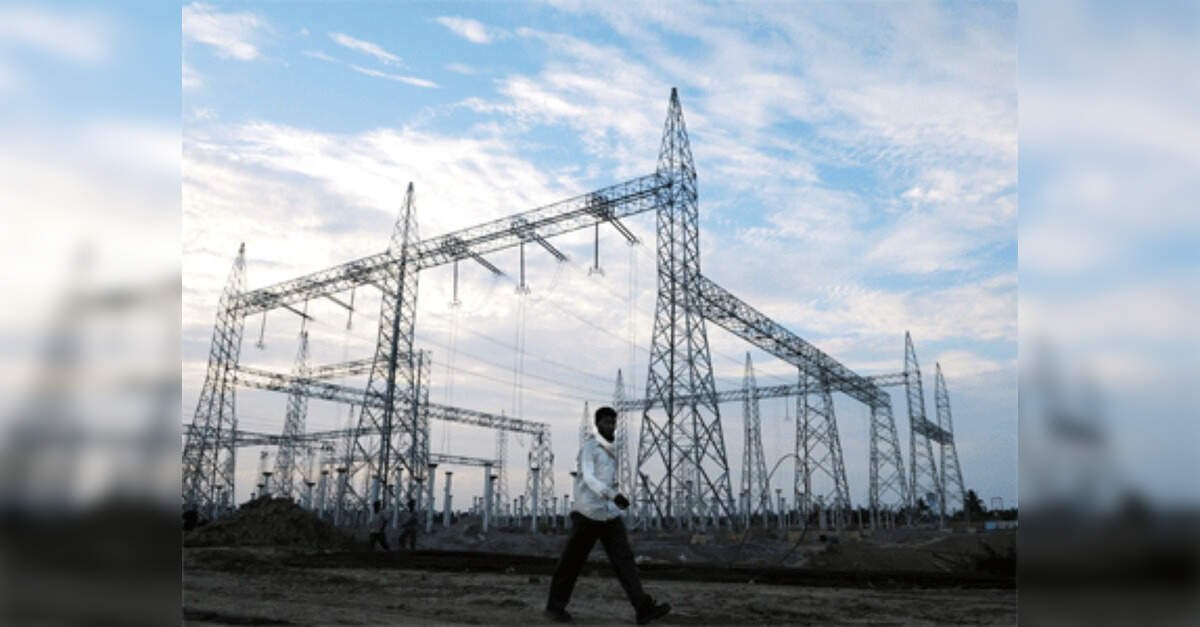
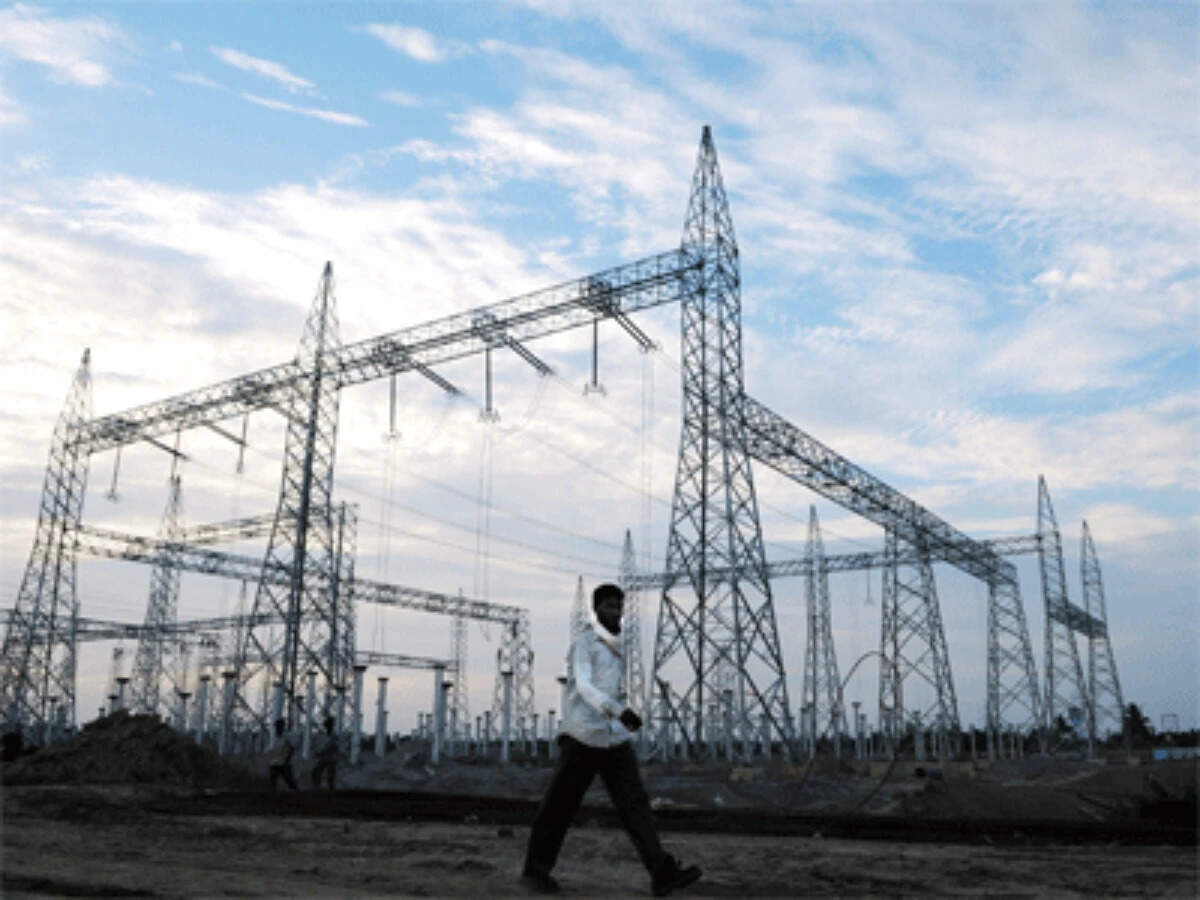
    India’s expanding power transmission network and rising demand from data centres are expected to create significant opportunities for the engineering and capital goods sector, with High-Voltage Direct Current (HVDC) technology emerging as an important growth driver, according to a report by 360 ONE Capital.

    The report highlighted that rising renewable energy integration, grid modernisation and increasing electricity requirements from data centres could support demand for power equipment over the coming years.

    However, project delays, higher input costs and uncertainty around global investment in artificial intelligence infrastructure could affect the pace of growth.

    “India’s HVDC capacity is expected to increase from 34.5 GW in FY27 to 55 GW by FY32, with a further 78 GW of HVDC pipeline identified by CEA till FY36,” the report said.

    It noted that HVDC projects are becoming increasingly important as India expands its transmission infrastructure to integrate renewable energy and strengthen the power grid. The report also pointed to the sector’s relatively concentrated supplier base and the importance of successfully executing projects to qualify for future orders.

    Data centres are another potential source of demand. India’s data centre capacity remains below 2 gigawatts, while the report expects it to reach 13-18 gigawatts by 2030. These facilities require reliable power supply and advanced grid equipment, including transformers, switchgear and grid management systems.

    The report estimated that equipment suppliers could address a meaningful share of data centre investment, creating an additional opportunity alongside conventional transmission projects. Growing electricity demand and the expansion of digital infrastructure could therefore broaden the sector’s growth drivers beyond traditional utility spending.

    Manufacturing capacity expansion and greater domestic production of specialised transmission equipment are also expected to support the sector. The report said localisation of high-voltage equipment could reduce dependence on imports and improve supply-chain control.

    However, the outlook is not without risks. Delays in large project awards and execution could affect revenue timing, while increases in commodity prices may put pressure on margins, particularly where contracts do not fully protect manufacturers against higher input costs. Uncertainty around export orders and global data centre investment could also influence near-term performance.

    The report said the scale and timing of transmission projects, progress in domestic manufacturing and continued investment in data centres would be important factors determining how effectively the sector capitalises on the emerging opportunities.

    • Published On Oct 12, 2026 at 12:50 PM IST

    Join the community of 2M+ industry professionals.

    Subscribe to Newsletter to get latest insights & analysis in your inbox.

    All about ETEnergyworld industry right on your smartphone!

  • Rajesh Power Services wins ₹472 crore Gujarat power distribution contracts

    Rajesh Power Services wins ₹472 crore Gujarat power distribution contracts

    The company added that the new contracts have added over 10 per cent to the company's order book, taking its total order value closer to ₹4,000 crore.
    The company added that the new contracts have added over 10 per cent to the company’s order book, taking its total order value closer to ₹4,000 crore.

    Rajesh Power Services, a power transmission and distribution EPC company, on Monday said it has secured turnkey contracts worth ₹471.92 crore from Madhya Gujarat Vij Company (MGVCL) to strengthen electricity distribution infrastructure across Gujarat.

    According to the official press release, the contracts involve replacing existing 11 kV overhead power lines with medium-voltage covered conductors (MVCC) and underground cables across Gujarat.

    “This significant order from MGVCL marks an important milestone for Rajesh Power Services. With our aggregate order book reaching approximately ₹4000 crore, we continue to strengthen our project pipeline and business visibility,” said Kurang Panchal, Chairman & Managing Director at Rajesh Power Services.

    The company added that the new contracts have added over 10 per cent to the company’s order book, taking its total order value closer to ₹4,000 crore and providing execution visibility for the next 18 months.

    Join the community of 2M+ industry professionals.

    Subscribe to Newsletter to get latest insights & analysis in your inbox.

    All about ETEnergyworld industry right on your smartphone!

  • JSW Energy, Gemstar & Actis vie for Polaris Smart Metering

    JSW Energy, Gemstar & Actis vie for Polaris Smart Metering

    Reghu Balakrishnan

    The shortlisted bidders have completed due diligence, and binding bids are expected by the end of October. The deal may value Polaris Smart Metering at about ₹1,800-2,000 crore, the people said.
    The shortlisted bidders have completed due diligence, and binding bids are expected by the end of October. The deal may value Polaris Smart Metering at about ₹1,800-2,000 crore, the people said.

    The sale process for Polaris Smart Metering has moved to its next stage, with private equity firm Actis, JSW Energy and Gemstar Infra shortlisted for the second round of negotiations, according to people familiar with the development.

    The shortlisted bidders have completed due diligence, and binding bids are expected by the end of October. The deal may value Polaris Smart Metering at about ₹1,800-2,000 crore, the people said.

    I Squared Capital, the $55 billion infrastructure-focused asset manager, is exploring an exit from its investment in the smart metering company, ET first reported in April. Boutique investment bank Impact Infracap is running the sale process.

    The US-based asset manager had invested $100 million to acquire a controlling stake in Polaris Smart Metering through its ISQ Growth Markets Infrastructure Fund in February 2023.

    Polaris Smart Metering, one of the leading smart metering players in India, has secured smart meter installation contracts in Uttar Pradesh and West Bengal. In Uttar Pradesh, it is executing a ₹5,200-crore contract with Madhyanchal Vidyut Vitran Nigam Limited to install 5.1 million smart meters across the Lucknow and Ayodhya clusters. In West Bengal, the company has won a contract for the installation of 2.2 million smart meters.

    ISQ Growth Markets Infrastructure Fund holds the majority stake in Polaris Smart Metering Private Limited, Singapore, while the remaining stake is held by Samunnati Pte. Limited, Singapore. Yashraj Khaitan holds 100 per cent of the shares of Samunnati.

    UK-based fund Actis is bidding through Bharat Grid, a joint venture formed last year with EDF India to operate a dedicated platform company for advanced metering infrastructure service provider concessions.

    Join the community of 2M+ industry professionals.

    Subscribe to Newsletter to get latest insights & analysis in your inbox.

    All about ETEnergyworld industry right on your smartphone!

  • India eyes ₹7.5 lakh crore investment, 100 GW nuclear capacity by 2047

    India eyes ₹7.5 lakh crore investment, 100 GW nuclear capacity by 2047

    Aryan Singh

    A representative picture.
    A representative picture.

    India is looking to scale up its nuclear power capacity to 100 gigawatts (GW) by 2047, with the entry of private players expected to bring in ₹7.5 lakh crore in investment and contribute 30 GW to the country’s ambitious expansion target.

    The move marks a major push to expand nuclear energy as India seeks to meet rising electricity demand, strengthen energy security and diversify its power mix.

    According to news agency PTI, Atomic Energy Commission chairman A K Mohanty said the private sector could contribute 30 GW to the target, while the opening of the nuclear power sector to private players is expected to attract ₹7.5 lakh crore in investment.

    He also said India holds 25 per cent of global thorium reserves, which could support the second and third stages of the country’s nuclear power programme.

    India currently has an installed nuclear power capacity of 8.78 gigawatts (GW), generated by 24 reactors, according to the Department of Atomic Energy. The government aims to increase this capacity to around 22 GW by 2031-32, before scaling it up further to 100 GW by 2047 as part of its long-term nuclear energy expansion plan.

    The government plans to raise the nuclear power capacity of Nuclear Power Corporation of India Limited (NPCIL), a public-sector company responsible for operating nuclear power plants in India, to 54 GW by 2047.

    Other public-sector companies, state governments and private players are expected to contribute the remaining 46 GW. The expansion aims to strengthen India’s energy security and provide reliable, low-carbon electricity.

    According to data released by the department of atomic energy, it has as identified around 439,800 tonnes of in-situ uranium oxide resources across Andhra Pradesh, Telangana, Jharkhand, Meghalaya, Rajasthan, Karnataka, Chhattisgarh, Uttar Pradesh, Uttarakhand, Himachal Pradesh and Maharashtra.

    The department also reported 1.18 million tonnes of thorium oxide resources contained in 13.15 million tonnes of monazite, a mineral found in coastal beach sands, red sands and inland deposits across several states.

    The department of atomic energy says India is pursuing a three-stage nuclear power programme to make optimal use of its limited uranium resources and harness thorium for long-term energy security. Thorium must first be converted into fissile uranium-233 before it can be used as nuclear fuel.

    Join the community of 2M+ industry professionals.

    Subscribe to Newsletter to get latest insights & analysis in your inbox.

    All about ETEnergyworld industry right on your smartphone!

  • NTPC invites bids from industries for 26% equity stake in co-generation power projects

    NTPC invites bids from industries for 26% equity stake in co-generation power projects

    ETEnergyWorld Desk

    A representative picture.
    A representative picture.

    NTPC, on Sunday, announced that it has invited Expressions of Interest (EOI) from commercial and industrial entities willing to invest 26 per cent equity in co-generation projects.

    According to the company’s statement, the initiative aims to explore opportunities for developing co-generation facilities to meet industrial requirements for steam and electricity, alongside integrated power supply solutions based on coal, renewable energy and Battery Energy Storage Systems (BESS).

    The state-run power utility said industries are increasingly focused on energy security, cost optimisation and sustainability, and that co-generation can improve overall energy efficiency.

    It said the proposed initiative seeks to address these diverse requirements of industries with reliable, economical and sustainable energy solutions through long-term power supply arrangements.

    The state-run integrated power utility firm has installed capacity of over 91 gigawatts (GW), with more than 35 GW under construction. It has set a target of 149 GW by 2032, including 60 GW from renewable energy.

    Its capacity includes thermal, hydro, solar and wind power plants. The company has also entered e-mobility, storage, waste-to-energy, nuclear power and green hydrogen.

    Join the community of 2M+ industry professionals.

    Subscribe to Newsletter to get latest insights & analysis in your inbox.

    All about ETEnergyworld industry right on your smartphone!

  • KEC International bags ₹1,014 crore orders for power transmission

    KEC International bags ₹1,014 crore orders for power transmission

    The order expands the company’s work in power transmission infrastructure linked to renewable energy. 
    The order expands the company’s work in power transmission infrastructure linked to renewable energy. 

    KEC International on Saturday said it has secured orders worth ₹1,014 crore in its India transmission and distribution business, including its first 765 kV transmission line project for power evacuation from a pumped storage plant in western India.

    According to the regulatory filing, the latest orders take the company’s year-to-date order intake to more than ₹9,600 crore.

    The 765 kV transmission line project marks the company’s first order in this category and is aimed at evacuating power from a pumped storage plant.

    Vimal Kejriwal, managing director and chief executive officer of KEC International, said the order was secured from an existing client and would support growing power infrastructure requirements in the renewables segment.

    The order expands the company’s work in power transmission infrastructure linked to renewable energy.

    KEC International is a global infrastructure engineering, procurement and construction company with a transmission and distribution business.

    Join the community of 2M+ industry professionals.

    Subscribe to Newsletter to get latest insights & analysis in your inbox.

    All about ETEnergyworld industry right on your smartphone!

  • Transmission delays, not excess capacity, driving renewable power curtailment, says MNRE secretary

    Transmission delays, not excess capacity, driving renewable power curtailment, says MNRE secretary

    Atul Mathur

    Renewable energy secretary Santosh Kumar Sarangi says faster transmission expansion and battery storage are key to reducing power curtailment.
    Renewable energy secretary Santosh Kumar Sarangi says faster transmission expansion and battery storage are key to reducing power curtailment.

    New Delhi: Rejecting concerns that India was adding renewable energy capacity beyond what the power system can absorb, new and renewable energy secretary Santosh Kumar Sarangi said delays in transmission infrastructure were primarily responsible for curtailment of renewable power.

    Talking to TOI, Sarangi said renewable capacity is generally developed against identified demand – through power purchase agreements, contracts with commercial and industrial consumers, or distributed renewable energy schemes such as PM-KUSUM and PM Surya Ghar. Curtailment has largely resulted from delays in transmission lines needed to evacuate renewable power. In some cases, projects are using temporary general network access, but the additional transmission capacity available under such arrangements cannot be assured round the clock.

    “So, from that point of view, you can’t claim that we have more RE capacity than is needed,” Sarangi said. “The solution is to expedite the transmission lines and complete them, and the second is to use more and more battery energy storage.”

    Curtailment of renewable energy – the intentional reduction or restriction of electricity output from sources such as wind or solar when generation exceeds the grid’s transmission capacity or local demand – has emerged as a major challenge for developers as well as the govt. In the first quarter of the ongoing financial year, nearly 8,133 gigawatt-hours of solar power was curtailed, which is estimated to be equivalent to 1.5 days of the country’s total electricity consumption.

    Sarangi said battery storage could also help improve utilisation of transmission infrastructure in renewable energy-rich regions. Solar-heavy transmission lines are typically used for only six to eight hours during the day. If sufficient battery storage is available, the same transmission network can be used to evacuate stored power during night hours.

    This could increase transmission capacity utilisation and allow more renewable energy to be connected to the same substations. Sarangi said the ability to expand and utilise renewable energy along with battery energy storage has much greater potential, with transmission utilisation potentially increasing almost two-fold in some solar-dominated areas.

    According to a Rubix Data Sciences report, India needs over 236 GWh of battery energy storage systems by FY 2031-32 to enable seamless integration of the increasing share of renewable energy into the grid. The cumulative installed BESS capacity currently stands at about 13.5 GWh, with over 150 GWh in the pipeline.

    Sarangi said both co-located and standalone BESS projects would be required. While co-located storage would be preferable for renewable energy projects as it would improve utilisation of transmission lines, standalone systems would be useful for managing surplus power and peak demand.

    On nearly 45GW of renewable energy projects that have received connectivity but are unable to sign power purchase agreements, Sarangi said a proposed amendment by the Central Electricity Regulatory Commission could provide an exit route for developers, allowing them to surrender connectivity without losing the bank guarantee furnished for it.

    Join the community of 2M+ industry professionals.

    Subscribe to Newsletter to get latest insights & analysis in your inbox.

    All about ETEnergyworld industry right on your smartphone!

  • ROSATOM and IIT Bombay launch 'Atomic Hack India 2026' to solve energy grid challenges

    ROSATOM and IIT Bombay launch 'Atomic Hack India 2026' to solve energy grid challenges

    Dipanjan Roy Chaudhury

    ROSATOM subsidiary JSC ETC GET and IIT Bombay have launched Atomic Hack India 2026 to encourage student innovation in nuclear engineering and digital twins.
    ROSATOM subsidiary JSC ETC GET and IIT Bombay have launched Atomic Hack India 2026 to encourage student innovation in nuclear engineering and digital twins.

    JSC ETC GET (a subsidiary of ROSATOM State Corporation), in strategic partnership with the Rosatom Corporate Academy and the IIT Bombay Research Hub for Green Energy and Sustainability (GESH IITB), on Friday announced the launch of Atomic Hack India 2026. This premier national innovation challenge invites undergraduate and master’s engineering students across India to tackle real-world industrial problems in nuclear engineering, digital twins, and critical infrastructure.

    As India accelerates toward its ambitious goal of 100 GW of nuclear capacity by 2047 alongside rapid growth in renewable energy, ensuring the stability and reliability of the national power grid has become a critical engineering priority.

    The hackathon challenges participants to design a Zero-Sequence Directional Overcurrent Protection (ZDOP) scheme for a 220 kV transmission line integrating both nuclear and renewable energy sources.

    To solve this complex industrial case, teams will use REPEAT VISION, a professional 1D-modeling and digital twin creation software platform developed by ETC GET (ROSATOM).

    Atomic Hack India 2026 is more than a competition; it is a direct bridge between academic theory and industrial practice to provide India’s brightest young engineers with the tools, mentorship, and real-world challenges needed to shape the future of the global energy transition.

    The event will unfold in two stages. Following an online qualification phase from October 20 to 28, 2026, up to 25 shortlisted teams will compete in a 48-hour on-site Grand Finale at the IIT Bombay campus in Mumbai from December 4 to 6, 2026.

    Participants will receive comprehensive support, including free access to the REPEAT VISION platform, introductory training webinars, and direct mentorship from ROSATOM engineers and IIT Bombay professors. No prior experience with the software is required.

    The winning teams will be awarded exclusive career-launching opportunities, including a sponsored international research trip to Moscow to visit ROSATOM’s advanced engineering centers, internship opportunities at JSC ETC GET, and official certificates.

    Collaborating on this hackathon allows to foster practical innovation and equip the next generation of energy leaders with cutting-edge digital skills.

    Registration for Atomic Hack India 2026 is now open and will close on October 20, 2026.

    Join the community of 2M+ industry professionals.

    Subscribe to Newsletter to get latest insights & analysis in your inbox.

    All about ETEnergyworld industry right on your smartphone!

  • Andhra thermal power stations generate record 19,268 MU of electricity in first half of FY27

    Andhra thermal power stations generate record 19,268 MU of electricity in first half of FY27

    Andhra Pradesh has stepped up coal procurement and advance power purchases after thermal generation rose to a record 19,268 million units in April-September.
    Andhra Pradesh has stepped up coal procurement and advance power purchases after thermal generation rose to a record 19,268 million units in April-September.

    Andhra Pradesh energy special chief secretary K Vijayanand on Thursday said the state’s thermal power stations generated a record 19,268 million units (MU) of electricity during the first half (April-September) of the current financial year, up 13.1 per cent from FY26.

    The official said 17,037 MU of power was generated during the same period last year, which is 2,231 MU lower than the current fiscal year, an official release said.

    “The state-owned thermal power stations of Andhra Pradesh generated a record 19,268 million units (MU) of electricity during the first half (April-September) of the financial year 2026-27. This is 13.1 per cent higher than the 17,037 MU generated during the same period last year,” said Vijayanand in the release.

    Assuring consumers of uninterrupted power supply in the coming months, he said the government has put in place a robust fuel security system and a comprehensive advance power purchase plan in view of the revised El Niño advisories of the State Load Despatch Centre (SLDC).

    El Niño conditions typically bring weaker rainfall and higher temperatures, which can push up electricity demand.

    According to Vijayanand, average availability of thermal stations rose from 66 per cent to 79 per cent while Plant Load Factor improved from 58.7 per cent to 66.4 per cent. Dr Narla Tata Rao Thermal Power Station’s (Dr NTTPS) Unit-7 ran non-stop for 146 days and Unit-8 for 101 days without a single trip.

    Reviewing the performance of power stations, Vijayanand explained that the average plant availability, the share of time a plant is ready to generate power, across Andhra Pradesh Power Generation Corporation Ltd (APGENCO) and Andhra Pradesh Power Development Company Ltd (APPDCL) thermal stations rose sharply by 13 percentage points, from 66 per cent to 79 per cent.

    As a result, the Plant Load Factor (PLF), which measures actual generation against a plant’s maximum capacity, improved from 59 per cent to 66 per cent, he said, observing that all three thermal power stations delivered outstanding results in the first six months

    Vijayanand said alternative coal sources have been arranged after the steep fall in Singareni supplies, and that imported coal is arriving on schedule.

    He noted that coal supplies from Singareni Collieries Company Limited (SCCL) against allotted linkages fell steeply during H1, 2026.

    Only 35 per cent of the allotted quantity reached Dr NTTPS while 14 per cent reached Dr MVR RTPP, and supplies to Dr NTTPS stopped completely in August, he said.

    Consequently, the southern state responded with some corrective measures, which included requesting the Ministry of Coal to transfer the SCCL linkages to Mahanadi Coalfields Limited (MCL) and Eastern Coalfields Limited (ECL), among others.

    Vijayanand said 1 lakh metric tonnes (LMT) of coal per month is being allocated from SDSTPS Stage-I to APGENCO from October to December 2026 while imported coal is arriving on schedule.

    Under APPDCL’s 5 LMT contract, three vessels have already reached Krishnapatnam Port, he said, adding that the fourth vessel is due by mid-October and supply schedules are in place up to mid-2027.

    On October 7, he said the board approved the procurement of 3 LMT of imported coal for APGENCO stations (2 LMT for Dr NTTPS and 1 LMT for Dr MVR RTPP) at APPDCL benchmark rates while the Letter of Intent (LOI) is being issued immediately.

    Recalling that the DISCOMs successfully managed the outages caused by boiler tube leakages in September by purchasing 989.3 MU from the open market, Vijayanand outlined the month-wise power purchase plan under an advanced power purchase plan from October 2026 to March 2027.

    To keep the grid stable, the plan includes a 700 MW spinning reserve, which is standby capacity kept ready to meet any sudden rise in demand or unexpected plant outage.

    Between October 2026 and March 2027, 4,185 MU will be purchased, he said.

    Vijayanand affirmed that the supply system has been further strengthened, particularly for the evening peak hours through bilateral banking arrangements ranging from 130 MW to 665 MW during evening peak hours and purchases through the term-ahead market (TAM).

    Other measures include round-the-clock (RTC) and peak-hour tenders through the DEEP portal, 150 MW to 557 MW of Battery Energy Storage Systems (BESS) to serve evening peak-hour demand and 150 MW to 600 MW for morning peak-hour demand in winter.

    Likewise, he said standby gas-based power arrangements have been made through NTPC Vidyut Vyapar Nigam (NVVN).

    With phased annual overhaul schedules and an optimised coal transport network, the Energy Department is fully prepared to supply quality and uninterrupted power to agricultural, industrial and domestic consumers across the state, Vijayanand added.

    • Published On Oct 10, 2026 at 08:24 AM IST

    Join the community of 2M+ industry professionals.

    Subscribe to Newsletter to get latest insights & analysis in your inbox.

    All about ETEnergyworld industry right on your smartphone!

  • Streetlight power supply test triggers traffic signal outage in Pune

    Streetlight power supply test triggers traffic signal outage in Pune

    Prasad Kulkarni

    Around 50 traffic signals across Pune stopped functioning after power supply to streetlights was disconnected during smart meter testing.
    Around 50 traffic signals across Pune stopped functioning after power supply to streetlights was disconnected during smart meter testing.

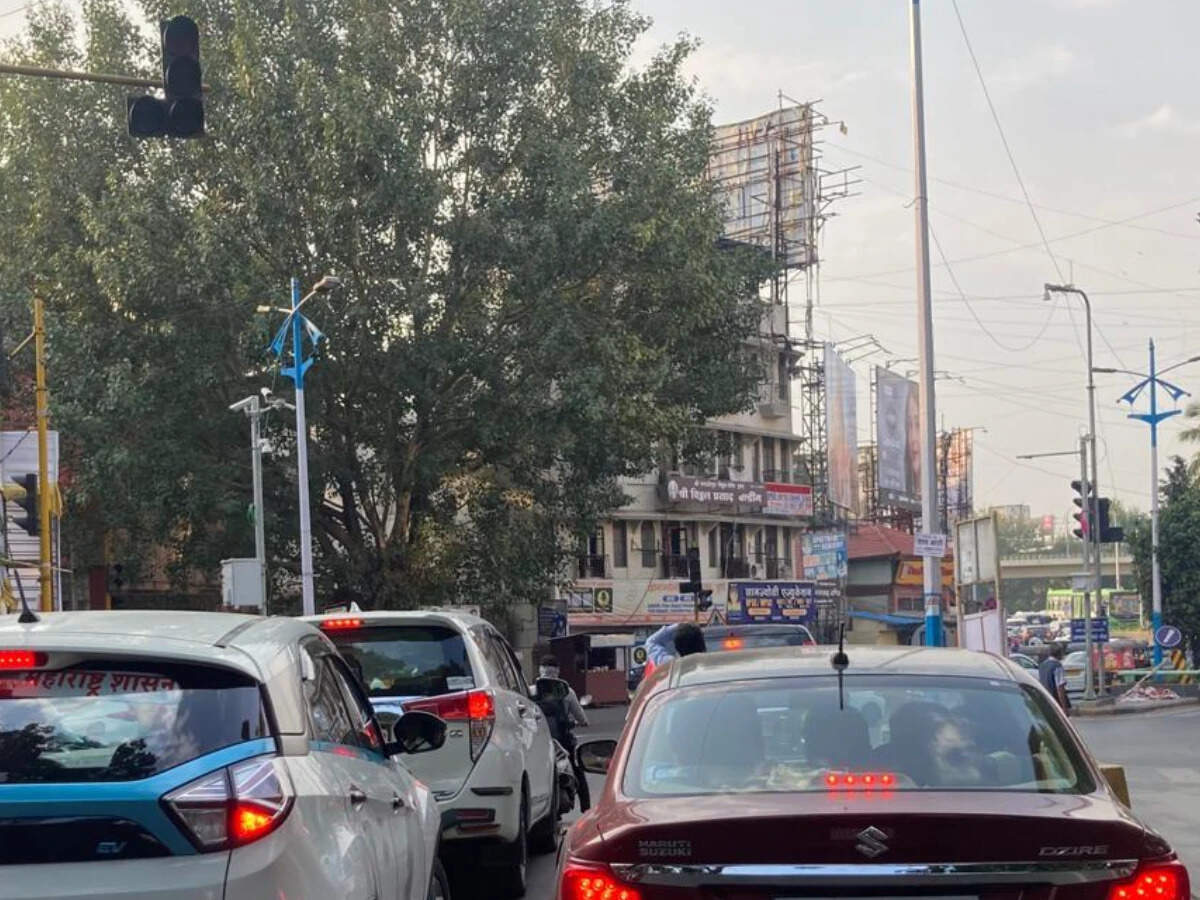
    Testing of smart meters and stoppage of power supply to streetlights caused a sudden disruption to around 50 traffic signals in different areas under Pune Municipal Corporation (PMC) on Friday.

    According to PMC officials, they approached Maharashtra State Electricity Distribution Company Limited (MSEDCL) to restore the supply and restart the signals. “The power supply to traffic signals and streetlights is combined in many locations. A private agency in charge of supplying power to streetlights disconnected it. Their officials wanted to test the impact when supply to these poles is stopped during daytime,” said Pramod Unde, superintending engineer (electrical).

    Asked about claims in a widely circulated social media post that PMC did not clear its electricity bill dues, leading to the power disconnection, Unde said those claims were false. “The bills are prepaid. Adequate funds were given in advance, so the issue of non-payment of bills does not arise,” he said.

    As per PMC and traffic police officials, the traffic signals were not functioning during the day, which led to major traffic disruptions. Following complaints from the traffic police department, a delegation of PMC officials visited the MSEDCL office and reported the incident.

    The PMC’s electrical department shoulders the responsibility of providing streetlights on roads across Pune city, managing the streetlights, and carrying out their maintenance and repairs. It also handles the installation and maintenance of traffic control lights at city intersections in coordination with the additional commissioner and the traffic police.

    According to officials, civic areas, including the 32 newly merged villages, have over 1 lakh streetlights. The city has around 400 traffic signals, of which 30 per cent source power directly from streetlights.

    Join the community of 2M+ industry professionals.

    Subscribe to Newsletter to get latest insights & analysis in your inbox.

    All about ETEnergyworld industry right on your smartphone!