Indian Gas Exchange Ltd (IGX), the country’s first online delivery-based trading platform for natural gas, on Monday secured Sebi’s approval to float an initial public offering (IPO), an update with the regulator showed.
The proposed public issue is entirely an offer for sale (OFS) of up to 1.67 crore equity shares by promoter Indian Energy Exchange Ltd (IEX), according to the draft red herring prospectus (DRHP).
As the issue is entirely an OFS, IGX will not receive any proceeds from the IPO. The entire proceeds will go to the selling shareholder, IEX.
The company had filed its preliminary IPO papers in July. After reviewing the draft prospectus, Sebi gave its final observation on October 12.
Sebi’s observations mark an important step in the IPO process, allowing the company to proceed with the preparations for the public issue, subject to applicable regulatory requirements.
The approval comes amid a strong IPO fundraising momentum, with companies raising over Rs 1.1 lakh crore through 96 public issues so far in 2026.
Several more IPOs are lined up for launch this month, signalling continued activity in the primary market.
In the draft papers, IGX stated the primary objective of the IPO is to achieve the benefits of listing its equity shares on the stock exchange, which it expects will enhance its visibility, strengthen brand image and provide a public market for its shares.
Indian Energy Exchange holds over 47 per cent stake in IGX, and as per regulations, it has to bring it down to 25 per cent.
IGX was incorporated in November 2019 as a wholly-owned subsidiary of IEX.
Its electronic gas trading platform was inaugurated in June 2020, and it received authorisation from the Petroleum and Natural Gas Regulatory Board (PNGRB) to operate as a gas exchange in December 2020.
The company operates a technology-enabled electronic marketplace for trading natural gas through standardised physical delivery-based contracts across multiple delivery hubs connected to India’s national gas pipeline network.
According to the draft papers, unlike several international gas exchanges where a significant share of contracts are financially settled, IGX operates a physical delivery-based market and also offers forward contracts with tenures of up to six months.
For the financial year ended March 2026, the company reported revenue from operations of Rs 61 crore, compared with Rs 48.8 crore in FY25 and Rs 34.8 crore in FY24.
In January, IGX’s Managing Director and CEO Rajesh Kumar Mediratta had stated that the country’s first online delivery-based natural gas trading platform was targeting an IPO by December 2026.
Axis Capital and Motilal Oswal Investment Advisors are the book-running lead managers to the issue, while KFin Technologies is the registrar.
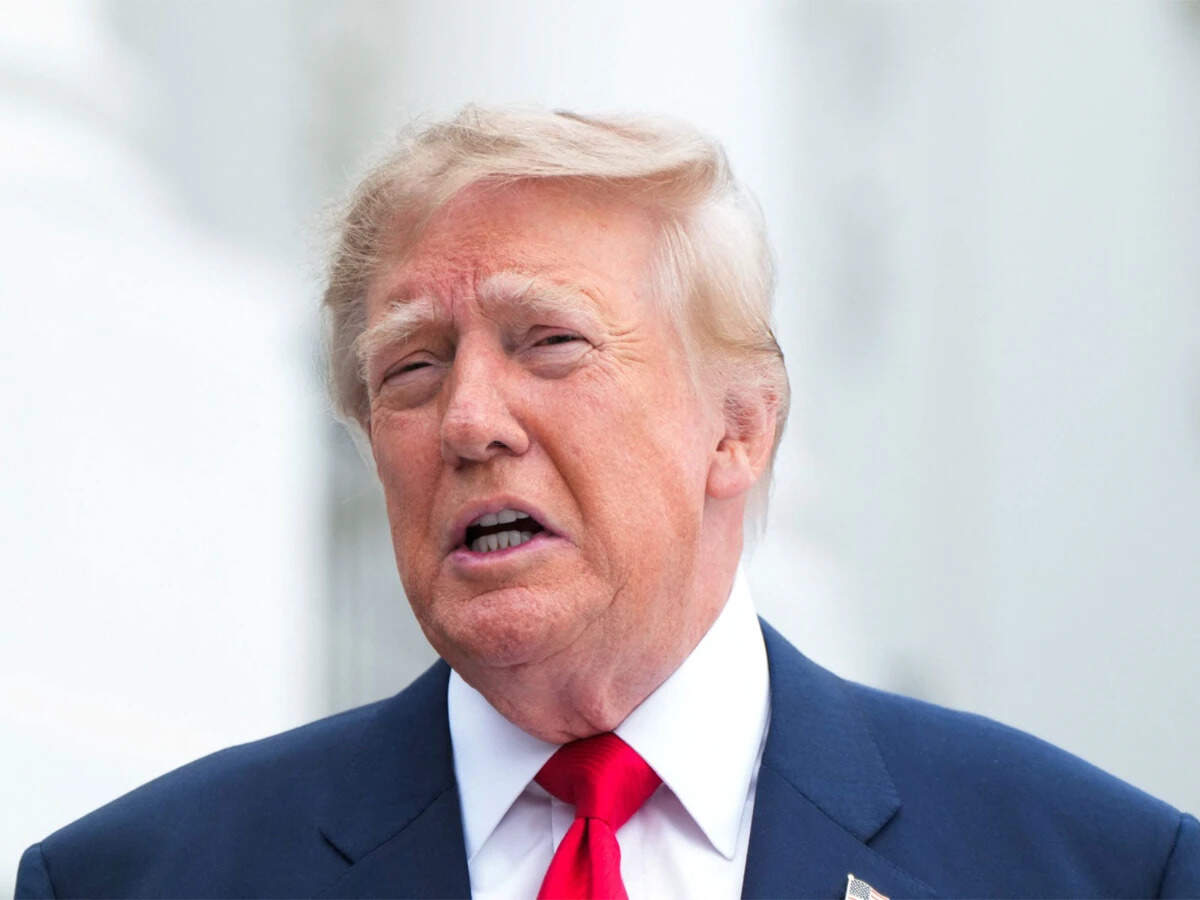
US President Donald Trump‘s trademark ability to talk down oil markets with a few words is fading as the Iran war drags on, leaving global energy prices far more exposed to escalation.
The Republican president’s so-called “jawboning” was one of the defining features of the Iran conflict’s early months after fighting erupted in late February.
In the months before the short-lived July ceasefire, Trump’s repeated public statements and social media posts that said Washington and Tehran were edging toward a deal to end the conflict and reopen the Strait of Hormuz helped keep oil prices well below record highs. That rhetoric appeared to work even as the blockage of the chokepoint, which previously handled about a fifth of global oil supplies, upended energy markets.
Trump repeatedly predicted during the months of Israeli-US airstrikes that oil prices would “drop like a rock” once a ceasefire deal with Iran is reached.
Traders likely deemed it too risky to bet against Trump’s desire to avoid a domestic fuel price spike. As stockpiles deteriorated, they assumed the US president would pull back and end the war quickly.
That bet appeared to pay off until markets learned the limitations of Trump’s control. The July ceasefire broke down, giving way to a protracted, low-level conflict that has spread throughout the region, including the recent escalation in violence between Yemen’s Iran-aligned Houthis and Saudi Arabia.
This lack of market confidence is now undermining the US president’s efforts to bring down soaring diesel prices, a key priority before US midterm elections that are only three weeks away.
For energy markets, the era of the Trump trade may be over.
FADING EFFECT
Global benchmark Brent crude prices have held stubbornly above $100 a barrel for most of the past few weeks, despite a strong recovery in oil flows through the Strait of Hormuz.
Crude exports through the critical waterway have rebounded to roughly 80%-90% of pre-war levels, according to ship-tracking firms, as Gulf producers have increasingly relied on US naval protection to move cargoes.
Yet repeated efforts by Trump and US Energy Secretary Chris Wright to calm markets by highlighting the recovery in flows have not proven effective.
Brent did slip below $100 a barrel on news of the surge in crude flows, but that reprieve proved brief as Middle East violence continued to spread, including stepped-up Iranian strikes on tankers.
Meanwhile, shipping oil through the region remains very costly because of soaring tanker chartering costs and insurance premiums, as well as the complicated logistics required to get crude out of the region. The Trump administration can’t “talk” those realities away anymore.
It turns out that increasing flows is one thing. Convincing traders that supplies will remain secure is much harder.
WORDS ARE CHEAP
Nowhere is that more evident than in the diesel market.
The combined impact of the Middle East conflict and Ukraine’s drone campaign against Russian energy infrastructure has sharply reduced global refining capacity, limiting gasoline, diesel and jet fuel output.
US diesel prices have climbed to fresh records of $6.50 a gallon, while US gasoline prices remain elevated, worsening a cost-of-living squeeze that has become a major political challenge for Trump ahead of the November 3 elections.
It is therefore no surprise that the administration has spent much of the past few weeks searching for ways to cool the diesel market.
Trump last week announced an agreement with President Vladimir Putin under which Russia would resume some diesel exports to ease the global shortage. Washington also relaxed certain sanctions to facilitate the shipments, drawing criticism from both Republicans and Democrats.
“Between our TOTAL CONTROL of the Strait of Hormuz, and this great announcement on Russian Energy, Diesel Prices for Americans and, indeed, the World, will be COMING DOWN, IN RECORD NUMBERS, AND FAST!” Trump wrote on Truth Social on October 9.
But the volumes involved are modest. The total promised Russian exports over the next three months, according to Trump, amount to around 15 million barrels, equivalent to only about half of one day’s global diesel consumption.
Trump also announced on Sunday an energy infrastructure ceasefire between Russia and Ukraine, although neither side has publicly confirmed adherence to the agreement.
All this comes after the administration took additional steps to ease domestic shortages, including pressing Europe to accelerate the release of emergency diesel stocks and relaxing restrictions on the use of certain diesel grades.
Yet so far, Trump’s “diesel diplomacy” has had only a limited effect. US wholesale diesel prices were flat on Monday, European diesel futures dropped 2% while Brent rose around 2% to nearly $107 a barrel.
HARSH REALITIES
The muted market response reflects a deeper problem. The loss of around 2 million barrels per day (bpd) of refining capacity in Russia and the Middle East, and the sharp drawdown in global oil inventories since the start of the Iran war, have left energy markets in a precarious position that cannot be fixed through rhetoric or relatively small supply additions.
A halt to Ukrainian attacks on Russian refineries could eventually allow Russia, the world’s second-largest diesel exporter, to restore larger export volumes. But repairing damaged refineries and export infrastructure will take months, if not years. Markets simply don’t believe Trump has the ability to bring about a resolution.
The president can still move energy markets with his words, but that power has clearly weakened as the web of conflicts has become more complicated. For energy investors, traders and producers, talk and even action are no longer sufficient. They need trust in Washington’s willingness and ability to find a durable solution – and that is in very short supply.
(The opinions expressed here are those of Ron Bousso, a columnist for Reuters.)
US President Donald Trump is defending a diesel supply deal with Russia amid bipartisan criticism over sanctions and its potential impact on support for Ukraine.
President Donald Trump on Monday defended a diesel oil deal he made with Russia as lawmakers from both parties complained the agreement appears to violate US law barring imports of Russian energy until Moscow ends its aggression against Ukraine.
Trump has said the deal to lift sanctions on Russian oil exports would help bring down high fuel prices. However, some analysts doubted the amount of diesel Trump has said Russia would provide over the next three months would do much to bring down prices, since it is equal to about 12 hours of global consumption of the fuel.
On Friday, Trump said Russia had agreed to supply diesel to global markets, and his administration temporarily lifted US sanctions on Russian fuel designed to deprive Moscow of revenue for its war on Ukraine. On Monday, Trump said the deal would help American farmers and ranchers.
The price of diesel has surged more than 60 per cent since Trump launched a war against Iran seven months ago, and high prices have jeopardised Republican chances to maintain thin majorities in the US Congress in the November 3 midterm elections.
On Sunday a group of Republican and Democratic US senators called on Trump to “reverse course” on the diesel supply deal with Russia. They said his deal may violate a 2022 law designed to support Ukraine in its bid to repel Russian invaders.
“We should be tightening sanctions further, not undercutting them by allowing the import of Russian diesel and risking erasing our leverage, damaging our credibility with allies, and emboldening our adversaries,” said Republican Senator Jerry Moran in a social media post.
Trump has blamed Ukraine’s attacks on Russian oil refineries as a leading factor for higher diesel prices.
“I made the right choice for the American People – ALWAYS, AMERICA FIRST! President DONALD J. TRUMP,” Trump said in a social media post.
On Monday, Trump rejected criticism of the deal from members of his own party, in comments to reporters as he departed the White House on a trip to Ohio.
“Well, I think these are Republicans that can’t really be serious,” he said. “We can do a restriction on oil, but the rest of the world would be greatly, greatly affected if we do that.”
Trump and Ukrainian President Volodymyr Zelenskiy bickered over the weekend about the Ukrainian attacks on Russian refineries. Trump said Ukraine needs a new president and Zelenskiy promised to hold elections if Russia would agree to a 60-day ceasefire.
Trump on Sunday declared that Russia and Ukraine agreed to halt attacks on each other’s energy infrastructure. Whether such a deal will hold was unclear.
“Well, they agreed,” Trump told reporters. “They agreed because I said they agreed. … That war has to be over with.”
Kremlin spokesman Dmitry Peskov said talks were underway about a possible energy ceasefire, as Trump announced. He declined to comment on whether the ceasefire would apply only to oil refineries.
Ukrainian President Volodymyr Zelenskiy said Kyiv favoured a ceasefire, but both sides had to observe it. He said it was “increasingly clear” that Russia was unwilling to accept it as Moscow hit six Ukrainian energy facilities on Monday
Zelenskiy told Fox News’ “America’s Newsroom”programme on Monday that Ukraine’s attacks on Russian refineries were not the leading cause of rising fuel prices.
“Everybody understands that the prices on diesel – it doesn’t depend on our attacks on diesel in Russia. Everybody understands that it depends on the blocking… the Strait of Hormuz,” he said.
Russia plans to raise diesel exports to global markets as US President Donald Trump announces a deal to boost supplies and ease pressure on fuel prices.
Russia, which has seen diesel exports collapse due to Ukrainian attacks on oil refineries and self-imposed overseas sales restrictions, will be able to return them near former levels and above amounts US President Donald Trump has outlined, Deputy Prime Minister Alexander Novak said on Monday.
Trump announced on Friday that Russia had agreed to supply diesel to global markets, and his administration temporarily lifted US sanctions on Russian fuel designed to deprive Moscow of revenue for its war on Ukraine.
“We will see how the situation develops further, but Russia has the capacity to increase diesel fuel exports,” Novak, President Vladimir Putin’s pointman on oil, said on Rossiya-24 state TV channel.
“By the end of the year, exports could reach 3.0-3.5 million metric tons per month, returning to the levels seen before the crisis,” he said.
Before Ukraine launched a barrage of drone attacks on Russian oil refineries in 2024-2025, Russian diesel exports amounted to more than 3 million metric tons per month.
Despite a self-imposed export ban, Moscow has continued to supply diesel to countries, mostly in Central Asia, under government deals. Russian diesel exports to Central Asia last month amounted to 427,000 tons, according to industry sources.
Soaring US diesel prices are hurting US truckers and farmers, and are a concern for voters and political parties ahead of US midterm elections on November 3.
Novak also said that under the deal with Trump, Russian diesel supplies will partially balance global supply and demand.
“We are already seeing this effect, including in global diesel markets, where prices have fallen by around 5-6%,” Novak said.
Trump said on Friday that Russia will immediately supply more than 300,000 metric tons (2.25 million barrels) of diesel to US and global markets.
That is less than a day’s supply for the US transport sector alone, according to US Energy Information Administration data, which shows daily use of around 2.94 million barrels per day.
Trump also said Russia would supply another 500,000 tons in November and a further 1 million tons “immediately thereafter”.
Oil prices edged lower on Tuesday after rising by nearly $2 a barrel in the previous session, as traders weighed the risks to supplies from attacks on Saudi Arabia against the prospect of additional diesel supplies from Russia.
West Texas Intermediate (WTI) crude was trading at $92.84 a barrel, down $0.90, or 0.96 per cent, while Brent crude fell $1.01, or 0.95 per cent, to $105.60 a barrel. This comes after Brent futures had settled at $106.65 a barrel on Monday, their highest level since September 15.
Oil markets have found some relief after US President Donald Trump said that Russia has agreed to supply diesel to global markets. The US administation temporarily lifted US sanctions on Russian fuel, which were designed to deprive Moscow of revenue for its war on Ukraine.
These additional supplies could ease tightness in global fuel markets and temper some of the supply concerns that have supported crude prices in recent weeks.
However, lawmakers from both parties in the US complained that Trump’s agreement with Russian President Vladimir Putin appeared to violate US law barring imports of Russian energy until Moscow ends its aggression against Ukraine.
Concerns about the vulnerability of energy infrastructure and shipping lanes in the Gulf continued to weigh on market sentiment after Iran-aligned Houthis struck Riyadh’s international airport over the weekend. Attacks on tankers were also reported near the Strait of Hormuz.
The incidents threatened to derail the recovery in West Asia supplies seen in September, reinforcing concerns about further disruptions along one of the world’s most important energy transit routes.
Ministers of OPEC and non-OPEC Participating Countries in the Declaration of Cooperation said shipping and insurance costs had surged to unprecedented levels, exceeding one-third of the commodity value. The higher costs were impeding the efficient movement of crude oil and petroleum products.
OPEC has also lowered its forecast for oil demand growth this year to 400,000 barrels per day (bpd), from 1.4 million bpd at the start of the year, reflecting developments throughout the year, the organisation’s secretary general, Haitham Al Ghais, said on Monday, as cited by Reuters.
Meanwhile, Goldman Sachs said that Brent crude prices could fall to the $60s per barrel in 2027 if oil production in the Persian Gulf recovers faster than expected. However, the investment bank warned that further escalation in the region could push prices significantly higher.
The bank said Brent could decline to the $60s if average oil output in the Gulf in 2027 rises by 1 million bpd above February 2026 levels.
“A faster recovery in Mideast output and/or a faster erosion of the risk premium are the most likely potential triggers of price downside,” Goldman Sachs said.
Continued adjustments in West Asia oil supplies would eventually bring crude prices down but renewed escalation in the region remained a significant risk that could push prices higher.
Now, the West Asia conflict has continued disrupt energy supplies for over seven months now, rattling oil markets and pushing prices high. However, even with the ongoing tensions, the spike is far lower than the $126 per barrel seen earlier during the crisis.
Join the community of 2M+ industry professionals.
Subscribe to Newsletter to get latest insights & analysis in your inbox.
All about ETEnergyworld industry right on your smartphone!
Ukraine has accused Russia of continuing drone attacks on energy infrastructure despite a proposed ceasefire announced by US President Donald Trump.
Russia struck at least six energy targets during overnight and morning attacks across Ukraine, President Volodymyr Zelenskyy said on Monday, arguing that the strikes showed Moscow had no intention of observing an energy ceasefire announced by US President Donald Trump.
Under pressure over high energy prices ahead of next month’s US midterm elections, Trump blindsided Kyiv and its European allies over the weekend by declaring that Russia and Ukraine had agreed to stop attacking each other’s energy infrastructure.
“It is increasingly evident that Russia is unwilling to accept an energy ceasefire proposed by the United States and intends to continue its terrorist air attacks against our people and communities,” Zelenskyy said on X. “This is what happens when Russia sees the prospect of higher revenues for its war machine.”
Speaking by video link to a conference in Poland earlier, Zelenskiy identified two targets as a gas facility and a petrol station, both struck by Russian drones.
Trump announced the purported ceasefire days after unveiling a deal to buy diesel from Russia, which Zelenskyy criticised as a reversal of years of Western efforts to isolate the Russian economy.
Trump has also urged Ukrainians to remove Zelenskyy through an election, marking an unusually sharp exchange in a relationship strained since Trump returned to power in 2025.
It was the second time in a few weeks that Trump had announced an energy ceasefire without confirmation from either side.
Ukraine’s European allies voiced scepticism on Monday, reaffirmed their support for Kyiv and approved the largest single package of European Union sanctions since Russia’s full-scale invasion in 2022.
In 2025, nearly 90 per cent of LNG shipments from Qatar and the UAE passing through the Strait of Hormuz were destined for Asia, leaving the region particularly vulnerable to supply disruptions, said the report.
India weathered one of the most severe LNG supply shocks in global gas trade relatively better than its South Asian neighbours, maintaining uninterrupted city gas distribution while restricting supplies to fertiliser, refinery and industrial sectors in March and April.
Despite the disruptions, daily urea production increased by 12,000–15,000 tonnes, with monthly output reaching record highs of 25.19 lakh tonnes in May and 25.37 lakh tonnes in June, supported by government subsidies, according to Wood Mackenzie’s latest analysis.
The war in West Asia and the closure of the Strait of Hormuz disrupted LNG supplies from Qatar and the UAE to South Asia, a region heavily dependent on imports from both countries.
South Asia’s demand dip
According to Wood Mackenzie’s latest analysis, LNG demand across South Asia, previously projected to grow by 2.7 million tonnes (Mt), or 7 per cent, in 2026, is now expected to decline by around 6 Mt. The consultancy has also significantly downgraded its demand outlook beyond 2026.
In 2025, nearly 90 per cent of LNG shipments from Qatar and the UAE passing through the Strait of Hormuz were destined for Asia, leaving the region particularly vulnerable to supply disruptions, said the report.
The resulting surge in spot LNG prices relative to contracted prices put pressure on government finances and reduced gas demand by more than 3 million tonnes (Mt) in Bangladesh and approximately 1.5 Mt each in India and Pakistan.
“The Middle East conflict has exposed the structural vulnerabilities of South Asian LNG markets in stark terms,” said Johnson Quadros, Head of Gas and LNG Research at Wood Mackenzie.
Highlighting the importance of supply diversification, Quadros added, “Countries that had diversified their supply sources and established multiple pricing mechanisms came through this crisis in far better shape than those that had not.”
The report warns that the conflict’s duration remains the key uncertainty and hostilities continue, current policy tools will prove inadequate, forcing governments to choose between energy security and fiscal stability.
“Affordable LNG is critical to the 60 per cent demand growth expected by 2040. Buyers must diversify supplies, adopt flexible pricing and strengthen infrastructure to avoid future disruptions,” said Quadros.
Join the community of 2M+ industry professionals.
Subscribe to Newsletter to get latest insights & analysis in your inbox.
All about ETEnergyworld industry right on your smartphone!
The briefing note also flags the proposed expansion of a petrochemical complex operated by Indorama Eleme in Nigeria while a compliance investigation into an existing production line remains open.
The World Bank Group (WBG) has directed $7.49 towards new petrochemical capacity for every $1 spent on decarbonisation and efficiency, according to a briefing note by the Institute for Energy Economics and Financial Analysis (IEEFA).
This raises questions about its climate commitments despite reporting 100 per cent Paris alignment for its projects. The group accounts for 48 of the 93 petrochemical and fertiliser projects tracked across multilateral development banks (MDBs), with investments worth $6.6 billion, or 65.7 per cent of the total tracked value of $10.04 billion, the report said.
The findings are based on a database developed by IEEFA and the International Accountability Project.
Of the WBG’s petrochemical portfolio, $5.72 billion, or 86.7 per cent by project value, is directed towards new capacity, while $763.9 million, or 11.6 per cent, supports decarbonisation and efficiency. The expansion-to-decarbonisation ratio is more than double the 3.2:1 ratio across all MDBs covered by the tracker.
Even after the WBG began aligning new deals with the Paris Agreement, it approved $2.10 in new capacity for every $1 spent on decarbonisation, the report said.
The briefing note also flags the proposed expansion of a petrochemical complex operated by Indorama Eleme in Nigeria while a compliance investigation into an existing production line remains open.
Indorama expansion faces scrutiny
The International Finance Corporation (IFC) disclosed plans on July 27, 2026, to finance a fourth production line at Indorama’s Eleme complex, including a 65-km gas pipeline.
The project has been provisionally classified as Category A, the IFC’s highest environmental and social risk rating, and is part of a $1.25 billion financing syndication. Dutch development bank FMO is considering a $100 million participation.
Meanwhile, Line 3 at the complex is under a joint compliance investigation by the Compliance Advisor Ombudsman and the US International Development Finance Corporation’s Independent Accountability Mechanism.
Complainants allege that the IFC misclassified the project as Category B, raising concerns over Okulu River pollution and the absence of a cumulative impact assessment.
In July 2025, the ombudsman found sufficient preliminary grounds to warrant an investigation into potential environmental and social harm and IFC non-compliance.
Indorama group companies feature in seven WBG projects worth $1.66 billion, or 25.1 per cent of the tracked investment value, the report said.
Eight WBG projects worth $4.47 billion, or 67.7 per cent of its tracked portfolio, use financial intermediaries.
All three WBG guarantees covered by the tracker relate to such projects and total $3.08 billion. Their underlying assets are either undisclosed, spread across 22 countries or routed through a multi-sector facility, limiting transparency.
IEEFA said the WBG has no policy specifically addressing petrochemicals. Its 2019 exclusion policy covers upstream oil and gas, while joint multilateral development bank (MDB) Paris-alignment principles assess intermediated financing at the counterparty level.
This, the report said, can allow a guarantee to be classified as aligned even when the underlying portfolio includes fossil-fuel-linked assets.
“Petrochemical investments carry long-term risks that merit careful consideration from development finance institutions,” Swathi Seshadri, research lead, Global Petrochemicals, IEEFA said, citing overcapacity, stressed margins and feedstock supply disruptions.
Proposed and approved projects account for $3.21 billion, or 48.7 per cent of the WBG’s tracked petrochemical exposure, compared with an average of 37.6 per cent across the MDB tracker.
Six WBG projects worth $2.54 billion carry Category A environmental and social risk ratings.
IEEFA urged the WBG to assess petrochemical investments against its Paris-alignment commitments as rigorously as it assesses upstream oil, gas and coal projects.
Join the community of 2M+ industry professionals.
Subscribe to Newsletter to get latest insights & analysis in your inbox.
All about ETEnergyworld industry right on your smartphone!
The project will modernise HPCL’s production of lube oil base stocks, key components used in the manufacture of automotive engine oils and industrial lubricants.
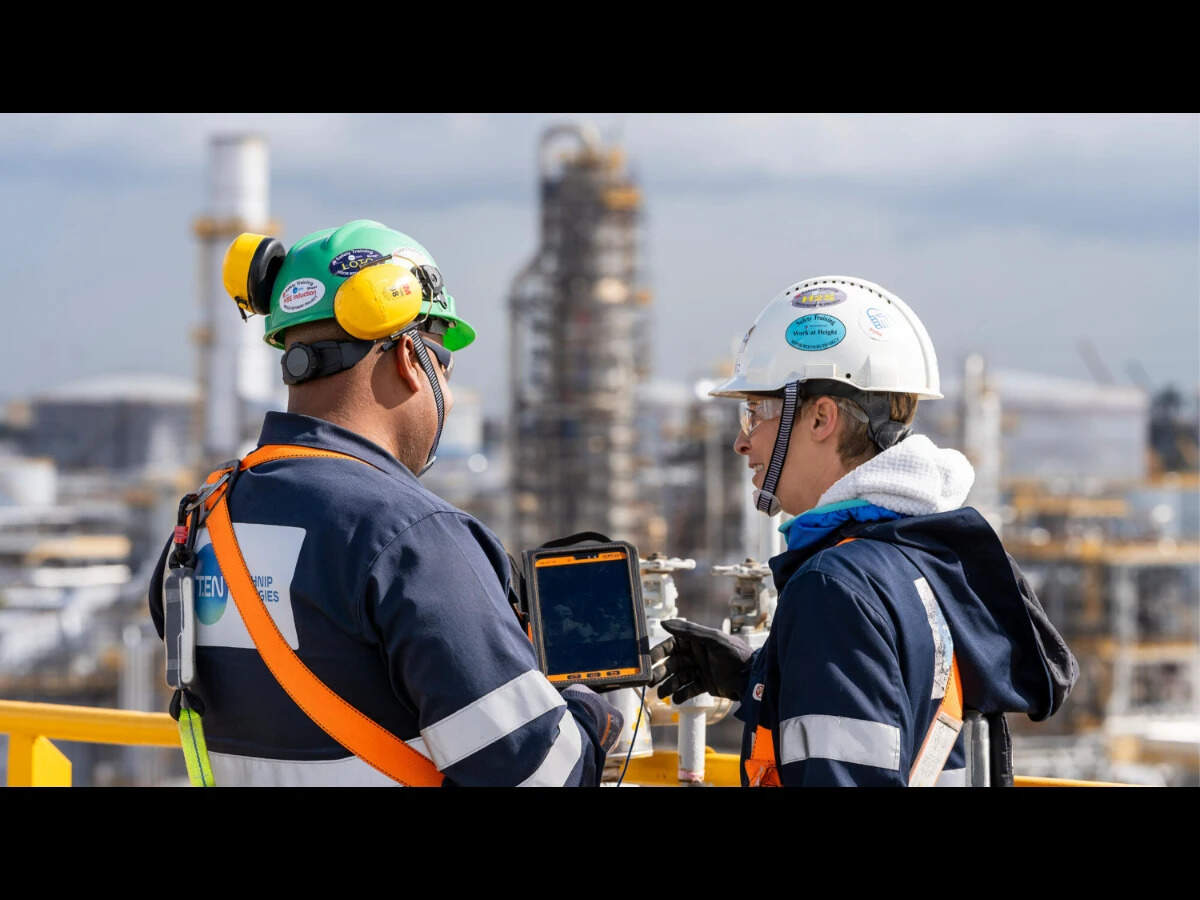
Technip Energies on Monday said it has secured a major engineering, procurement and construction (EPC) contract from Hindustan Petroleum Corporation (HPCL) for its Lube Modernisation and Bottom Upgradation (LMBU) project at the Mumbai refinery in Maharashtra.
According to the official press release, the contract involves the development of a 550 KTA integrated hydrocracker and catalytic dewaxing unit and an 850 KTA solvent deasphalting unit, which will be integrated into HPCL’s existing refinery operations.
The project will modernise HPCL’s production of lube oil base stocks, key components used in the manufacture of automotive engine oils and industrial lubricants.
“This award by HPCL reflects the confidence placed in our EPC delivery capabilities and builds on a relationship between our two companies spanning more than two decades,” said Loïc Chapuis, President Project Delivery and Services at Technip Energies.
The project will also upgrade heavier refinery streams into higher-value products, improving resource utilisation and supporting the refinery’s long-term competitiveness.
As India continues to invest in the modernisation of its refining infrastructure to meet growing domestic demand for fuels and specialty petroleum products, the company claims that this project will contribute to strengthening the country’s production capabilities while improving the value generated from existing refining assets.
Join the community of 2M+ industry professionals.
Subscribe to Newsletter to get latest insights & analysis in your inbox.
All about ETEnergyworld industry right on your smartphone!
New Delhi: India has protected city gas supplies by curbing deliveries to fertiliser plants, refineries and industrial users as the Middle East conflict disrupts liquefied natural gas (LNG) shipments, while South Asia’s overall LNG demand is now expected to fall by about 6 million tonnes in 2026, consultancy Wood Mackenzie said.
The region’s LNG demand had earlier been projected to grow by 2.7 million tonnes, or 7 per cent, this year. The closure of the Strait of Hormuz and disruption to Qatari and United Arab Emirates supplies have reversed that outlook, forcing governments to ration gas, seek expensive replacement cargoes and absorb mounting fiscal costs, Wood Mackenzie said.
“India fared relatively better by deploying a tiered demand-management strategy that kept city gas distribution unaffected while cutting supply to the fertiliser, refinery, and industrial sectors in March and April,” it said in a report.
Government subsidies helped sustain fertiliser production, with daily urea output rising by 12,000-15,000 tonnes. Monthly production reached record highs of 25.19 lakh tonnes in May and 25.37 lakh tonnes in June, according to the consultancy.
However, India has not escaped the price shock. LNG tender award prices ranged from USD 16.8 to USD 18.8 per million British thermal units (mmBtu) between March and June, before rising to USD 26.4 per mmBtu in September. Demand for LNG tenders remained robust throughout the period, Wood Mackenzie said.
The disruption has hit Pakistan and Bangladesh harder because of their dependence on Gulf supplies. In 2025, Qatar accounted for 99 per cent of Pakistan’s LNG imports and more than 70 per cent of Bangladesh’s, leaving both countries highly exposed to interruptions through the Strait of Hormuz.
Nearly 90 per cent of Qatari and UAE LNG shipments transiting the strait in 2025 were destined for Asia, making the region particularly vulnerable to the supply shock, Wood Mackenzie said.
The resulting surge in spot prices relative to contracted LNG prices contributed to a reduction in gas demand of more than 3 million tonnes in Bangladesh and about 1.5 million tonnes each in India and Pakistan, according to the consultancy.
“The Middle East conflict has exposed the structural vulnerabilities of South Asian LNG markets in stark terms,” said Johnson Quadros, head of gas and LNG research at Wood Mackenzie. “Countries that had diversified their supply sources and established multiple pricing mechanisms came through this crisis in far better shape than those that had not.”
Pakistan has been among the hardest-hit markets, with the Hormuz disruption reducing LNG supplies bound for the country by as much as 0.4 million tonnes per month between March and November 2026. It responded by curtailing demand, switching fuels and releasing previously withheld domestic gas, resulting in more than 2.5 million tonnes of gas demand destruction, Wood Mackenzie said.
Pakistan returned to the spot LNG market in April after a two-year absence, but high prices limited its ability to secure replacement cargoes. It also remains liable for daily floating storage and regasification unit (FSRU) take-or-pay charges regardless of whether LNG cargoes arrive, adding to the financial burden.
Wood Mackenzie has cut its forecast for Pakistan’s LNG demand to 3.7 million tonnes in 2027, from 6.6 million tonnes in 2025. Committed LNG volumes are expected to exceed demand through 2030, while uncontracted volumes are projected to account for more than 90 per cent by the early 2030s.
Bangladesh, meanwhile, has struggled to replace disrupted supplies because of limited scope to increase domestic gas production and a lack of diversified import options. Gas shortages triggered prolonged power outages and greater reliance on coal.
State-owned Petrobangla bought spot LNG cargoes from Gunvor and Vitol for March delivery at USD 23-28 per mmBtu. Between March and June, Bangladesh consistently paid an average of more than USD 18 per mmBtu for spot LNG, putting additional pressure on government subsidies, Wood Mackenzie said.
Governments across South Asia have responded with gas rationing, power cuts, tariff increases and additional budget allocations. But the consultancy warned that such measures defer costs rather than resolve the underlying vulnerabilities, as rising energy bills and disrupted industrial supplies put further pressure on consumers, businesses and public finances.
The duration of the conflict remains a key uncertainty. If disruptions persist, governments could face increasingly difficult choices between energy security, consumer protection and fiscal stability, Wood Mackenzie said.
The crisis also threatens the region’s longer-term gas demand outlook. Wood Mackenzie expects affordable LNG to be essential to support global demand growth of 60 per cent through 2040, with South and Southeast Asia central to that expansion.
“Affordable LNG is essential to drive the 60 per cent demand growth we expect through 2040, and South and Southeast Asian economies are central to that trajectory,” Quadros said.
“The disconnect between today’s supply crisis and tomorrow’s risk of oversupply creates real uncertainty for both buyers and sellers. Buyers who do not act on the lessons of 2026 on diversification, on flexible pricing, on infrastructure resilience and on building trading capabilities risk facing the same vulnerabilities again, in a market that will be even larger and more interconnected.”