Author: admin

  • Trump has learnt his India lesson the hard way but will he own up?

    Trump has learnt his India lesson the hard way but will he own up?

    New Delhi's argument has never been that Russia's invasion of Ukraine is acceptable. It is that energy security, inflation and the purchasing power of hundreds of millions of people must count in decisions about where a country buys its fuel.
    New Delhi’s argument has never been that Russia’s invasion of Ukraine is acceptable. It is that energy security, inflation and the purchasing power of hundreds of millions of people must count in decisions about where a country buys its fuel.

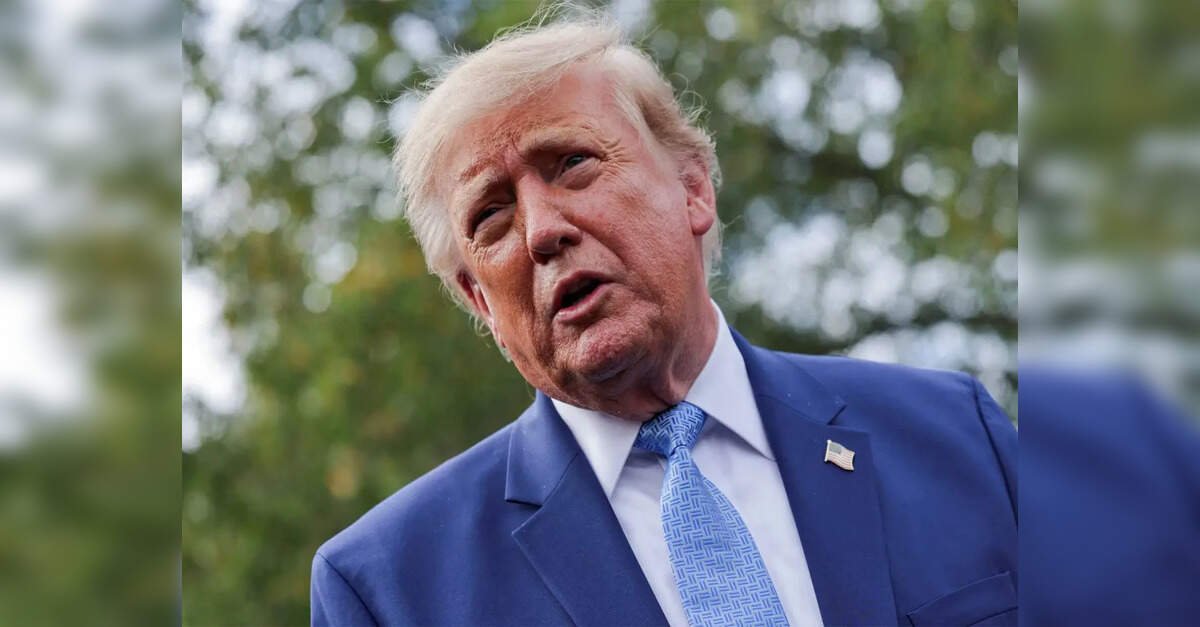
    Donald Trump has been pressuring India for close to a year to stop buying Russian oil, arguing that energy revenues were helping Vladimir Putin finance his war against Ukraine. He even imposed an additional 25 per cent tariff on Indian imports last year to punish New Delhi for continuing those purchases.

    Now, with American diesel prices soaring and the November 3 midterm elections hanging over his head like a sword, Trump has struck a deal to bring Russian diesel into global markets.

    The reversal exposes an uncomfortable truth that when energy costs threaten voters, geopolitical principles become negotiable. The question is whether Trump will now acknowledge India’s argument that affordable energy and the interests of ordinary people cannot simply be sacrificed to foreign policy objectives.

    The American consumer comes first

    Trump announced the agreement with Putin on October 9 after what he described as a successful conversation with the Russian president. Russia would immediately supply more than 300,000 tonnes of diesel, followed by another 500,000 tonnes in November and 1 million tonnes thereafter. A further 3 million tonnes could follow, depending on refinery conditions.

    Diesel powers American agriculture, trucking and parts of the heating sector. Its rising cost feeds into freight charges, food prices and inflation, making it a politically sensitive issue before voters decide whether Republicans retain control of Congress. Trump has described lower fuel prices for farmers, ranchers and truckers as a priority.

    The irony here is difficult to miss. The administration that argued Russian oil purchases helped finance Moscow’s war is now prepared to relax restrictions to secure Russian fuel for Americans. The economic logic is familiar to India, which imports most of its crude oil and cannot insulate its consumers from international price shocks.

    New Delhi’s argument has never been that Russia’s invasion of Ukraine is acceptable. It is that energy security, inflation and the purchasing power of hundreds of millions of people must count in decisions about where a country buys its fuel. Trump has learnt his India lesson the hard way when opinion polls suggest his popularity is dipping and high diesel prices just before midterm elections loom as a threat.

    A concession that may not deliver

    There is, however, a significant difference between announcing a deal and changing prices at the pump. Analysts doubted Russia could deliver the promised volumes easily, given damage to its refining infrastructure and restrictions on diesel exports. Russian export capacity has been disrupted by Ukrainian strikes, while Moscow has also imposed export restrictions to protect domestic supplies.

    The proposed shipments were unlikely to make a substantial difference to American diesel prices. Transporting fuel takes time, and the promised volumes remain small relative to global demand. The arrangement may offer some additional supply, but it cannot quickly reverse the damage caused by disruptions to energy production and shipping.

    That weakens the administration’s economic case for taking a politically costly decision that appears to benefit Putin. If the relief for American consumers proves modest, the diplomatic and legislative backlash could outlast any immediate price benefit.

    The legal battle could complicate India’s case

    Having learnt that people take precedence over geopolitics, will Trump now acknowledge India’s long-held concerns over oil? The biggest obstacle to any American concession to India may now be Trump’s own Congress.

    On October 11, seven senators, including Republicans Susan Collins, Lisa Murkowski, Thom Tillis and John Curtis, urged the administration to reverse the decision. Democrats Jeanne Shaheen, Richard Blumenthal and Ron Wyden also signed the statement, arguing that the 2022 ban on Russian energy imports was intended to prevent American money from financing Putin’s war. They accused the administration of failing to consult Congress or provide the explanation required by law.

    Tillis went further, saying there was a legitimate case that Trump was not following the law. Representative Brian Fitzpatrick has separately vowed to force a House vote to block Russian oil purchases. The opposition is particularly awkward for Trump because the sanctions legislation signed in September, named after the late Senator Lindsey Graham, allows tariffs of up to 100% on major buyers of Russian energy.

    However, Treasury Secretary Scott Bessent insists the administration has sufficient legal authority to proceed. The Treasury has temporarily suspended sanctions on Russian diesel exports until April 7, 2027, for fuel already loaded onto tankers by the specified deadline. But whether that exemption can withstand congressional scrutiny is a separate question from whether the administration believes it is justified.

    If Washington needs a special legal interpretation or a narrow exemption to buy Russian diesel, it will be harder to argue that India’s purchases must automatically attract punitive measures. Yet the reverse is also possible — congressional opposition could push Trump towards a tougher public stance on sanctions, even as his administration seeks flexibility for itself.

    Will India get a carve-out?

    India is watching how Washington structures the exemption. ET reported today that India was reviewing the implications of Trump’s announcement, with officials examining whether the US could create a specific concession for its own purchases without formally violating the Russia and Iran Sanctions Act. The administration has not reached a conclusive decision on a waiver for India, despite a September 30 conversation between Trump and Prime Minister Narendra Modi.

    For India, the stakes go beyond the immediate tariff bill. Energy purchases from Russia have provided an additional source of supply and helped Indian refiners manage costs. Some Russian crude is processed in India and the resulting refined products, including diesel, are exported to international markets. That creates a further complication for Washington. Former US diplomat Stephen Mull told The Times of India that India has its own leverage because some of the Russian crude it buys is refined into diesel that subsequently reaches American markets.

    Mull argued that India has options to respond if sanctions are imposed and that Trump would have to factor those possibilities into his calculations. Retaliation could deepen the damage to a bilateral relationship already strained by trade negotiations and disagreements over Washington’s approach to Pakistan.

    Washington may distinguish between crude oil purchases and a temporary arrangement involving diesel already loaded onto ships. That argument could matter legally but won’t erase the sheer political inconsistency.

    The hard lesson Trump may still refuse to acknowledge

    Trump’s decision does not necessarily mean he would now accept India’s argument. He could insist that America’s arrangement is temporary, narrowly defined and designed to address an exceptional supply crisis. He could also return to a harder sanctions policy once the immediate pressure on fuel prices eases after midterms.

    If fuel prices remain high, the administration will face pressure to find more supplies regardless of their origin. If prices fall, Trump may have greater room to restore restrictions and maintain pressure on countries buying Russian energy. Either way, the principle guiding policy appears less absolute than Washington previously suggested.

    Trump need not endorse India’s entire position on Russia to acknowledge that energy security cannot be judged by one standard for Washington and another for New Delhi. But with Republicans and Democrats questioning his diesel deal, a waiver of any sort for India may become politically harder to deliver.

    • Published On Oct 12, 2026 at 03:16 PM IST

    Join the community of 2M+ industry professionals.

    Subscribe to Newsletter to get latest insights & analysis in your inbox.

    All about ETEnergyworld industry right on your smartphone!

  • Lumino Industries bags orders worth ₹496 crore since its September IPO

    Lumino Industries bags orders worth ₹496 crore since its September IPO

    ETManufacturing Desk

    The company said the manufacturing orders cover conventional and high-performance conductors, as well as high-tension (HT), low-tension (LT), and railway signalling cables, clarifying that these cater to the power transmission and distribution sector and other industries.
    The company said the manufacturing orders cover conventional and high-performance conductors, as well as high-tension (HT), low-tension (LT), and railway signalling cables, clarifying that these cater to the power transmission and distribution sector and other industries.

    Lumino Industries, a Kolkata-based power infrastructure company, has secured new orders worth ₹496 crore since listing its shares on the stock exchanges on September 3, 2026, taking its order book to ₹3,215 crore, the company said in a regulatory filing on Monday.

    The orders, excluding goods and services tax (GST), comprise manufacturing contracts worth ₹339 crore for conductors and cables and an engineering, procurement and construction (EPC) contract worth ₹157 crore to upgrade underground power distribution networks in India.

    “Rising electricity demand, renewable energy integration and network upgrades are driving investment in India’s transmission and distribution infrastructure,” said Devendra Goel, managing director of Lumino Industries.

    The company said the manufacturing orders cover conventional and high-performance conductors, as well as high-tension (HT), low-tension (LT), and railway signalling cables, clarifying that these cater to the power transmission and distribution sector and other industries.

    The EPC contract involves upgrades to underground distribution networks.

    The company also noted that it is focusing on high-performance products, including high-temperature low-sag (HTLS) conductors, used to increase power transfer capacity across transmission networks, railways, and other industries.

    The company operates two manufacturing facilities in Howrah, West Bengal, with a combined annual aluminium consumption capacity of 40,000 tonnes. Its upcoming facility at Ranihati, Howrah, is expected to increase capacity to 75,000 tonnes in phases.

    Join the community of 2M+ industry professionals.

    Subscribe to Newsletter to get latest insights & analysis in your inbox.

    All about ETEnergyworld industry right on your smartphone!

  • Emerging Asia's power-driven LNG demand at risk as renewables gain ground

    Emerging Asia's power-driven LNG demand at risk as renewables gain ground

    Falling renewable energy costs and volatile LNG prices are reshaping power investment plans across emerging Asia.
    Falling renewable energy costs and volatile LNG prices are reshaping power investment plans across emerging Asia.

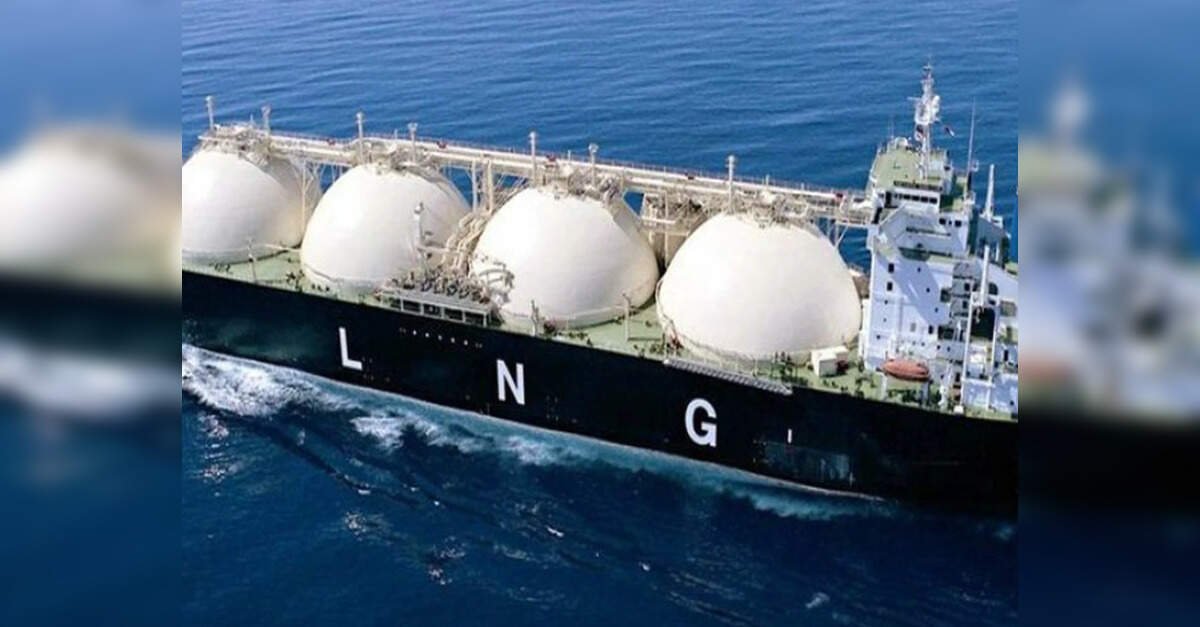
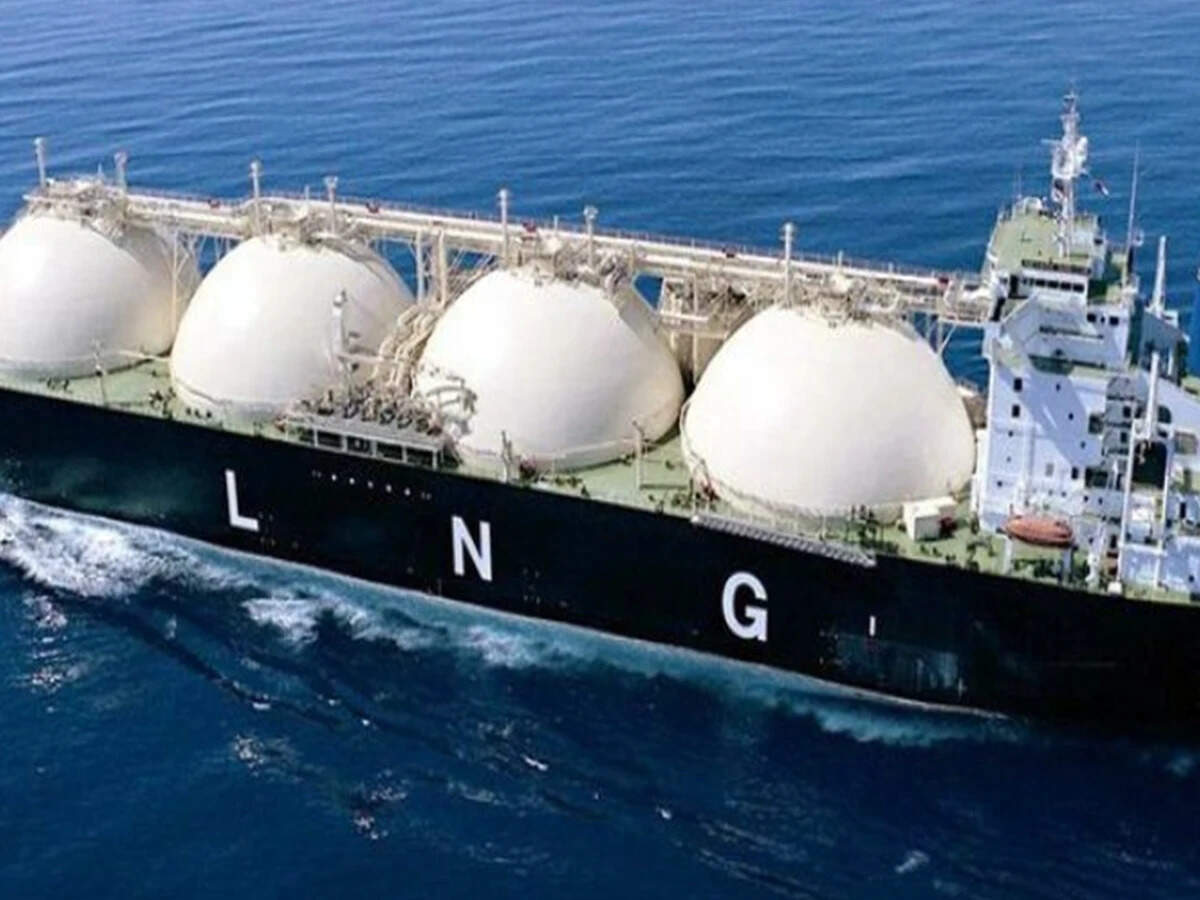
    Emerging Asia is losing its appetite for liquefied natural gas to generate power as geopolitical shocks, equipment shortages and cheaper renewables derail projects, disappointing industry hopes that the region would drive the next wave of demand.

    Countries including Vietnam and the Philippines had planned new LNG import terminals and power plants to meet rising demand and transition from coal, but the market shocks of Russia’s 2022 Ukraine invasion and the ongoing US-Iran war sent prices soaring, exposing the risks of LNG reliance.

    Since then, several projects in the region have stalled while buildout plans for others have fallen behind targets, with a global gas turbine shortage contributing to the slowdown.

    With renewable generation costs falling, governments are accelerating their clean energy deployment to cut import fuel dependency. The International Energy Agency forecast in October that wind and solar energy will contribute 11 per cent of Southeast Asia’s energy mix by 2030, up from 5 per cent in 2025.

    “As gas project delays mount and supply chains tighten, policymakers are being forced to rethink not only the role of gas in the near term, but also the long-term pathways to achieving their energy transition goals,” said Wei Han Tan, Southeast Asia power and renewables analyst at Wood Mackenzie.

    “Countries will need to look elsewhere to meet rising demand”, he said, by adding to existing coal fleets and speeding up renewables deployment.

    Wood Mackenzie estimates that only 14.9 gigawatts of Southeast Asia’s planned 53 GW of gas-fired power projects in the pipeline will come online by 2030, with Vietnam seeing the biggest shortfall in projects, with 25.7 GW unlikely to start by then.

    Even before the Iran war, gas-fired power generation was losing ground across some emerging Asian economies, data from energy think tank Ember shows. Gas-fired power output has declined in Bangladesh, Pakistan and India in the last five years as coal and renewables expand, while gas has struggled to expand its share of China’s power mix.

    In Southeast Asia, gas generation volumes have been stable in the last decade, but have steadily lost share to expanding renewable capacity.

    Transition now

    Since the US-Israeli war on Iran began on February 28, emerging Asian markets have accelerated plans for alternative power sources. Bangladesh and Thailand announced solar rollout plans, while Vietnam is considering increasing coal-fired generation.

    Thailand, which imports a fifth of its LNG from Qatar, must secure alternative near-term supplies but speed its energy transition in the long run, its energy minister told Reuters last month.

    In the Philippines, rooftop solar installations to offset high electricity prices are rising, while at least three LNG-related projects there have been halted in the last two years.

    One project in the Philippines stalled after developer Energy World Corp sold the gas turbine for its power plant for nearly four times what it paid a decade ago, saying rapid renewable energy growth was reducing the need for gas-fired generation. The company intends to build the site as an import terminal, according to its website.

    Irtiza Sayyed, the chief executive of JERA Global Energy Solutions, said power infrastructure development in emerging economies has slowed as they compete globally with data centres for gas turbines. JERA is Japan’s top power generator and is looking to sell LNG in South and Southeast Asia.

    Reduce volatility

    To be sure, overall LNG demand in emerging Asia is still likely to rise as economies grow and domestic gas production wanes, with Wood Mackenzie forecasting Southeast Asian consumption rising to 39 million metric tons by 2028, from 27 million in 2025.

    LNG proponents also say gas is needed for grid reliability and flexible power generation, while planned data centre capacity could boost power-sector demand.

    But governments planning for the next decade will likely turn to additional renewable energy amid gas price uncertainty, said Rystad Energy analyst Lu Ming Pang.

    The firm has cut its long-term Asia LNG demand forecasts by 3 per cent for 2040, and 7 per cent by 2045, as countries including Vietnam and the Philippines have not secured sufficient LNG supply deals and infrastructure, while China accelerates its renewable energy buildout.

    • Published On Oct 12, 2026 at 02:06 PM IST

    Join the community of 2M+ industry professionals.

    Subscribe to Newsletter to get latest insights & analysis in your inbox.

    All about ETEnergyworld industry right on your smartphone!

  • Exponent Energy completes 200 ICE-to-EV autorickshaw retrofits in Bengaluru

    Exponent Energy completes 200 ICE-to-EV autorickshaw retrofits in Bengaluru

    The company says the retrofitted vehicles have covered over 1.5 million km and completed more than 25,000 charging sessions during the four-month pilot.

  • India’s cab game has a new green player: A Vietnamese behemoth aiming to win fast

    India’s cab game has a new green player: A Vietnamese behemoth aiming to win fast

    Green SM enters India with a controlled electric vehicle fleet, challenging the aggregator model. This Vietnamese company aims for a premium segment, unlike Uber and Ola’s mass-market approach.

  • UAE President calls PM Modi, discusses West Asia situation and deepens strategic ties

    UAE President calls PM Modi, discusses West Asia situation and deepens strategic ties

    Prime Minister Narendra Modi spoke with UAE President Sheikh Mohamed bin Zayed Al Nahyan. They exchanged views on recent developments occurring in West Asia.

  • India, Bhutan sign ₹4,000 crore Line of Credit for energy projects during Jaishankar visit

    India, Bhutan sign ₹4,000 crore Line of Credit for energy projects during Jaishankar visit

    India and Bhutan welcomed the signing of an agreement on a concessional Line of Credit of INR 4,000 crore for energy projects in Bhutan during External Affairs Minister S Jaishankar’s official visit to the country.

  • Fed unlikely to signal aggressive tightening cycle; energy prices remain key risk: Axis Bank

    Fed unlikely to signal aggressive tightening cycle; energy prices remain key risk: Axis Bank

    The US Federal Reserve is unlikely to embark on an aggressive tightening cycle, with only one additional rate hike projected, even as energy prices remain the key risk to the inflation outlook and potential new tariffs could renew price pressures, according to an Axis Bank report.

  • GR Infraprojects shares drop 2% after terminating contract with NTPC. Here’s why

    GR Infraprojects shares drop 2% after terminating contract with NTPC. Here’s why

    Shares of GR Infraprojects fell 2% after the company issued a notice to terminate its contracts with NTPC for a Battery Energy Storage System project at Mouda Super Thermal Power Station.

  • India’s EV charging network expands 10X in 4 years, but user experience remains a concern: Report

    India’s EV charging network expands 10X in 4 years, but user experience remains a concern: Report

    India’s public EV charging network has expanded more than tenfold since 2022, but poor charger reliability, high public charging costs and home-charging challenges continue to limit wider EV adoption, according to IEEFA.