Author: admin

  • From monitoring to management: Rajasthan’s journey towards a distributed energy resource management system

    From monitoring to management: Rajasthan’s journey towards a distributed energy resource management system

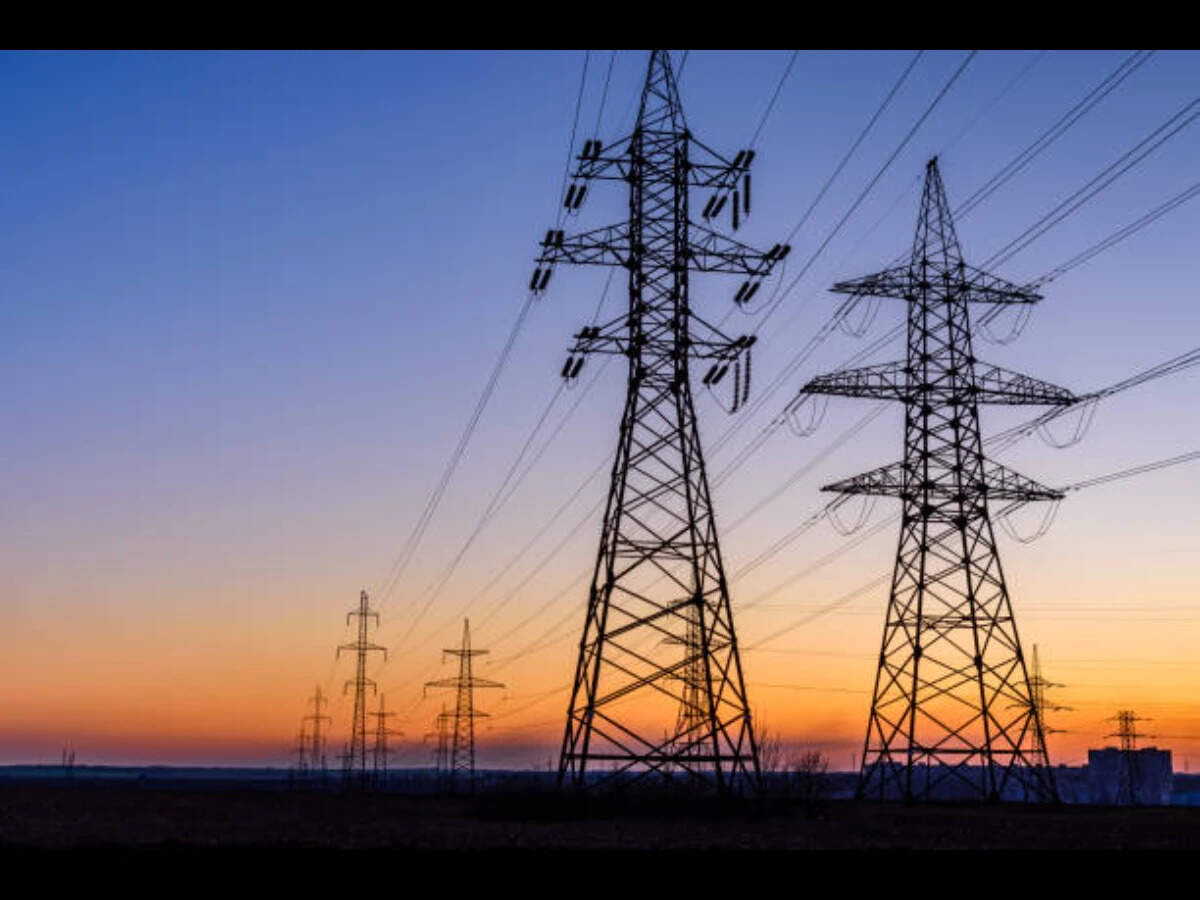
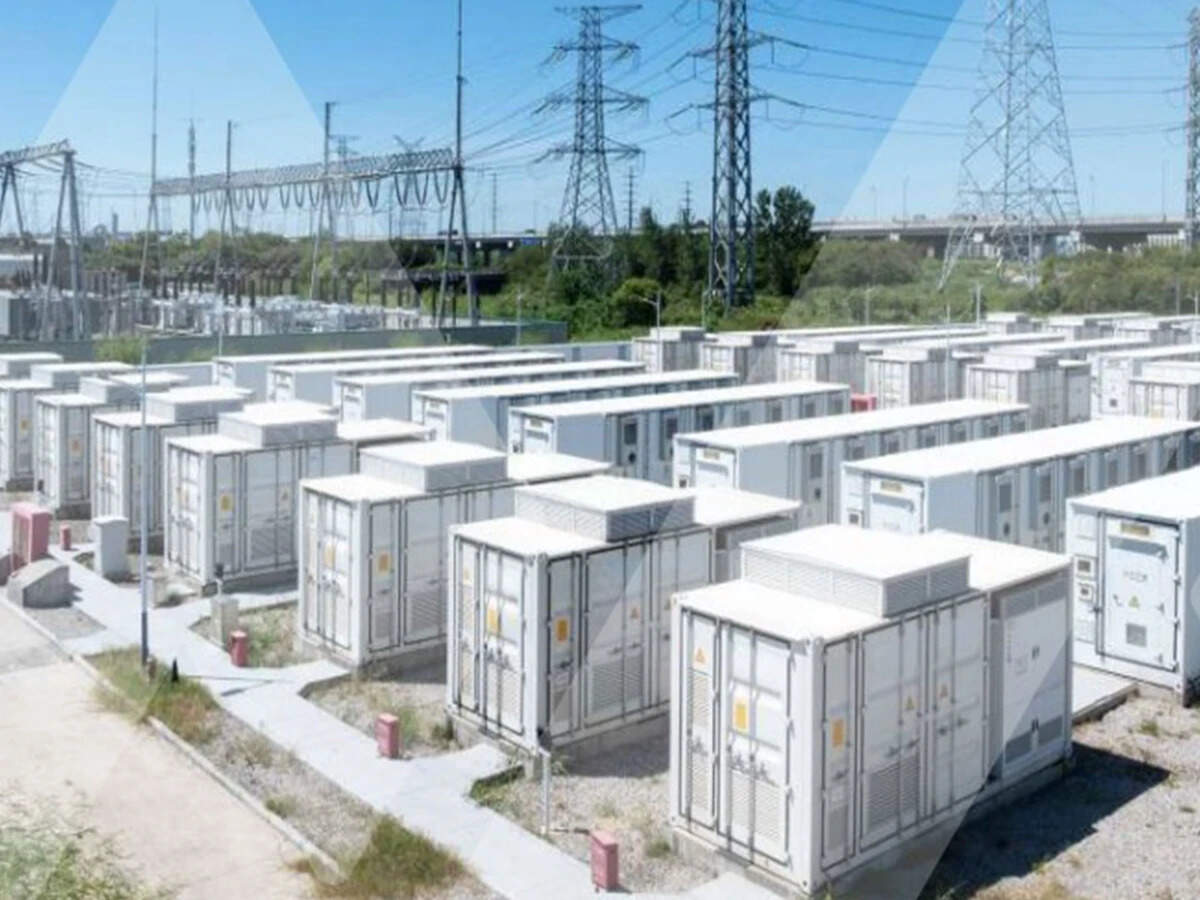
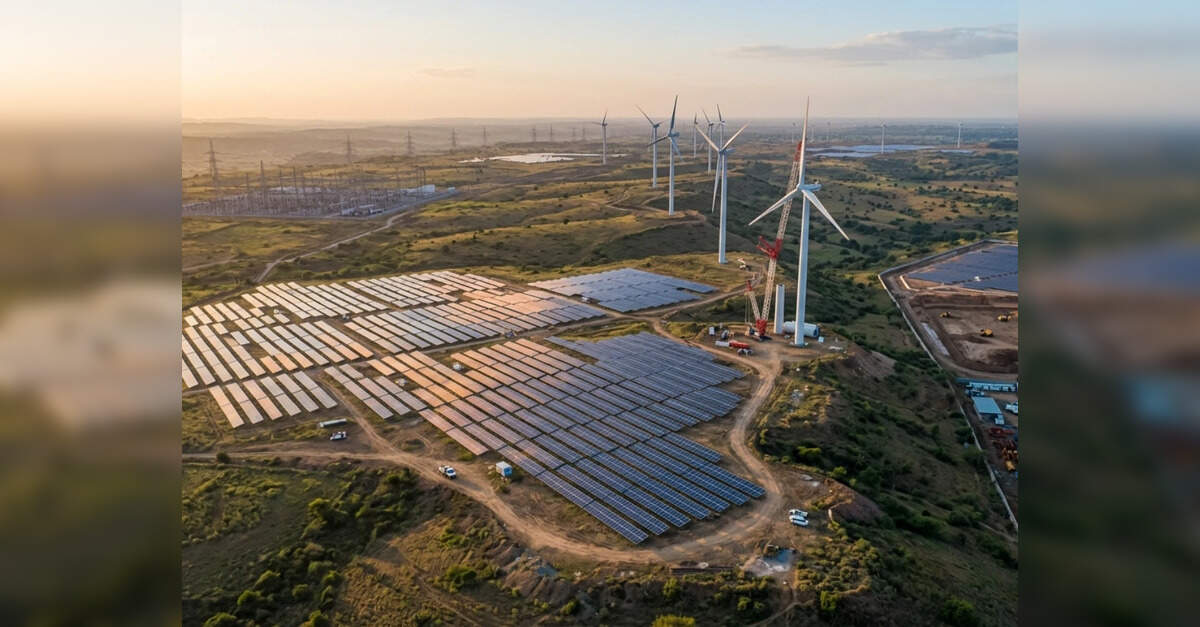
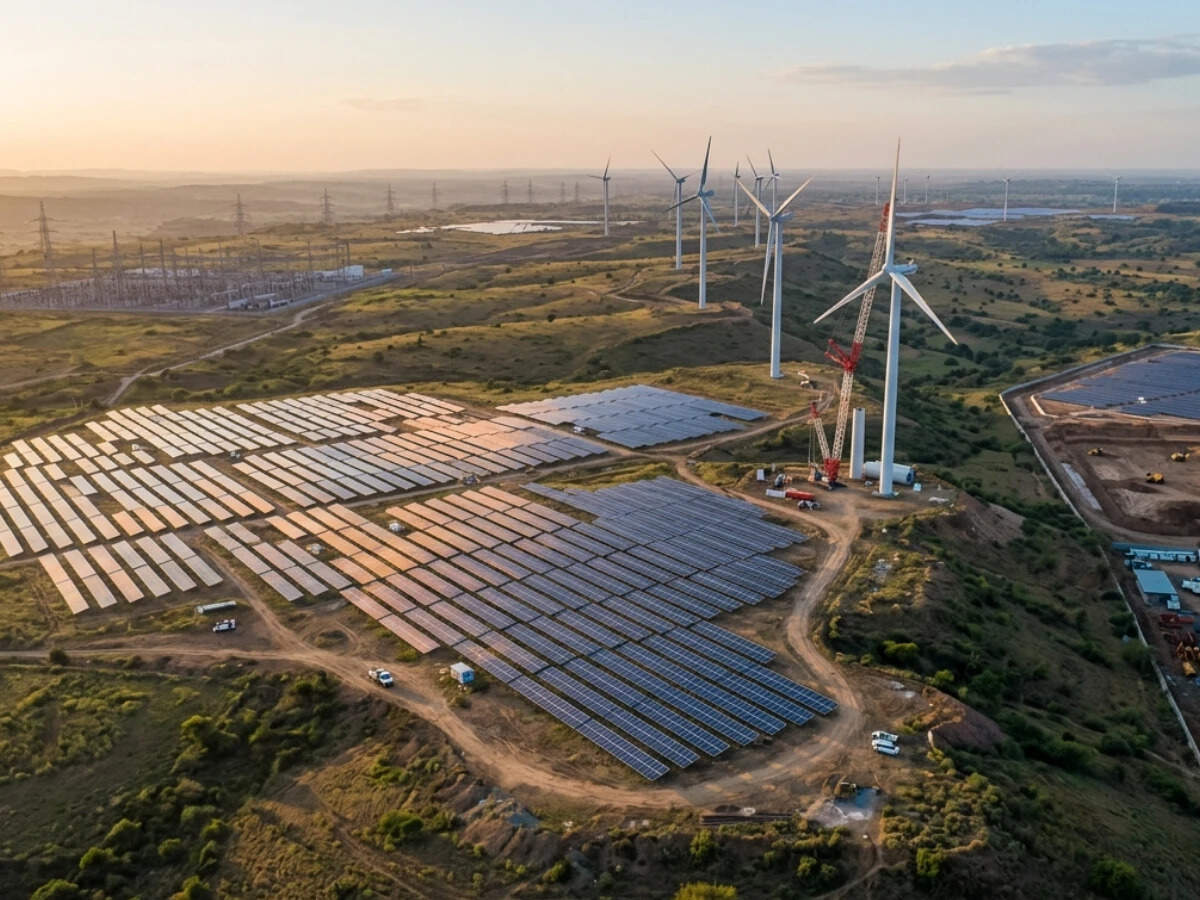
    Distributed renewable energy includes rooftop photovoltaic systems, agricultural solarisation, small captive plants, behind-the-meter generation and other decentralised resources.(Representational image)
    Distributed renewable energy includes rooftop photovoltaic systems, agricultural solarisation, small captive plants, behind-the-meter generation and other decentralised resources.(Representational image)

    India’s electricity transition is entering a new phase. For much of the past decade, policy attention has centred on accelerating renewable energy capacity addition and developing the transmission infrastructure required to integrate large-scale solar and wind projects. These priorities remain critical.

    However, the rapid growth of distributed renewable energy is creating a parallel challenge: how to govern and operate an electricity system that is becoming increasingly decentralised.

    Distributed renewable energy includes rooftop photovoltaic systems, agricultural solarisation, small captive plants, behind-the-meter generation and other decentralised resources.

    Recent policy interventions such as PM-KUSUM and PM-Surya Ghar, along with regulatory innovations including Virtual Net Metering and Group Net Metering, have accelerated the penetration of DRE.

    Unlike utility-scale projects, distributed energy assets are geographically dispersed, connected at different points across the distribution network and often involve large numbers of consumers as well as multiple implementing agencies.

    The scale of this transition is already significant. During 2025–26, distributed solar accounted for approximately 16.3 GW, or around 36 per cent, of total solar capacity additions in India.

    As distributed resources become an increasingly important part of renewable capacity, the electricity system must accommodate greater volumes of variable generation, bidirectional power flows and a significantly larger number of active participants.

    The policy question is therefore evolving. It is no longer only about how rapidly renewable capacity can be added, but also about how effectively an increasingly distributed renewable energy system can be integrated and managed, while ensuring that the momentum in utility-scale projects is not adversely affected.

    From renewable energy scale to distributed complexity

    Rajasthan has emerged as one of India’s leading renewable energy states, with an estimated potential of approximately 828 GW of solar and 284 GW of wind energy.

    The state has crossed 50 GW of installed renewable energy capacity, including approximately 44 GW of solar capacity, representing around 27 per cent of India’s total installed solar capacity.

    But Rajasthan’s renewable energy transition is increasingly moving beyond large utility-scale projects.

    Under PM Surya Ghar, rooftop solar adoption has accelerated, with more than three lakh installations achieved in Rajasthan by September 2026.

    Agricultural solarisation under PM-KUSUM has also expanded significantly. Against an allocation of approximately 10.5 GW, around 5 GW has been installed, supporting daytime electricity supply to more than 3.34 lakh farmers by 18 August 2026.

    These programmes are being complemented by the solarisation of government buildings, distributed generation for public infrastructure through virtual net metering and group net metering mechanisms, and an increasing number of small captive and behind-the-meter generation projects.

    These developments represent a significant policy opportunity. At the same time, they fundamentally alter the management challenge.

    A utility-scale renewable energy project typically involves a relatively small number of large assets whose location, capacity and generation profile are visible to system operators, including state load dispatch centres or SLDCs.

    Distributed energy, by contrast, can involve thousands or even millions of smaller assets spread across the network.

    The resulting challenge is fundamentally one of information, coordination and system visibility.

    The visibility problem

    As distributed renewable energy penetration rises, distribution utilities increasingly need granular information on quite a few factors, including the location and capacity of distributed resources; actual generation profiles; electricity injection at feeder and substation levels; consumer demand patterns; network loading and constraints; and the status of existing and proposed installations.

    Without such information, distributed generation can effectively remain invisible from the perspective of system planning.

    This creates three important challenges.

    First, demand forecasting becomes more difficult as an increasing share of consumer demand is met through distributed renewable generation.

    Second, network planning becomes less responsive, because conventional demand-based planning does not fully capture the changes resulting from distributed generation.

    Third, renewable energy curtailment may increase, particularly for existing utility-scale projects, when local demand falls because of DRE while utility-scale renewable generation remains high.

    Curtailment of renewable energy creates significant financial stress for utility-scale renewable energy projects, since traditional energy PPAs in India generally reward actual delivery of energy units and do not adequately mitigate the risk of financial losses arising from non-delivery caused by curtailment.

    The institutional challenge

    The visibility challenge is further complicated by institutional fragmentation.

    DRE programmes involve multiple stakeholders — central ministries, state agencies, DISCOMs, consumers, developers, vendors and regulators.

    Different schemes may operate through separate application processes, databases, inspection procedures and subsidy mechanisms.

    For consumers, such fragmentation can mean navigating multiple interfaces while having limited visibility of their application status.

    For implementing agencies, it can lead to duplication of data and difficulties in tracking projects across their lifecycle.

    For DISCOMs, State Transmission Utilities and SLDCs, fragmented information can restrict access to timely data needed for network planning and system operations.

    The conventional approach has often been incremental digitisation, with separate portals developed for individual schemes or administrative functions.

    A more fundamental question, however, is whether these interventions can be brought together within a common digital and data architecture.

    DRE-PMT: From digitisation to integrated governance

    The DRE-PMT is being developed by Rajasthan Renewable Energy Corporation Ltd. (RRECL) to establish a unified digital platform for monitoring the DRE project lifecycle.

    Launched on August 13, 2026 by the Energy Minister, Government of Rajasthan, the platform brings together information and workflows that have traditionally remained dispersed across multiple programmes and institutions.

    DRE-PMT integrates functions including:

    • project registration and monitoring;
    • consumer application and tracking;
    • technical feasibility and approval workflows;
    • inspection and commissioning;
    • subsidy and DBT monitoring;
    • vendor management;
    • rooftop solar and agricultural solarisation programmes;
    • generation monitoring; and
    • DISCOM-level dashboards and analytics.

    Its significance can be viewed from two perspectives.

    The first is administrative efficiency.

    Standardised workflows, role-based access and centralised monitoring can reduce transaction costs, strengthen accountability and provide greater transparency to both prosumers and state agencies.

    The second is system intelligence.

    When project-level information is brought together with generation and network information, it can help identify where renewable generation is concentrated, how generation patterns differ across locations and where network constraints could potentially emerge.

    This creates the possibility of moving beyond simply tracking individual projects towards developing a more comprehensive understanding of the distributed energy system.

    From monitoring to DERMS

    A critical distinction must nevertheless be maintained between a DRE monitoring platform and a full Distributed Energy Resource Management System (DERMS).

    A monitoring platform primarily provides visibility.

    A DERMS is ultimately intended to provide operational intelligence and coordinated management of distributed energy resources.

    The evolution can be understood as:

    Data → Visibility → Analytics → Forecasting → Optimisation → Active Management

    DRE-PMT establishes important foundations for the initial stages of this progression.

    Further evolution would require integration with:

    • smart-meter data;
    • SCADA and distribution management systems;
    • geographic information systems;
    • weather and renewable generation forecasts;
    • battery energy storage;
    • electric vehicle charging infrastructure; and
    • demand-response resources.

    Such integration could eventually allow utilities to forecast distributed generation at the feeder level, anticipate congestion, onboard DRE aggregators, coordinate storage, optimise renewable utilisation and improve voltage and power-quality management.

    DRE-PMT can provide the foundational data architecture from which DERMS capabilities can progressively evolve.

    Implications for distribution utilities

    The growth of distributed renewable energy is changing the traditional architecture of the electricity system.

    Historically, electricity systems have largely followed the model:

    Generation → Transmission → Distribution → Consumer

    The emergence of rooftop solar, agricultural solarisation, storage, electric vehicles and other distributed resources is creating a considerably more complex model:

    Grid ↔ Distributed Resources ↔ Consumers (Prosumers)

    Consumers are increasingly becoming prosumers, capable of both consuming and supplying electricity.

    This transition requires corresponding changes in distribution utility capabilities.

    First, planning must become more granular.

    Utilities will need to understand changes at feeder, transformer and substation levels rather than relying primarily on aggregate demand growth.

    Second, operations must become more data-driven.

    Real-time or near-real-time visibility will become increasingly important for forecasting, balancing and congestion management.

    Third, digital capability must become part of core utility infrastructure.

    Digital platforms can no longer be viewed merely as administrative tools. They are increasingly becoming an essential layer of the electricity system itself.

    A policy roadmap for DERMS

    The Rajasthan experience suggests that states seeking to integrate DRE at scale could consider a phased approach.

    Stage I — Digitalisation: Digitise applications, approvals, inspections and project workflows.

    Stage II — Visibility:Create a unified registry of distributed energy assets and their generation characteristics.

    Stage III — Analytics: Develop forecasting, network analytics and congestion identification capabilities.

    Stage IV — Optimisation: Coordinate distributed generation, storage and demand-side resources.

    Stage V — Active Management:Enable real-time or near-real-time coordination and control of distributed resources.

    Four policy priorities cut across these stages.

    First, interoperability and cybersecurity should be embedded into digital platforms through common data standards and APIs.

    Second, asset-level visibility should progressively replace purely project-centric monitoring, enabling utilities to understand the location and behaviour of the distributed asset base.

    Third, digital and physical planning should be integrated, so that distributed generation data can inform network investment decisions.

    Fourth, institutional capacity must evolve alongside technology.

    Digital infrastructure will have limited value unless DISCOMs possess the analytical and operational capabilities required to convert data into decisions.

    Cybersecurity, data governance and privacy must also be incorporated into the architecture from the outset as distributed resources become increasingly digitally connected.

    India’s renewable energy transition is moving from a phase dominated by capacity addition towards one increasingly defined by integration and system management.

    Opportunities served with challenges

    For Rajasthan, the rapid expansion of distributed renewable energy presents both an opportunity and a governance challenge.

    Rooftop solar, agricultural solarisation and other decentralised resources can accelerate clean energy adoption and broaden consumer participation. At the same time, their geographical dispersion and operational variability demand greater visibility and coordination.

    DRE-PMT represents an important response to this challenge.

    Its immediate value lies in improving project governance, integrating workflows and creating a unified information environment. Its longer-term significance lies in the possibility of building on this foundation to develop increasingly sophisticated capabilities for distributed energy management.

    The journey from DRE-PMT to DERMS should therefore be viewed not simply as a technology upgrade, but as a transition in the operating model of the distribution sector.

    The ultimate objective is not merely to know how many distributed renewable energy assets exist. It is to understand where they are, how they behave, how they interact with the network and how they can be coordinated to maximise the value of renewable energy while maintaining reliability and affordability.

    For Rajasthan, this creates an opportunity to demonstrate a broader principle for India’s energy transition:

    The next generation of renewable energy infrastructure will require not only megawatts and wires, but also data, digital intelligence and institutional capacity to manage them.

    (The author is IAS, Chairman & Managing Director, Rajasthan Renewable Energy Corporation Ltd. Views are personal.)

    Join the community of 2M+ industry professionals.

    Subscribe to Newsletter to get latest insights & analysis in your inbox.

    All about ETEnergyworld industry right on your smartphone!

  • Rajesh Power Services wins ₹472 crore Gujarat power distribution contracts

    Rajesh Power Services wins ₹472 crore Gujarat power distribution contracts

    The company added that the new contracts have added over 10 per cent to the company's order book, taking its total order value closer to ₹4,000 crore.
    The company added that the new contracts have added over 10 per cent to the company’s order book, taking its total order value closer to ₹4,000 crore.

    Rajesh Power Services, a power transmission and distribution EPC company, on Monday said it has secured turnkey contracts worth ₹471.92 crore from Madhya Gujarat Vij Company (MGVCL) to strengthen electricity distribution infrastructure across Gujarat.

    According to the official press release, the contracts involve replacing existing 11 kV overhead power lines with medium-voltage covered conductors (MVCC) and underground cables across Gujarat.

    “This significant order from MGVCL marks an important milestone for Rajesh Power Services. With our aggregate order book reaching approximately ₹4000 crore, we continue to strengthen our project pipeline and business visibility,” said Kurang Panchal, Chairman & Managing Director at Rajesh Power Services.

    The company added that the new contracts have added over 10 per cent to the company’s order book, taking its total order value closer to ₹4,000 crore and providing execution visibility for the next 18 months.

    Join the community of 2M+ industry professionals.

    Subscribe to Newsletter to get latest insights & analysis in your inbox.

    All about ETEnergyworld industry right on your smartphone!

  • Tata Power Renewables’ Q2 FY27 project execution jumps 130% to 419 MW

    Tata Power Renewables’ Q2 FY27 project execution jumps 130% to 419 MW

    ETEnergyWorld Desk

    According to an official release, the company also executed 131.2 MWh of battery storage projects during Q2 FY27, comprising 101.2 MWh for its own operations and 30 MWh for third-party customers.
    According to an official release, the company also executed 131.2 MWh of battery storage projects during Q2 FY27, comprising 101.2 MWh for its own operations and 30 MWh for third-party customers.

    Tata Power Renewable Energy (TPREL), a subsidiary of Tata Power, on Monday said it has commissioned 419 MW of utility-scale renewable energy projects in the second quarter of FY27, registering year-on-year growth of over 130 per cent from 182 MW in the corresponding quarter last year.

    According to an official release, the company also executed 131.2 MWh of battery storage projects during Q2 FY27, comprising 101.2 MWh for its own operations and 30 MWh for third-party customers.

    Building on its second-quarter performance, TPREL commissioned a total of 645 MW of utility-scale renewable energy projects and 161.2 MWh of battery storage capacity during the first half of FY27. Of the total storage capacity, 101.2 MWh was developed for in-house operations, while the remaining 60 MWh was delivered to third-party customers.

    With these additions, the company’s operational utility-scale portfolio has reached 7.2 GW, comprising 5.8 GW of solar capacity, 1.3 GW of wind capacity and 281.2 MWh of battery storage capacity.

    The company said its expanding renewable energy portfolio continues to support India’s clean energy transition, energy security and sustainability goals.

    TPREL expects to execute more than 2 GW of renewable energy projects in H2 FY27, including 1,075 MW of solar, 969 MW of wind and 274 MWh of battery energy storage systems (BESS).

    In addition to its in-house projects, the company plans to execute another 300 MW of third-party projects during the second half of the financial year.

    By the end of FY27, TPREL expects its operational portfolio to reach about 9.3 GW, comprising 6,899 MW of solar, 2,298 MW of wind and 555.2 MWh of battery storage capacity.

    During H1 FY27, the company commissioned several major projects, including the 100.8 MW Jewali Wind Project, the Kalasar firm and dispatchable renewable energy project comprising 227.5 MW of solar capacity and 101.2 MWh of battery storage, the 100 MW Kayathar Group Captive Project and the 72.5 MW Tata Steel Captive Project.

    Join the community of 2M+ industry professionals.

    Subscribe to Newsletter to get latest insights & analysis in your inbox.

    All about ETEnergyworld industry right on your smartphone!

  • Oil price on October 12: Crude oil dips to $103 despite simmering Iran war tensions

    Oil price on October 12: Crude oil dips to $103 despite simmering Iran war tensions

    Veer Sharma

    Trump announced the energy ceasefire on Sunday, following Friday’s announcement of the diesel-supply deal with Russia. Ukrainian President Volodymyr Zelenskiy said he was still awaiting details of the agreement, while Russia had not commented.
    Trump announced the energy ceasefire on Sunday, following Friday’s announcement of the diesel-supply deal with Russia. Ukrainian President Volodymyr Zelenskiy said he was still awaiting details of the agreement, while Russia had not commented.

    Oil prices fell on Monday as expectations of increased Russian supplies weighed on the market after US President Donald Trump said Ukraine and Russia had agreed to stop attacks on each other’s energy facilities. The announcement followed a US deal with Moscow to supply diesel.

    Trump announced the energy ceasefire on Sunday, following Friday’s announcement of the diesel-supply deal with Russia. Ukrainian President Volodymyr Zelenskiy said he was still awaiting details of the agreement, while Russia had not commented.

    Crude oil price on October 12

    Brent crude futures declined $1.42, or 1.36 per cent, to $103.35 a barrel, while US West Texas Intermediate crude fell $1.42, or 1.60 per cent, to $90.42 a barrel.

    Iran war tensions continue

    The ongoing conflict in the Middle East continued to support Brent crude above $100 a barrel. Yemen’s Houthis claimed responsibility for a strike on Riyadh’s international airport on Saturday that killed 13 people and wounded more than 300. Saudi authorities also reported injuries in another attack on the airport on Sunday.

    Trump said on Saturday that the United States was considering joining Saudi strikes against the Houthis, as the conflict spreads from the wider war with Iran launched by the US and Israel in February.

    Attacks on tankers passing through the Strait of Hormuz have also increased this month, threatening to undermine the recovery in Middle Eastern crude exports recorded in September. The United Kingdom Maritime Trade Operations reported over the weekend that a tanker was hit by a drone near the Sohar anchorage in Oman, while another vessel was damaged by an unknown projectile while transiting the Strait of Hormuz.

    Where are prices headed?

    Uncertainty over how the conflict will end remains a key concern for markets. JPMorgan analysts said they did not know how to model the eventual outcome, noting that the bank had initially assumed the US administration would avoid crossing certain economic thresholds when the conflict began. Six months into the war, many of those thresholds had been crossed, while a clear exit strategy remained absent.

    The growing threat of further supply disruptions has also raised the prospect of higher oil prices. Daan Struyven, co-head of global commodities research at Goldman Sachs, said recent attacks demonstrated how disruptions to shipping could spread and intensify. Goldman Sachs has outlined a scenario in which oil prices could climb to $120 a barrel if attacks on vessels in the Middle East escalate. If exports return to normal, the bank expects prices to move back towards $80 a barrel.

    Speaking to Bloomberg, Struyven said risks to shipping had become a major driver of oil prices. Goldman Sachs sees meaningful upside potential for crude and expects natural gas and refined product prices to rise as well. Struyven added that supply shocks affecting gas and fuels were larger than those in the crude oil market.

    Disclaimer: This article has been written by Veer Sharma, who is not a SEBI-registered Research Analyst or an Investment Adviser. Veer Sharma and his/her ‘relative(s)’ (as defined under Section 2(77) of the Companies Act, 2013) do not hold any financial interest in the companies mentioned in this article as of the date of publication. The views/recommendations mentioned in this article, wherever applicable, are those of the respective SEBI-registered Research Analyst/brokerage and have been reproduced/reported with due attribution. They should not be construed as the views or recommendations of The Economic Times Digital or the journalist. Readers are advised to consider the original research report and make their investment decisions based on their own assessment. Brokerage disclaimers here.

    Join the community of 2M+ industry professionals.

    Subscribe to Newsletter to get latest insights & analysis in your inbox.

    All about ETEnergyworld industry right on your smartphone!

  • India's battery energy storage sector set for 91% growth to 302GWh by FY32E: Nuvama

    India's battery energy storage sector set for 91% growth to 302GWh by FY32E: Nuvama

    India’s battery energy storage sector is poised for rapid expansion as demand rises for grid balancing and round-the-clock renewable power.
    India’s battery energy storage sector is poised for rapid expansion as demand rises for grid balancing and round-the-clock renewable power.

    India’s Battery Energy Storage System (BESS) sector is projected to register a compound annual growth rate (CAGR) of 91 per cent between FY26 and FY32E, according to a recent report by Nuvama. The expansion reflects a critical infrastructure cycle designed to support renewable integration, grid balancing, and round-the-clock power requirements across the country.

    The report noted that cumulative capacity will surge from 6.3 GWh to 302GWh over the same period, with annual additions climbing from 5.7GWh in FY26 to 56 GWh by FY32E. The report noted that the Central Electricity Authority (CEA) estimates national BESS demand at 236 GWh by FY32 and 1,840 GWh by 2047.

    “We estimate annual BESS additions to rise from 5.7 GWh in FY26 to 56 GWh by FY32E, taking cumulative capacity from 6.3GWh to 302GWh (91 per cent CAGR) over FY2632E,” the report said.

    “With 89 per cent of current requirements met through imports, falling battery costs, alongside a likely ALMM-like framework, could accelerate adoption, localisation and domestic capacity growth. Although Li-ion occupies 98 per cent of the BESS market, sodium-ion technology and China+1 themes are an opportunity for India,” the report added.

    Manufacturing economics reveal distinct margins across end-markets, with commercial, industrial, and retail segments yielding spreads of $18 to 23 per kilowatt-hour, corresponding to EBITDA margins of 17 to 20 per cent. By contrast, the utility segment records spreads of $8 per kilowatt-hour and an EBITDA margin of 9 per cent.

    “Our analysis shows attractive cell-to-pack manufacturing economics with materially differentiated spreads across end-markets,” the report noted. “Even with low spreads of USD8/kWh (EBITDA margin 9 per cent) for the Utility segment, our calculation and channel checks indicate a one-to-two-year payback.”

    The report also highlighted that while returns for an integrated BESS facility yield a modest internal rate of return of 12 per cent, domestic production maintains a distinct cost advantage through capital expenditure of $80 million per gigawatt-hour, coupled with production-linked incentive support of ₹181 billion for 50 GWh and competitive labour expenses. Cell-to-pack configurations demonstrate an internal rate of return of 31 per cent.

    “We believe with policy support, localisation and scale, integrated BESS could open up export-led growth,” the report noted.

    Financially, BESS integration is estimated to contribute 17 to 60 per cent to company revenues by FY28. Premier presents an opportunity of ₹103 billion, representing 60 per cent of its projected FY28 revenue, while Vikram is positioned for a 54 per cent revenue uplift.

    “Despite early battery ambitions and potential BESS addition of 17-60 per cent to FY28E revenue, most listed solar/BESS players’ earnings are yet to capture meaningful BESS contribution,” the report stated.

    “At 17x FY27E EPS, solar/BESS trades at a 77 per cent discount to battery chemicals and a 64 per cent discount to battery IPP peers. As capacity ramps up, we believe BESS could emerge as a strong driver of earnings upgrade and valuation re-rating,” the report said.

    • Published On Oct 12, 2026 at 11:26 AM IST

    Join the community of 2M+ industry professionals.

    Subscribe to Newsletter to get latest insights & analysis in your inbox.

    All about ETEnergyworld industry right on your smartphone!

  • AI could help India’s remote green hydrogen hubs tackle skilled manpower crunch: Honeywell Technologies

    AI could help India’s remote green hydrogen hubs tackle skilled manpower crunch: Honeywell Technologies

    The industry’s readiness will ultimately depend on demonstrating that these systems can operate within clearly defined safety, cybersecurity and human-oversight frameworks, says Asheesh Arora.
    The industry’s readiness will ultimately depend on demonstrating that these systems can operate within clearly defined safety, cybersecurity and human-oversight frameworks, says Asheesh Arora.

    AI-assisted operations could help India’s remote green hydrogen hubs address the shortage of experienced industrial talent, says Asheesh Arora, Vice President & General Manager, Industrial Automation, Honeywell Technologies, India & APAC.

    In an exclusive interaction with ETEnergyWorld, Arora said AI-enabled systems can make operational knowledge more accessible to on-site teams, support faster analysis and decision-making, and help less-experienced operators manage complex processes with appropriate human oversight.

    Edited excerpts:

    In your pilot projects with green hydrogen developers, how does your software help keep electrolyser stacks running safely, and which green hydrogen developers are you currently working with? What real-world data do you have on stack life and performance?

    India’s green hydrogen ecosystem is in its transition phase from experimental installations to commercial scale, so reliability and stack economics continue to be important considerations. Electrolyser stacks contribute to a significant part of the total cost of producing an electrolyser, and the performance of stacks can vary based on factors including operational conditions, cycling loads, and water purity. The larger the installations become, the more need there will be to monitor such metrics.

    Honeywell Technologies’

    Protonium

    Hydrogen Electrolyzer Control System is designed to work across PEM, alkaline and AEM electrolyser technologies and provide continuous monitoring of operating and performance indicators. The objective is to help operators monitor electrolyser degradation, identify changes in equipment behaviour early and take corrective action before they translate into a larger reliability and cost issue. Degradation directly impacts cost of energy and plant operating expenses; hence, monitoring degradation is critical to control cost of energy and green hydrogen

    We are engaging with a growing set of developers across India’s emerging hydrogen ecosystem, and HECS is central to how we support electrolyzer reliability as projects move from pilot to commercial scale.

    In commercial setups like TruAlt’s aviation fuel plant, how does your automation stop contaminated feedstocks from ruining catalysts without shutting down the entire facility?

    Feedstock variability and contamination are established operational risks in renewable-fuel production because contaminants can affect catalyst performance, product quality, and plant economics. The ability to identify a deviation early and respond at the appropriate point in the process is therefore critical, particularly as new fuel pathways move from demonstration to commercial scale.

    TruAlt Bioenergy’s

    80,000

    -tonne-per-year SAF project uses Honeywell Technologies’ Ethanol-to-Jet technology. In such an operating environment, automation and safety systems can provide continuous visibility into process conditions and feed quality, while defined alarms, interlocks, and isolation procedures help operators respond to abnormal conditions without unnecessarily taking the entire facility offline.

    Honeywell Technologies’ Experion distributed control and safety systems are designed to give operators the process visibility and control needed to manage these conditions. The broader principle is straightforward: protect the catalyst and the process by detecting deviations early, isolating the affected section where the process design allows it, and enabling the rest of the facility to continue operating safely. This layered approach – sensing, alarming, and isolating in sequence, rather than defaulting to a full shutdown is not unique to SAF plants. The same architecture applies across renewable-fuel and biofuel facilities handling variable feedstocks, where an unplanned outage carries a much higher cost than the automation that could have prevented it.

    Indian renewable developers face intense pressure to bid the lowest possible power tariffs in government tenders. Are companies buying cheaper, basic control systems instead of heavy-duty safety systems to keep initial building costs down?

    Cost competitiveness is a central consideration for India’s emerging green hydrogen industry. Developers are balancing the cost of renewable power, electrolysers, storage, infrastructure and other plant systems while trying to build projects that remain commercially viable over the long term. In that environment, the initial purchase price of automation cannot be viewed separately from reliability, safety and lifecycle performance.

    The key question is therefore not whether developers should spend more on automation, but whether the control and safety architecture is appropriately designed for the operating and risk profile of the plant. A lower upfront specification may appear attractive, but the consequences of an avoidable trip, prolonged downtime, equipment damage or a safety incident can extend well beyond the original equipment cost.

    Honeywell Technologies’ approach is to right-size automation and safety solutions to the scale and requirements of the project. For developers competing in a price-sensitive market, the objective is to maintain the level of plant integrity required for safe and reliable operations without over-engineering the solution. The broader industry shift is towards evaluating automation as part of total project economics and lifecycle risk, rather than treating it only as an upfront capex line item.

    Honeywell Technologies’ bought turbomachinery specialist CCC, pump maker Sundyne, and Johnson Matthey’s catalyst division. Why are you packaging these together and what does this mean for Indian developers who prefer mixing and matching cheaper standalone vendors to keep their capex low?

    Energy-transition projects are becoming increasingly interconnected. A green hydrogen, SAF or other low-carbon process may involve process technology, catalysts, rotating equipment, controls and digital systems that all must perform reliably within the same operating environment. For developers, this makes integration, commissioning, lifecycle support and clear accountability important alongside the upfront equipment price.

    Honeywell Technologies’ acquisitions of

    Compressor Controls Corporation

    ,

    Sundyne

    and

    Johnson Matthey’s

    Catalyst Technologies business broaden the portfolio across critical equipment, process technologies, catalysts and automation. Together, they strengthen combined syngas capabilities spanning methanol, ammonia, hydrogen and low-carbon fuel value chains. The strategic rationale is to bring complementary capabilities together so customers can access a more connected set of technologies and lifecycle services.

    For Indian developers, this does not mean they have to abandon a multi-vendor approach. Rather, an integrated offering can reduce the number of interfaces that need to be coordinated across technology, engineering, commissioning and lifecycle support, while providing a single point of accountability across the relevant solution stack.

    As India develops first-of-a-kind energy-transition projects, the value of this approach will be measured not simply by the number of components supplied, but by how effectively those components work together through engineering, deployment and operations.

    Many of India’s planned green hydrogen hubs sit in remote coastal pockets where experienced chemical engineers don’t want to relocate. Is the Indian industry genuinely open and ready to letting AI run plants remotely with less operators on-site?

    Access to experienced industrial talent is an important consideration as green hydrogen projects develop in remote locations. The challenge is not unique to hydrogen: process industries globally are managing an experienced workforce that is becoming harder to replace, while new projects are often located away from established industrial centres.

    For India’s hydrogen hubs, AI-assisted operations can help address this gap by making operational knowledge more accessible to teams on site and supporting operators with faster analysis, recommendations and decision support. Honeywell Technologies’ Protonium Unified Control and Optimisation is an AI-enabled offering which automates Green Hydrogen and Green Ammonia performance, plantwide energy management and optimises plant operation for large electrolyser fleets with minimal operator intervention. The objective is not to remove people from the operating model; it is to augment their capabilities and help less-experienced teams manage complex processes with appropriate oversight.

    Honeywell Technologies’

    Experion Cognition

    provides autonomous control-room support, and the company’s

    collaboration with TCS

    is intended to bring autonomous operations capabilities to Indian customers. These technologies point towards a model where routine monitoring and optimisation can increasingly be supported by AI, while human operators retain responsibility for critical decisions and safety.

    The industry’s readiness will ultimately depend on demonstrating that these systems can operate within clearly defined safety, cybersecurity and human-oversight frameworks. For remote green hydrogen hubs, AI-assisted operations can therefore be an important enabler of scalability, rather than a substitute for skilled people.

    Join the community of 2M+ industry professionals.

    Subscribe to Newsletter to get latest insights & analysis in your inbox.

    All about ETEnergyworld industry right on your smartphone!

  • Republican, Democratic US senators say Trump's diesel deal with Russia is illegal

    Republican, Democratic US senators say Trump's diesel deal with Russia is illegal

    • Published On Oct 12, 2026 at 07:40 AM IST
    US President Donald Trump’s plan to import Russian diesel has drawn objections from seven senators over its legality under sanctions law.
    US President Donald Trump’s plan to import Russian diesel has drawn objections from seven senators over its legality under sanctions law.

    Seven US senators from both parties issued a statement Sunday questioning the legality of President Donald Trump’s deal to allow Russian diesel exports despite a US ban in place since Moscow’s invasion of Ukraine.

    Trump on Friday announced an agreement with his Russian counterpart Vladimir Putin to release a massive quantity of diesel in exchange for temporarily easing US sanctions, a deal that drew swift backlash from Ukraine, the EU and several American lawmakers.

    “Congress explicitly banned Russian energy imports in 2022 to prevent American dollars from financing Putin’s brutal war against Ukraine,” the joint statement from the senators began.

    “Congress was clear: the US should not import oil from Russia until it ends its aggression against Ukraine and ceases threats against our NATO Allies.”

    The statement was co-signed by Democratic senators Jeanne Shaheen, Richard Blumenthal and Ron Wyden, and four Republican senators: Susan Collins, Lisa Murkowski, John Curtis and Thom Tillis.

    “President Trump’s decision to allow Russian diesel imports to the US runs directly counter to that law. The Administration has also failed to consult with Congress or submit any explanation to justify its decision as required by statute,” the statement continued.

    The senators condemned the decision to “provide Putin with a financial lifeline while Russia continues to kill Ukrainian civilians” and urged the Trump administration to “immediately reverse course.”

    Treasury Secretary Scott Bessent defended the deal Sunday, telling Fox News in an interview: “We are going to do it with all the legal authorities we have.”

    • Published On Oct 12, 2026 at 07:40 AM IST

    Join the community of 2M+ industry professionals.

    Subscribe to Newsletter to get latest insights & analysis in your inbox.

    All about ETEnergyworld industry right on your smartphone!

  • Russia partially lifts diesel export ban after Putin-Trump deal to supply US, global markets

    Russia partially lifts diesel export ban after Putin-Trump deal to supply US, global markets

    • Published On Oct 12, 2026 at 07:37 AM IST
    “Production volumes are sufficient to meet both domestic demand in full and exports to the global market in the specified volumes,” Deputy Prime Minister Alexander Novak said in a statement.

    The Russian government said on Saturday it had partially lifted a ban on diesel exports with immediate effect, following an agreement between President Vladimir Putin and US President Donald Trump for Russia to supply the US and global markets.

    “Production volumes are sufficient to meet both domestic demand in full and exports to the global market in the specified volumes,” Deputy Prime Minister Alexander Novak said in a statement.

    • Published On Oct 12, 2026 at 07:37 AM IST

    Join the community of 2M+ industry professionals.

    Subscribe to Newsletter to get latest insights & analysis in your inbox.

    All about ETEnergyworld industry right on your smartphone!

  • JSW Energy, Gemstar & Actis vie for Polaris Smart Metering

    JSW Energy, Gemstar & Actis vie for Polaris Smart Metering

    Reghu Balakrishnan

    The shortlisted bidders have completed due diligence, and binding bids are expected by the end of October. The deal may value Polaris Smart Metering at about ₹1,800-2,000 crore, the people said.
    The shortlisted bidders have completed due diligence, and binding bids are expected by the end of October. The deal may value Polaris Smart Metering at about ₹1,800-2,000 crore, the people said.

    The sale process for Polaris Smart Metering has moved to its next stage, with private equity firm Actis, JSW Energy and Gemstar Infra shortlisted for the second round of negotiations, according to people familiar with the development.

    The shortlisted bidders have completed due diligence, and binding bids are expected by the end of October. The deal may value Polaris Smart Metering at about ₹1,800-2,000 crore, the people said.

    I Squared Capital, the $55 billion infrastructure-focused asset manager, is exploring an exit from its investment in the smart metering company, ET first reported in April. Boutique investment bank Impact Infracap is running the sale process.

    The US-based asset manager had invested $100 million to acquire a controlling stake in Polaris Smart Metering through its ISQ Growth Markets Infrastructure Fund in February 2023.

    Polaris Smart Metering, one of the leading smart metering players in India, has secured smart meter installation contracts in Uttar Pradesh and West Bengal. In Uttar Pradesh, it is executing a ₹5,200-crore contract with Madhyanchal Vidyut Vitran Nigam Limited to install 5.1 million smart meters across the Lucknow and Ayodhya clusters. In West Bengal, the company has won a contract for the installation of 2.2 million smart meters.

    ISQ Growth Markets Infrastructure Fund holds the majority stake in Polaris Smart Metering Private Limited, Singapore, while the remaining stake is held by Samunnati Pte. Limited, Singapore. Yashraj Khaitan holds 100 per cent of the shares of Samunnati.

    UK-based fund Actis is bidding through Bharat Grid, a joint venture formed last year with EDF India to operate a dedicated platform company for advanced metering infrastructure service provider concessions.

    Join the community of 2M+ industry professionals.

    Subscribe to Newsletter to get latest insights & analysis in your inbox.

    All about ETEnergyworld industry right on your smartphone!

  • RBI to meet daily dollar needs of 3 state-run oil firms to ease rupee pressure

    RBI to meet daily dollar needs of 3 state-run oil firms to ease rupee pressure

    The RBI will supply dollars to Indian Oil, BPCL and HPCL through designated banks to reduce pressure on the rupee.
    The RBI will supply dollars to Indian Oil, BPCL and HPCL through designated banks to reduce pressure on the rupee.

    The Reserve Bank of India (RBI) has announced that it will meet the entire daily dollar requirements of Indian Oil, Bharat Petroleum and Hindustan Petroleum from October 12, taking one of the foreign-exchange market’s largest recurring sources of dollar demand off the market as it seeks to ease pressure on the rupee.

    The three state-run refiners and oil marketing companies (OMCs) could need roughly $200 million daily for crude and petroleum imports, according to estimates based on August trade data. However, actual amounts could vary based on their crude sourcing, payment currencies and settlement terms, particularly for Russian oil, payments for which are largely made in UAE dirhams or rupees.

    Under the special window, the RBI will sell dollars to the three companies through designated banks at prevailing market rates, allowing them to meet their foreign-currency requirements without having to compete for dollars in the spot market. In April, the central bank had similarly directed OMCs to meet their dollar requirements through designated banks, according to industry executives.

    The measure, they said, is aimed primarily at reducing pressure on the rupee rather than addressing any shortage of dollars for oil companies. The companies have continued to obtain foreign currency from the market, although the cost of sourcing dollars has risen as market conditions have tightened. The rupee closed at 96.74 against the US dollar on Friday.

    “The immediate impact should be to remove a large and predictable source of dollar demand from the market,” a treasury head at a private bank said on condition of anonymity. “If the window continues while pressure on the rupee remains elevated, it should help smooth volatility and reduce the impact of large oil-related flows on the currency.”

    Oil companies are among the biggest regular buyers of foreign currency because India relies on imports for the bulk of its crude requirement. Their dollar purchases can become particularly significant during periods of rupee weakness, when importers seeking to cover their requirements add to demand for the US currency.

    India imported about 23 million tonnes of crude oil worth $11.7 billion in August, translating into an average import bill of roughly $377 million a day. Indian Oil, Bharat Petroleum and Hindustan Petroleum together processed about 55 per cent of the crude handled by Indian refiners during the month, indicating a daily crude import bill of around $207 million, assuming a similar share of imports. However, not all of this translates into direct dollar demand.

    Industry executives said most purchases of Russian crude are currently settled in UAE dirhams or rupees. Russian oil accounted for about 45 per cent of India’s crude imports in August. Assuming that no payment was made in dollars for Russian oil, the three state-owned companies’ direct dollar requirement for crude payments can be estimated at roughly $114 million a day, given that their sourcing mix broadly mirrors the industry.

    Even payments made in dirhams can indirectly feed into the dollar market because of the UAE currency’s peg to the US dollar and the way banks manage the underlying foreign-exchange transactions, executives said.

    The OMCs also require foreign currency to pay for imports of refined petroleum products, primarily liquefied petroleum gas, as well as catalysts, equipment and some capital expenditure.

    Join the community of 2M+ industry professionals.

    Subscribe to Newsletter to get latest insights & analysis in your inbox.

    All about ETEnergyworld industry right on your smartphone!