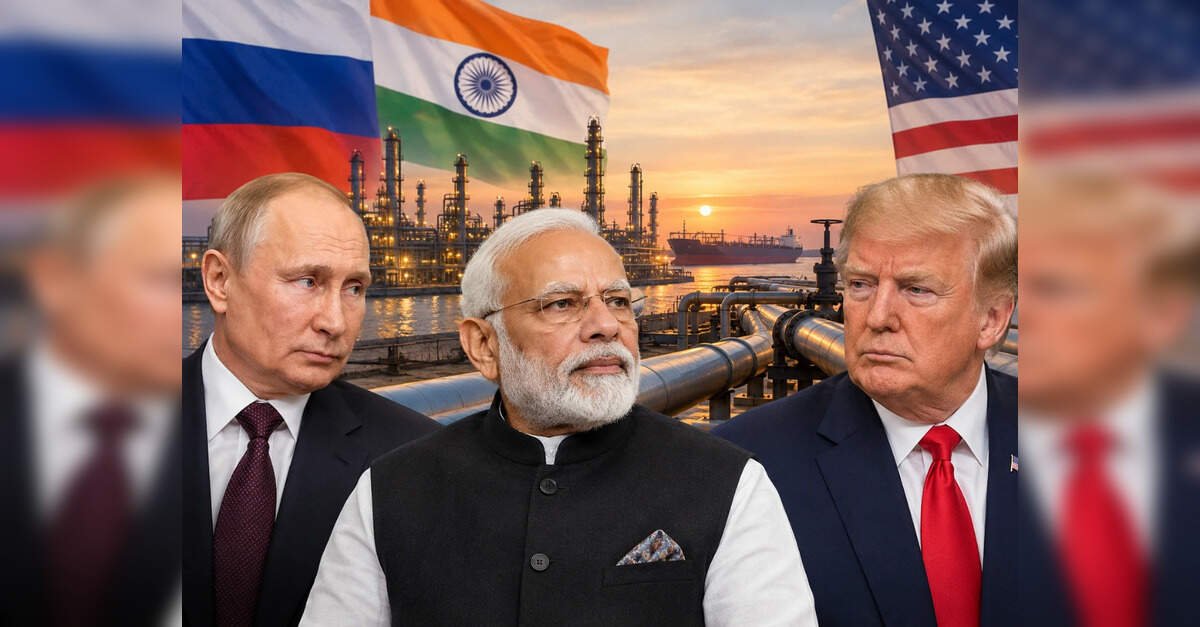
US President Donald Trump’s decision to temporarily waive sanctions and tariffs linked to Russian oil purchases gives India relief from impending trade penalties, but does not offer lasting certainty, the Global Trade Research Initiative (GTRI) said, according to a PTI report.
On October 16, citing national interests, Trump issued an executive order waiving restrictions and tariffs under the Sanctioning Russia and Iran Act (SRIA).
The legislation, which became law on September 18, mandated a 500 per cent tariff increase on Russian goods and a 100 per cent additional duty on products from nations making new Russian oil purchases from October 18, 2026.
While the waiver protects India from these severe levies, experts warn the reprieve is highly unstable.
“But the relief is reversible. Washington can restore the tariffs anytime, leaving India and other buyers uncertain about future US action,” the GTRI stated, adding that the law allows Washington to revive tariff threats to extract concessions during bilateral trade talks.
This geopolitical maneuvering occurs alongside a shift in India’s crude sourcing.
Data shows Russia’s share of Indian oil imports dropped from 51 per cent in July to 44 per cent in August, as New Delhi increased purchases from the US and the UAE despite higher prices.
GTRI Founder Ajay Srivastava urged the government to remain vigilant and avoid making permanent trade concessions based on temporary relief.
“For India, the waiver buys time but offers no lasting certainty. India should protect its energy security, buy oil on commercial terms and prepare for renewed US pressure,” he said.
The US waiver seemingly stems from Washington’s own domestic pressures. Following an October 9 agreement allowing the US to buy Russian diesel to curb local fuel shortages, enforcing SRIA became politically difficult.
“Punishing other countries for buying Russian energy while doing so itself would invite accusations of double standards,” Srivastava observed.
Furthermore, Washington had already granted China a shield against tariff hikes until January 10. Targeting India exclusively would have likely disrupted ongoing bilateral negotiations.
“China already had protection against US tariff increases until January 10. The message is clear – US interests determine when penalties apply, while the ability to retaliate helps secure protection. China can push back. India risks repeated pressure unless it demonstrates that coercion carries a cost,” Srivastava noted.
Join the community of 2M+ industry professionals.
Subscribe to Newsletter to get latest insights & analysis in your inbox.
All about ETEnergyworld industry right on your smartphone!
- Download the ETEnergyworld App and get the Realtime updates and Save your favourite articles.