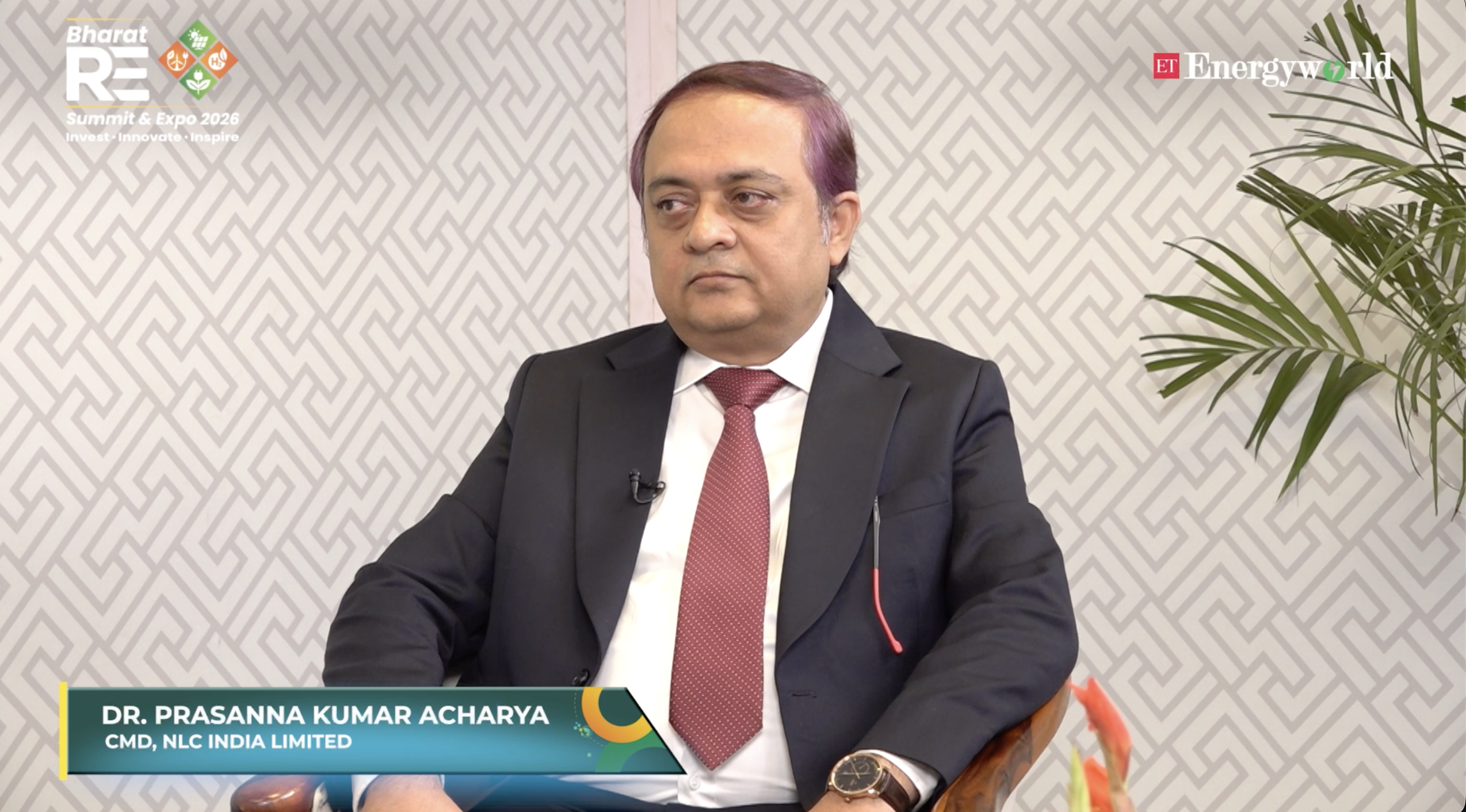
As India’s power demand rises and the energy transition gathers pace, NLC India is pursuing a balanced growth strategy spanning conventional generation, renewables and energy storage. In an interview with ET Energyworld on the sidelines of the Bharat Renewable Energy Summit and Expo 2026 in New Delhi, Prasanna Kumar Acharya, CMD, NLC India Limited, discussed the company’s expansion roadmap, its target of a 50:50 conventional-renewable energy mix by 2032, and the growing importance of storage solutions in ensuring grid stability. Edited excerpts:
NLC India has set a target of achieving a 50:50 mix of conventional and renewable energy capacity by 2032. How is the company progressing towards this transition, and what is its roadmap ahead?
NLC India Limited was established in 1956, almost seven decades ago, primarily to develop the country’s lignite resources and to establish power generation capacity linked to them. Accordingly, all our thermal power plants are captive plants linked to the lignite resources available mainly in Tamil Nadu and Rajasthan.
From 2014-15 onwards, we began diversifying into the coal sector. We currently have three coal mines in operation: Talabira, Pachwara and North Dhadu, which is about to commence operations in Jharkhand.
Apart from these, we have also secured three coal mines through the auction process. These include Machhakata and Patrapada in Odisha, while North Dadu is also under development.
At present, NLC India has a total power generation capacity of 8.5 GW, of which 1.8 GW comes from renewable energy sources, with the balance comprising thermal generation capacity.
We are also expanding our thermal generation capacity from nearly 6 GW to 10 GW by 2030. Of this additional capacity, 3 GW is already under construction, while the remaining capacity is at the development stage.
How is NLC India balancing conventional and renewable energy within its overall generation portfolio?
Under our Corporate Plan 2030, we have set a target of having a 50:50 mix of renewable and conventional energy capacity. By 2032, our target is to have 50 per cent of our generation capacity from conventional sources and 50 per cent from renewable sources.
In addition, we are entering the battery energy storage and pumped storage segments. We have secured projects through competitive bidding processes conducted by agencies such as SECI, MNRE and NTPC.
NLC India has been working towards greening the Andaman and Nicobar Islands. Could you elaborate on the company’s experience with energy storage in the region?
This was the first grid-scale battery storage system established by NLC India Limited. The project was commissioned in 2019-20, and we completed it within 90 days.
The project comprises a 20 MW solar plant and an 8 MWh battery storage system, which has been operational for the last five to six years. It is functioning efficiently in the Andaman and Nicobar Islands.
We are now expanding our battery storage footprint in other parts of the country as well.
What is NLC India’s roadmap for expanding its renewable energy footprint across the country?
Currently, our renewable energy projects, which are either under execution or in the development stage, span nearly 11 states.
We are developing these projects either through bilateral arrangements with state power utilities or through the tendering route. NLC India Renewables has secured projects through tenders floated by various agencies, including NTPC, NHPC and SECI.
What is the road ahead for NLC India as it transitions from a conventional energy company to an integrated energy enterprise?
Over the last two to three months, there has been a significant increase in power demand. This poses a challenge for the grid in maintaining stability while meeting the country’s electricity requirements.
Renewable energy alone will not be sufficient to meet these requirements. An integrated approach is necessary to maintain grid stability and ensure an affordable, sustainable power supply that meets consumer demand.
NLC India is working in this direction by meeting the country’s demand through a combination of conventional and renewable energy sources, with energy storage also playing a very important role.
During the daytime, solar and wind power generation can, by themselves, be more than sufficient to meet demand. Consequently, generation is also backing down in various parts of the country, resulting in the underutilisation of solar power during these hours.
At the same time, thermal power plants need to maintain their minimum technical operating levels. Otherwise, operating these plants also becomes a challenge.
Battery storage and pumped storage projects offer alternatives for storing surplus energy generated during off-peak hours and utilising it during peak demand periods. This is an important challenge, and we are working closely with various government utilities to address this requirement.
Join the community of 2M+ industry professionals.
Subscribe to Newsletter to get latest insights & analysis in your inbox.
All about ETEnergyworld industry right on your smartphone!
- Download the ETEnergyworld App and get the Realtime updates and Save your favourite articles.